


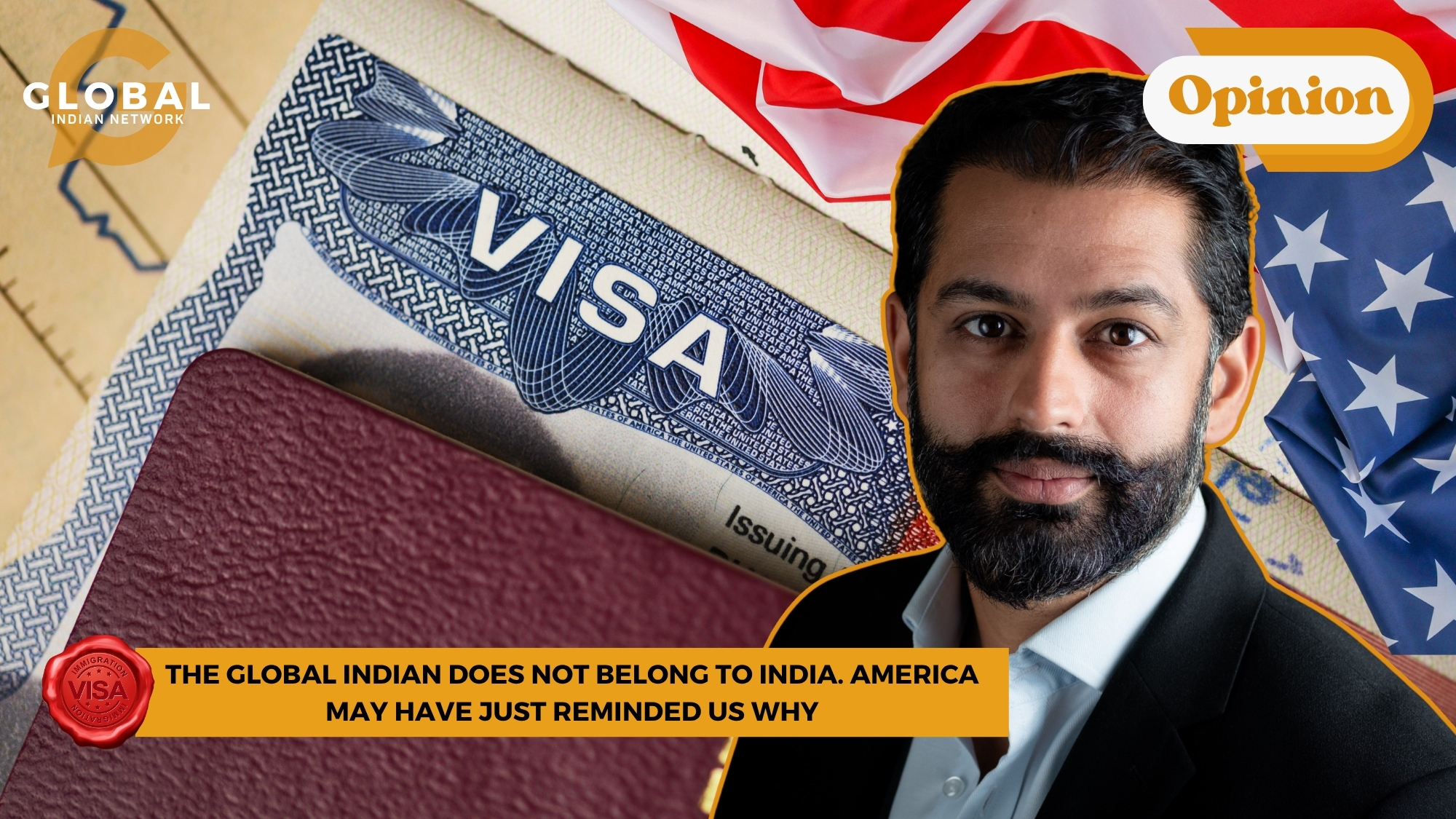

America’s decision to suspend eight major technology companies, including Microsoft, Adobe, Tata Consultancy Services, Infosys, Wipro, HCL Technologies, Cognizant and Capgemini, from its employment-based green card labour certification programme has created another moment of uncertainty for international technology companies and the skilled professionals who depend upon them.
The announcement on 8 October 2026 was presented by the Trump administration as a measure to protect American workers. The government alleges that employment-based immigration programmes have been misused, and the Department of Labor has stopped accepting new or processing pending PERM labour certification applications involving the eight companies. This is an important step in certain employment-based green card applications, but it is not a blanket prohibition on Indian nationals obtaining permanent residency, nor does it automatically invalidate existing H-1B visas. The allegations against the companies should not be confused with proven findings of wrongdoing.
But I believe there is a far deeper conversation taking place beneath these headlines. One that extends beyond immigration, employment and the commercial interests of multinational technology companies. It concerns identity, citizenship, economic opportunity and the future of a global Indian community whose collective history stretches across continents and generations.
Over the years, having travelled to more than 75 countries, I have encountered communities of Indian origin whose histories are far richer and more complicated than the convenient narratives often presented about the Indian diaspora. Some trace their ancestry to the nineteenth century, including those whose forebears arrived through the indentured labour system across the Caribbean, beginning in British Guiana in 1838, Trinidad in 1845 and Suriname in 1873. Across Africa, connections with the Indian subcontinent extend much further back through Indian Ocean trade, while more substantial communities developed through successive movements of merchants, traders, labourers and families during the nineteenth century and the migration waves of the 1920s, 1940s, 1960s and beyond.
In some cases, I have encountered people who describe themselves as seventh or eighth-generation members of their communities. Their histories are not simply stories of migration. They are stories of belonging, shaped by the countries their families have helped build and called home for generations.
These communities have established businesses, institutions, political relationships and cultural identities. They have experienced colonialism, independence, discrimination, economic hardship, prosperity and, in some cases, expulsion and displacement. Their connection to their respective countries is not simply one of residence. It is a history of contribution and national belonging.
And this is where I believe we need to begin questioning an assumption that has become increasingly embedded in the way India, its political establishment and sections of the international media understand the diaspora.
Does being of Indian origin automatically mean that one’s economic, political and national interests should align with India?
I would argue that it does not. Nor should it.
A marriage of mutual convenience
For decades, India has successfully cultivated its diaspora as an instrument of soft diplomacy. The achievements of people of Indian origin across the world have frequently been celebrated as evidence of India’s growing international influence. When an individual of Indian ancestry becomes the chief executive of a major American corporation, the achievement is often presented as an Indian success story. When a politician of Indian origin rises to prominence in Britain, America or elsewhere, the connection with India becomes part of the narrative.
There is nothing inherently wrong with celebrating shared heritage. Indeed, cultural familiarity can be an extraordinary strength. But somewhere along the way, we have allowed the distinction between ancestry, citizenship and economic allegiance to become blurred.
India’s relationship with its diaspora has, in many respects, operated as a marriage of mutual convenience. For India, the diaspora offers access to markets, investment, political relationships, technology and international influence. For successful individuals of Indian origin, an association with India can offer access to one of the world’s largest consumer markets, commercial opportunities and considerable recognition.
We have seen prominent business leaders celebrated at major Indian events, welcomed by political leaders and embraced as symbols of national achievement. Some undoubtedly maintain genuine emotional and cultural connections. Others may also recognise the commercial advantages of those relationships. These motivations are not mutually exclusive.
But what happens when the economic interests of the countries these individuals call home begin to diverge from India’s?
What happens when American policymakers demand that American companies prioritise American employment, while Indian businesses seek continued access to the American labour market?
What happens when a person of Indian origin finds themselves on the opposite side of an economic argument from another person of Indian origin?
Consider the position of an American citizen of Indian origin. This individual may have been born in America, educated in America, paid taxes in America and built a career contributing to the American economy. They may celebrate Diwali, maintain close relationships with relatives in India and retain a deep sense of cultural familiarity. But when that individual walks into an interview for a technology job, their interests are those of an American worker.
If they believe their employment prospects are being undermined by a company’s decision to recruit lower-cost labour from overseas, why should we automatically assume that their shared Indian ancestry makes them sympathetic to that arrangement?
Would it not be entirely reasonable for them to question it?
Of course, whether foreign recruitment actually displaces domestic workers or suppresses wages must be established through evidence rather than political rhetoric. Skilled international workers have made enormous contributions to American innovation, and Indian professionals seeking opportunities abroad should not be treated as threats simply because of their nationality.
But the underlying question remains. Why should an American of Indian origin be expected to support an economic arrangement that they believe disadvantages them, simply because the other person involved also happens to be Indian?
That would be absurd.
Both individuals can share cultural familiarity while holding competing economic interests. Neither has betrayed their heritage. They are simply operating within different national and economic circumstances.
And yet, much of the conversation surrounding the diaspora continues to suggest that people of Indian origin constitute a single constituency, naturally aligned with India’s national ambitions.
They do not.

When ancestry becomes political expectation
There is another dimension to this conversation that I have increasingly observed during my travels, particularly across parts of Africa and the Caribbean.
Many established communities of Indian origin have spent generations developing identities deeply connected to their respective countries. Their ancestral relationship with India may remain culturally or spiritually significant, but their political and economic priorities are often rooted in their local circumstances.
At the same time, I have encountered instances in which individuals and organisations appear increasingly concerned with advancing the interests of contemporary Indian political movements. In some cases, I have questioned whether the priorities being promoted genuinely reflect the needs of local communities or the political objectives of groups operating beyond those countries.
This is not an argument against newer Indian migrants, nor should we assume that someone’s political allegiance can be determined by when they arrived or where they were born. Many recent migrants make substantial contributions to their adopted countries, just as established diaspora communities hold a wide range of political views.
My concern is with the use of cultural familiarity as an instrument of political mobilisation, particularly when religious affiliation becomes intertwined with economic influence and the objectives of particular political parties.
Religion can provide communities with a sense of belonging, continuity and shared values. But when religious identity is used to suggest that individuals must support a particular political movement, government or economic agenda, we begin to lose something fundamental.
Our right to choose.
Our right to disagree.
Our right to determine our own political and economic priorities without having our cultural authenticity questioned.
The danger is not simply that communities become politically divided. It is that the very familiarity that once helped establish trust can become a mechanism for demanding conformity.
And when that happens, the fabric of a community begins to weaken.
I have always believed that shared ancestry should create an opportunity for conversation, not an obligation of political allegiance. Our cultural identity should never become a means through which another individual, organisation or government claims ownership over our decisions.
The question Indian media must confront
I am particularly interested in how Indian media will navigate the American announcement.
Will the debate focus almost exclusively on the implications for Indian technology companies, Indian professionals and India’s international reputation? Will the restrictions be framed primarily as another obstacle to India’s global economic ambitions?
These are legitimate dimensions of the story. The affected workers deserve attention, and the economic consequences for Indian businesses warrant scrutiny.
But where is the voice of the American citizen of Indian origin who is concerned about employment, wages and economic security? Where is the perspective of the Indian-origin entrepreneur operating an American business who must balance international recruitment with domestic obligations?
And where is the recognition that the Indian diaspora is not exclusively an extension of India’s national interests?
The media has an important role in distinguishing between the interests of Indian citizens, Indian corporations and people of Indian origin who hold citizenship elsewhere. These interests can overlap, but they are not interchangeable.
A fourth-generation person of Indian origin in Trinidad, a business owner in Uganda, a technology executive in California and a professional in Mumbai may share elements of cultural familiarity. But their political realities, economic priorities and relationships with the countries they call home can be profoundly different.
That diversity should be recognised as a strength rather than treated as an inconvenience.
India is an important part of our collective story. But it is not the entirety of that story, and it should not be regarded as the automatic custodian of our global identity.
America may have unlocked an extraordinary opportunity
There is another dimension to this debate that I believe deserves considerably more attention.
If American technology companies face increasing restrictions on the routes through which they recruit and retain international workers, what happens next?
The current restrictions concern a particular pathway towards permanent residency rather than a general prohibition on hiring skilled foreign workers. Indian technology companies have also reduced their dependence on some visa routes, expanded local American recruitment and developed international delivery models.
Nevertheless, the broader direction of American immigration policy raises important questions about how multinational businesses organise their operations, access talent and distribute work across international markets.
And this is where I believe we should be looking at the world very differently.
Why must the conversation remain confined to whether an Indian technology professional can work in America or whether that work should be relocated to India?
Why could Kenya not position itself to capture a greater share of international technology services?
Why could Suriname not begin developing new capabilities in business process outsourcing, financial technology, data services or digital operations?
Why should countries across Africa and the Caribbean remain spectators to an economic contest between Washington and New Delhi when they have opportunities to participate in the same global value chain?
These countries already possess internationally connected communities, including established populations of Indian origin. They have people who understand different cultures, business environments and international markets. They have entrepreneurs, professionals and families whose relationships extend across continents.
That familiarity can become a valuable commercial advantage.
Of course, cultural connections alone will not build a competitive technology industry. Countries need reliable infrastructure, skilled workforces, supportive regulation, data protection,
investment and commercially viable delivery models.
But relationships can help establish the foundations upon which those industries develop.
Featured Conversation
The Evolving Identity of Britishness in the Political Scene
with Ash Verma
What if Britishness was never about skin colour or borders, but about courage? Why does a society that celebrates diversity in sport, music and business still hesitate when it comes to who leads? And if the diaspora is Britain’s real strategic advantage, what does it take to own that honestly?
For Kenya, the opportunity could involve expanding its position in technology-enabled services, regional business operations and international outsourcing. For Suriname, the question is whether its international relationships can help accelerate diversification into industries that create skilled employment beyond its traditional economic sectors.
These are not guaranteed outcomes of America’s immigration restrictions. They are opportunities that governments and businesses should be evaluating.
And the benefits must extend to the wider national population. The objective cannot be to create privileged economic enclaves connected by ancestry. It must be to use existing international relationships to generate employment, investment and prosperity for the countries concerned.
That, to me, is where the real opportunity lies.
The conversations we should be having with governments
I remember discussing the importance of economic diversification and international relationships with Saint Lucia’s Prime Minister, Philip J. Pierre, and Deputy Prime Minister Ernest Hilaire, both individuals with whom I have developed warm personal relationships.
For smaller economies, the question is particularly important. How do you create economic opportunities beyond the sectors upon which you have historically depended? How do you attract international capital, develop local talent and establish industries capable of competing globally?
The answer cannot simply be to wait for investment from larger economies.
Countries such as Saint Lucia already possess internationally connected communities whose commercial relationships, cultural familiarity and knowledge of overseas markets could contribute to broader economic development.
The challenge is to turn those relationships into practical opportunities.
I have raised similar questions in conversations with Malawi’s former President Lazarus Chakwera, including concerns about approaches to indigenous economic participation, and more recently with Antigua and Barbuda’s Foreign Minister E. P. Chet Greene ahead of the Commonwealth Heads of Government Meeting.
My concern with economic policies framed around indigenous participation is not with the objective of developing local enterprise. That is essential. Countries have every right to create opportunities for their citizens and protect legitimate national economic interests.
But I believe we must question approaches that risk making identity, rather than capability and contribution, the determining factor in economic participation.
The effectiveness of such policies must be judged by their actual provisions and consequences, including whether they create sustainable local businesses, encourage investment and expand opportunities.
There is a difference between empowering local communities and building economic barriers that may ultimately limit their potential.
Across Africa and the Caribbean, governments face difficult choices. They must protect domestic interests while attracting international investment. They must develop local talent while participating in global markets. They must preserve national identity without allowing nationalism to become an obstacle to economic cooperation.
I believe the global Indian community can contribute to navigating these challenges, not by advancing India’s political interests, but by connecting the countries its members call home with wider international opportunities.
The global Indian advantage has been misunderstood
One of the central premises behind the Global Indian Network has always been that shared familiarity can create opportunities for connection.
It can help establish trust, open conversations, and reduce the barriers that often exist between unfamiliar markets.
But familiarity alone does not guarantee solidarity, and it certainly does not guarantee shared economic interests.
We must be willing to ask whether our relationships extend beyond occasions when our commercial objectives happen to align.
Are we prepared to support one another when our national interests differ? Can we acknowledge that an American of Indian origin may have a legitimate disagreement with an Indian corporation? Can we create relationships in which those differences are discussed openly rather than hidden behind the language of cultural unity?
Because if our sense of community only functions when everyone benefits from the same geopolitical arrangement, then what we have built is not a community. It is a network of convenience.
And networks of convenience are vulnerable when political circumstances change.
Consider instead what becomes possible when we approach the global Indian community as an independent international ecosystem.
A technology entrepreneur in California could establish a delivery partnership with a business in Nairobi. A financial services company in London could develop operations in the Caribbean. A Surinamese entrepreneur of Indian origin could use relationships in India, Europe and North America to attract investment into industries that create employment locally.
None of these arrangements requires anyone to surrender their national identity.
And none requires India to act as the central authority through which every relationship must pass.
This is the opportunity I believe we have consistently underestimated.
For too long, we have measured the success of the Indian diaspora by its contribution to India’s global standing.
But what if we began measuring it by the prosperity it creates across the countries its members call home?
What if we built relationships between communities rather than simply between communities and their ancestral homeland?
What if we recognised that the true value of a global network is not the ability to agree on everything, but the ability to maintain trust when interests diverge?
These are the questions that have shaped my thinking behind the Global Indian Network.
I have never believed that our shared heritage should make us a uniform political or economic constituency. Our histories are too varied, our circumstances too different and our individual ambitions too important.
But I do believe that familiarity creates an extraordinary opportunity.
It can make an introduction easier. It can establish an initial level of trust. It can help people navigate unfamiliar environments and discover possibilities that might otherwise remain hidden.
What happens after that depends upon the quality of the relationships we build and whether we are prepared to recognise one another as independent individuals rather than representatives of an ancestral homeland.
India should be a partner, not the proprietor
Perhaps the most important lesson is that India must be understood as a powerful supporting partner within the global Indian ecosystem rather than its automatic owner.
This does not diminish India’s importance. Quite the opposite. It creates the possibility of a healthier and more sustainable relationship.
India can offer markets, investment opportunities, innovation, cultural connection and diplomatic cooperation. But the global Indian community must also be free to develop its own relationships, institutions and priorities across the countries in which its members live.
An American of Indian origin should not feel that their heritage requires them to place India’s economic interests above America’s. A British Indian should not have to measure their identity against the expectations of New Delhi. Nor should an Indian national be expected to abandon legitimate economic ambitions because they create competition elsewhere.
We should be capable of recognising all these positions without questioning anyone’s cultural authenticity.
That requires something more substantial than celebrations of diaspora achievement or photographs of prominent executives standing alongside political leaders.
It requires an independent global community capable of facilitating conversations, encouraging commerce, building trust and supporting its members across national boundaries.
A community that recognises shared ancestry without demanding shared political allegiance.
A community that can disagree without disintegrating.
A community whose strength comes from the relationships its members build with one another rather than the geopolitical fortunes of any one country.

Featured Conversation
Reshaping National Identity: Discovering Trinidad
with Dr Kirk Meighoo
What does it take to hand back one citizenship and choose another without hesitation? How does a man raised in Canada come to recognise the coloniser in his own thinking, and what does he find when he moves to Trinidad? And what can a society that laughs at itself teach the rest of us about belonging?
A moment to recalibrate
There is an irony in the current American debate.
At the very moment governments are becoming increasingly concerned with national economic security, the global economy remains deeply interconnected.
American businesses require international markets and talent. Indian companies require international customers. African and Caribbean economies need investment, skills and opportunities to diversify.
No single country can satisfy all these needs in isolation.
Yet political debates increasingly encourage us to view economic relationships through the narrowest possible national lens.
I believe the global Indian community has an opportunity to demonstrate a different approach.
We can recognise the legitimate interests of the countries we call home while using our shared familiarity to create new relationships across borders.
We can celebrate India without making our identity dependent upon Indian political interests.
We can support Indian businesses while also recognising the rights and aspirations of American, British, Kenyan, Surinamese and Caribbean citizens of Indian origin.
And we can resist the temptation to allow religious or cultural identity to become a substitute for independent political judgement.
The objective should not be to create another geopolitical bloc. It should be to build a community capable of working across geopolitical divisions.
America’s decision may ultimately prove to be a relatively narrow immigration measure. Its wider consequences will depend upon how businesses, workers and governments respond.
But the questions it raises are much larger.
Who owns our identity? Whose economic interests are we expected to serve? And can shared ancestry become a foundation for genuine international cooperation without becoming an obligation to support one particular nation’s political ambitions?
For me, the answer begins with recognising that the global Indian community belongs to the people who comprise it.
India is an important part of that story. So are the countries across Africa, the Caribbean, Europe, Asia, the Pacific and the Americas where generations have built their lives.
We should be looking at this extraordinary tapestry as an opportunity to connect markets, create jobs and build mutual prosperity.
Not as an instrument of political ownership.
The future of the global Indian community will not be determined by how closely we align ourselves with India. It will be determined by how effectively we support one another across the many countries we call home.
And if the current dispute in America encourages us to recognise that distinction, perhaps it will have unlocked something far more significant than anyone initially imagined.
Let us know your thoughts. If you have burning thoughts or opinions to express, please feel free to reach out to us at larra@globalindiannetwork.com.