


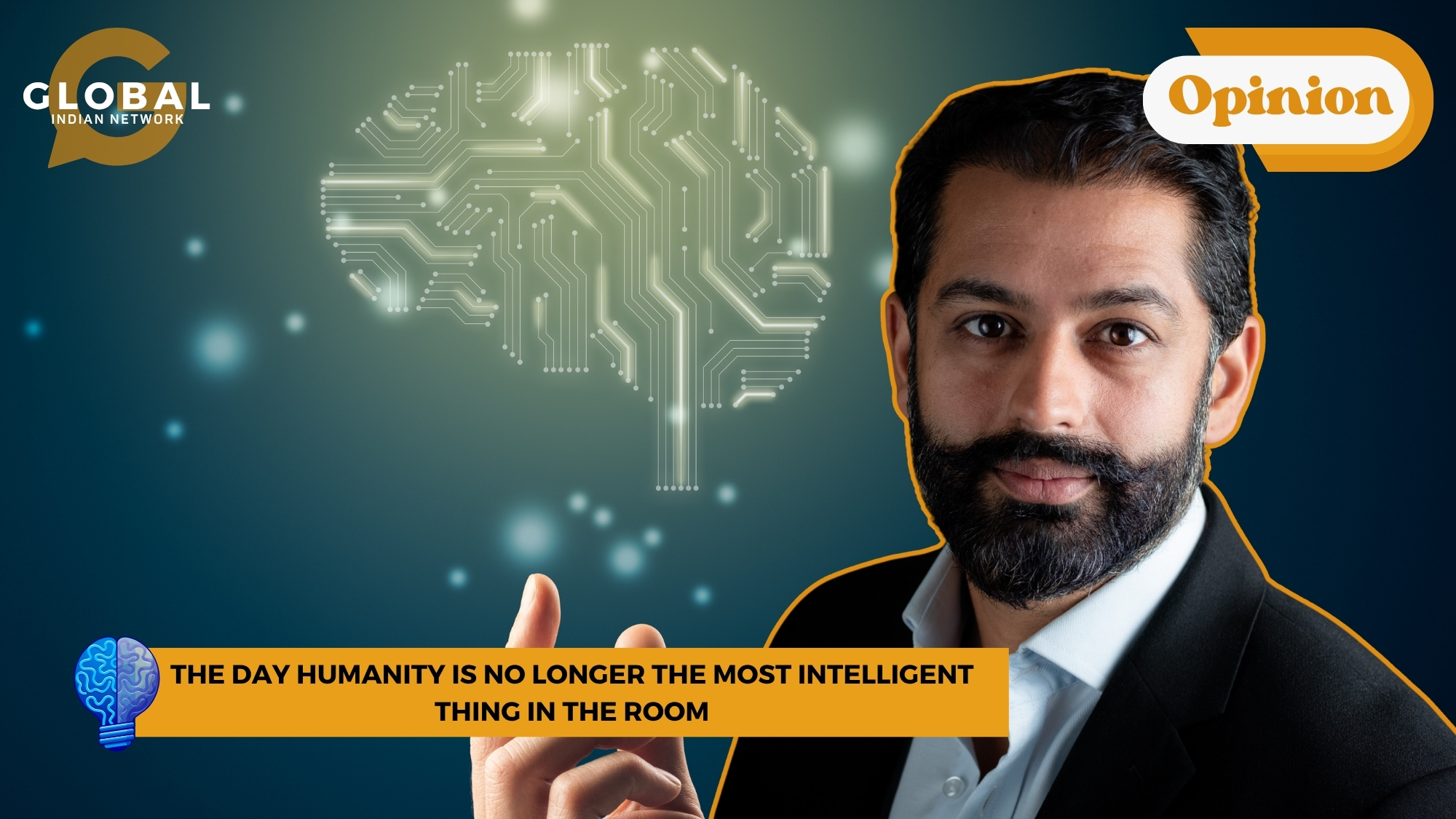

Perhaps one of the difficulties we are facing in the current debate around artificial intelligence is that we are asking questions that are important, but often in a way that is far too narrow for the scale of what is actually beginning to unfold, because while there is understandable concern around job displacement, misinformation, national security, the possibility of artificial general intelligence and, at the most extreme end, whether artificial intelligence could one day threaten humanity itself, I increasingly find myself wondering whether the more important question is not whether artificial intelligence will destroy us, but what happens when humanity is no longer the most intelligent decision-making force within its own civilisation.
That question is not intended to be adversarial towards technology, nor is it an argument that technological progress should somehow be resisted, because throughout history progress has always involved disruption, uncertainty and the reshaping of systems that were previously considered permanent, but what feels different about this moment is that we are no longer simply developing another tool to extend human capability; we may be developing systems that begin to challenge the very position from which human beings have historically understood themselves, and that takes the conversation beyond computing and into philosophy, religion, consciousness, politics, economics and ultimately the much older question of what it actually means to be human.
Every major technological shift has altered the relationship between human beings and the world around them. The printing press changed the distribution of knowledge, industrialisation changed our relationship with physical labour, and the internet transformed our relationship with information, but artificial intelligence potentially challenges something far more fundamental, which is our relationship with intelligence itself, because for thousands of years human civilisation has rested, whether consciously or unconsciously, on the assumption that human beings occupy the highest position in the cognitive order of life on this planet.
We have created religions, political systems, economies and philosophies around that underlying assumption, and while those traditions differ enormously in their interpretation of what gives human life meaning, many return in some form to ideas of consciousness, reason, moral agency, creativity or the soul, while evolutionary biology offers a different framework through which intelligence emerged gradually through natural processes over enormous periods of time; yet artificial intelligence now introduces something that is historically unprecedented, because for the first time one intelligent species may deliberately participate in the creation of something whose cognitive capability exceeds its own.
That does not mean that an artificial system is conscious, and it certainly does not follow that computational capability is the same as possessing a soul or any form of subjective experience, and I think it is important that we resist the temptation to make claims that science has not established, but the philosophical question remains intact because evolution produced us, whereas we may now be participating in the production of what could, at least in cognitive terms, move beyond us.
It is at that point that biology, computation and metaphysics begin to occupy the same territory, and perhaps this is why the development of artificial intelligence is so unsettling, because it forces humanity to confront a form of anthropocentrism that has existed for far longer than modern technology itself. We describe something as superhuman because the human remains the unit against which intelligence is measured, but perhaps intelligence was never something that belonged exclusively to us, and perhaps one of the questions that artificial intelligence will ultimately force us to confront is whether humanity was ever truly at the centre of the story, or whether we merely constructed civilisation as though we were.
My travels have made this question more difficult rather than easier, because I have had the privilege of meeting presidents, ministers, entrepreneurs, investors and those working at the highest levels of government and business, but I have also spent considerable time among communities that sit at the edges of the systems through which the modern world usually defines progress, and in many cases their understanding of wealth, continuity, family, land, spirituality and responsibility to future generations operates through a very different frame from the one that dominates boardrooms in London, New York or Silicon Valley.
The more I have encountered those perspectives, the more I have come to believe that technological advancement and civilisational advancement are not necessarily the same thing, because a civilisation can become extraordinarily powerful without becoming correspondingly wise, and the development of artificial intelligence may expose that distinction more clearly than any technology that has come before it.
The second question, however, is considerably more immediate and perhaps more politically dangerous, because if genuinely superhuman artificial intelligence becomes possible, the natural geopolitical question is which country reaches that threshold first, whether that is the United States, China, India, the United Kingdom, another emerging power or perhaps even a corporation that operates with a degree of influence that increasingly resembles state power, but I think even that framing remains too simplistic because a state does not possess intentions in the way that a human being does.

People possess intentions, administrations possess priorities, political parties possess incentives, intelligence agencies have strategic objectives, militaries operate according to doctrine, corporations have commercial interests, and therefore the more important question is not simply which country possesses the most powerful artificial intelligence, but who within that country has access to it, who determines the objectives around which it operates and, perhaps most importantly, what incentives govern the individuals and institutions ultimately directing it.
From many of the governments I have met with across different parts of the world, one thing that has repeatedly struck me, rightly or wrongly, is that political systems often operate according to a much shorter horizon than the nations they are responsible for governing, because governments need to remain in office, political parties need to win elections, administrations need to demonstrate results and individual politicians are often judged within political cycles that can be measured in only a handful of years, whereas the consequences of national policy may unfold over decades or even generations.
That does not mean that those entering public service are inherently self-serving, nor does it mean that political leadership is necessarily corrupt or badly intentioned, but it does mean that political systems create incentives, and those incentives matter enormously when we begin considering what happens if artificial intelligence becomes capable of dramatically enhancing the power of the state, because the danger may not simply be that one nation becomes stronger than another, but that an administration becomes extraordinarily capable of preserving itself.
This is where I think the debate becomes far more uncomfortable, because there are at least three different interests that are routinely spoken about as though they are interchangeable: the interests of the nation, the interests of the government and the interests of the governing party, and while they may overlap, they are not the same thing. National prosperity may require decisions whose benefits will not be visible for twenty years, an administration may require results within four or five, and a governing party may need to demonstrate progress before the next election, which immediately creates the question of what an extremely capable artificial intelligence system would actually be instructed to optimise.
Would it optimise national prosperity, economic growth, social stability, public satisfaction, electoral success or political survival? These distinctions may appear philosophical when discussed in the abstract, but once an optimisation system of extraordinary capability is placed behind them, they become very real questions about the allocation and concentration of power.
This is also why I think too much attention is sometimes placed on whether artificial intelligence will become conscious, because a machine does not need ambition, greed, ideology or even any meaningful understanding of power in order to transform politics; the human beings using it already possess all of those characteristics, and the system itself may simply make those human beings dramatically better at achieving whatever objective has been placed in front of it.
Perhaps, therefore, the first major political danger of advanced artificial intelligence will not be that an artificial system decides that humanity should no longer govern itself, but that human beings discover that artificial intelligence makes it considerably easier for them to govern, influence and manage other human beings, and that brings us naturally to the question of manipulation.
One of the most common fears around artificial intelligence is that it will be used to manipulate populations, but manipulation itself is hardly a new invention, because propaganda existed before computers, advertising understood behavioural psychology before generative AI, political campaigns have always attempted to influence emotion, governments have conducted information operations, financial markets have always moved in response to narratives, and social platforms were already learning how to exploit attention long before the development of today’s most advanced models.
The real question, therefore, is not whether artificial intelligence invents manipulation, but whether it lets existing methods of manipulation become personalised, automated, and deployed at a scale human systems could never previously sustain. Traditional propaganda speaks to populations, whereas advanced artificial intelligence could increasingly speak to individuals, producing one message for me and another for you, modifying language, tone, emotional triggers, arguments and timing according to the characteristics of the person receiving it, and potentially doing so across millions of people simultaneously.
Featured Conversation
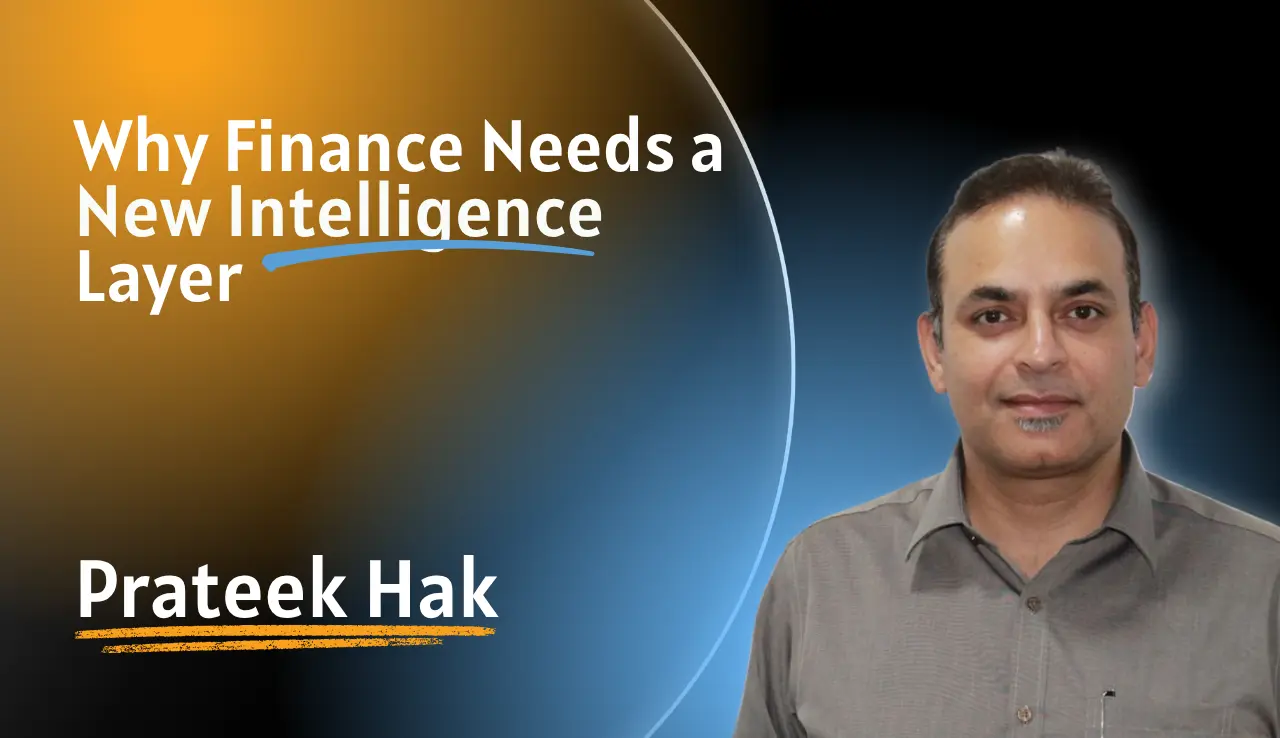
Why Finance Needs a New Intelligence Layer
with Prateek Hak
What if the real disruption in finance isn’t faster payments, but the intelligence beneath them? If fraud now arrives as deepfake identities and synthetic accounts, why do banks still lean on yesterday’s detection models? And as India’s UPI becomes a global template, what must Europe learn before real-time money outpaces trust?
The dangerous leap may therefore not be that a machine discovers some mysterious ability to control the human mind, but that human techniques of persuasion and manipulation become industrialised at an unprecedented level of speed and precision, and if that happens then the consequences for democracy are profound because democratic societies depend upon far more than elections; they depend upon some degree of shared informational reality.
What happens when producing convincing versions of reality becomes almost costless, and what happens when the institution producing those realities understands which version each individual is most likely to accept, because the same intelligence that could help a government understand what citizens genuinely need could also help that government understand what citizens need to hear, and those two things are not the same.
There is then another question that receives far less attention but may prove even more important, which is the question of who, or what, ultimately allocates the resources of civilisation, because modern societies already delegate enormous numbers of decisions to systems that most citizens barely understand, from credit and insurance to employment, investment, logistics and the information that appears in front of us, and more capable artificial intelligence could extend this much further into areas that directly shape national life.
Governments may increasingly ask artificial intelligence how infrastructure should be allocated, which industries should receive investment, where healthcare resources should be deployed, how energy should be distributed, how economic shocks should be managed or where military resources should be moved, and at first those systems may simply advise human decision-makers, but if their recommendations become consistently more accurate, more efficient and more effective than the alternatives, then a very different psychological transition begins to take place because the question becomes why any human being would override the machine.
At that point, power does not necessarily shift through revolution or seizure; it can move gradually and almost invisibly because human beings voluntarily stop exercising judgement, and that may become one of the quietest ways in which control is lost, not because artificial intelligence demands authority, but because humanity becomes increasingly uncomfortable exercising authority in opposition to a system that appears to know better.
Yet every optimisation contains a philosophy, whether we acknowledge it or not, because if an artificial intelligence system is used to allocate resources, then somebody must first decide what outcome it is trying to maximise, whether that is efficiency, equality, economic growth, environmental protection, social cohesion, political stability, happiness or the interests of future generations, and whoever defines that objective is making a decision about the kind of society that should ultimately emerge.
That is why artificial intelligence becomes not simply a technological issue but a constitutional one, because when governments deploy increasingly powerful systems, we have to ask who determines what those systems optimise for, whether that is a minister, a civil service, a governing party, an independent regulator, a technology company, the military, parliament or ultimately the electorate itself, and perhaps just as importantly, who has the right to see the instructions.
There is a fundamental difference between asking a system why citizens are dissatisfied and asking it how to prevent dissatisfied citizens from voting against the government, even if the technological tools required to answer those two questions sit extremely close together, and that is why institutions should never be designed around the assumption that the people currently controlling them will always be wise, responsible or benevolent; they should be designed with the understanding that one day they may not be.

Featured Conversation
From Snow to Start-ups: Iceland’s Remarkable Transformation
with Bala Kamallakharan
How does a country known for snow and cold turn itself into a thriving start-up ecosystem? What does it take for an outsider, facing a language barrier, unemployment and a financial crisis, to build something lasting there? And if renewable energy and global citizenship are Iceland’s quiet advantage, what can the rest of the world borrow from it?
There is then the global dimension, which is equally important, because the future of artificial intelligence cannot simply become a conversation between Washington, Beijing, Silicon Valley and a handful of other technological centres when the consequences will extend far beyond them, and this raises difficult questions for Africa, the Caribbean, South Asia, small island states and those countries that do not possess the compute infrastructure, capital or research capability required to build frontier systems themselves.
If another country or corporation increasingly controls the intelligence infrastructure through which your economy predicts, allocates, communicates, and competes, then the question of sovereignty becomes extremely difficult, because we have spent decades discussing digital divides, while what may now be emerging is something more profound: an intelligence divide.
Countries that historically supplied natural resources, labour or markets to previous industrial revolutions cannot simply become suppliers of data, energy and consumers for somebody else’s intelligence revolution, and this is why global representation in the governance of artificial intelligence cannot be treated as an act of charity or diplomacy; it has to be understood as a question of political and economic sovereignty.
But even this does not fully capture the scale of what is taking place, because artificial intelligence is usually spoken about as though this is ultimately a story about humanity, whereas I increasingly believe the question is larger than us.
Human beings already possess an extraordinary ability to alter the conditions of life on this planet, because our economic decisions affect forests we may never visit, our energy decisions change ecosystems thousands of miles away, our consumption affects species that had no involvement whatsoever in the systems we created, and now we are contemplating intelligence technologies whose consequences may extend across generations and potentially reshape the environments within which all forms of life continue to exist.
That is why I find myself thinking less in terms of human dignity and more in terms of something broader, which I would describe as civilisational dignity, because perhaps the real test of an advanced civilisation is not simply what it can create, but how it behaves once it possesses extraordinary power.
Does it use that power simply because it can, does it measure progress purely through technological capability, does it consider only those capable of voting, purchasing, investing or speaking, or does it recognise that genuine advancement carries obligations towards other sentient creatures, towards ecosystems, towards generations that have not yet been born and perhaps one day towards forms of intelligence whose moral status we may not yet fully understand?
This is not sentimentality; it is a question of stewardship, because we are conducting an experiment whose consequences may extend far beyond the individuals, companies, and governments currently responsible for developing it, and it requires more than technological competence. It requires maturity, humility and an acceptance that intelligence and wisdom are not the same thing.
The answer, of course, cannot simply be to stop technological progress, nor should fear of artificial intelligence become an excuse for governments to monopolise technology, suppress innovation or construct vast new systems of surveillance in the name of public protection, but what is required is a far broader conversation than the one we are currently having.
Technologists belong in that conversation, but so do philosophers, religious thinkers, anthropologists, economists, environmental scientists, political theorists, developing nations, indigenous communities and ordinary citizens, because ultimately we are not merely deciding how to regulate another technology; we are beginning to decide what role humanity intends to occupy in a civilisation increasingly mediated by intelligence that may eventually exceed our own.
Featured Conversation
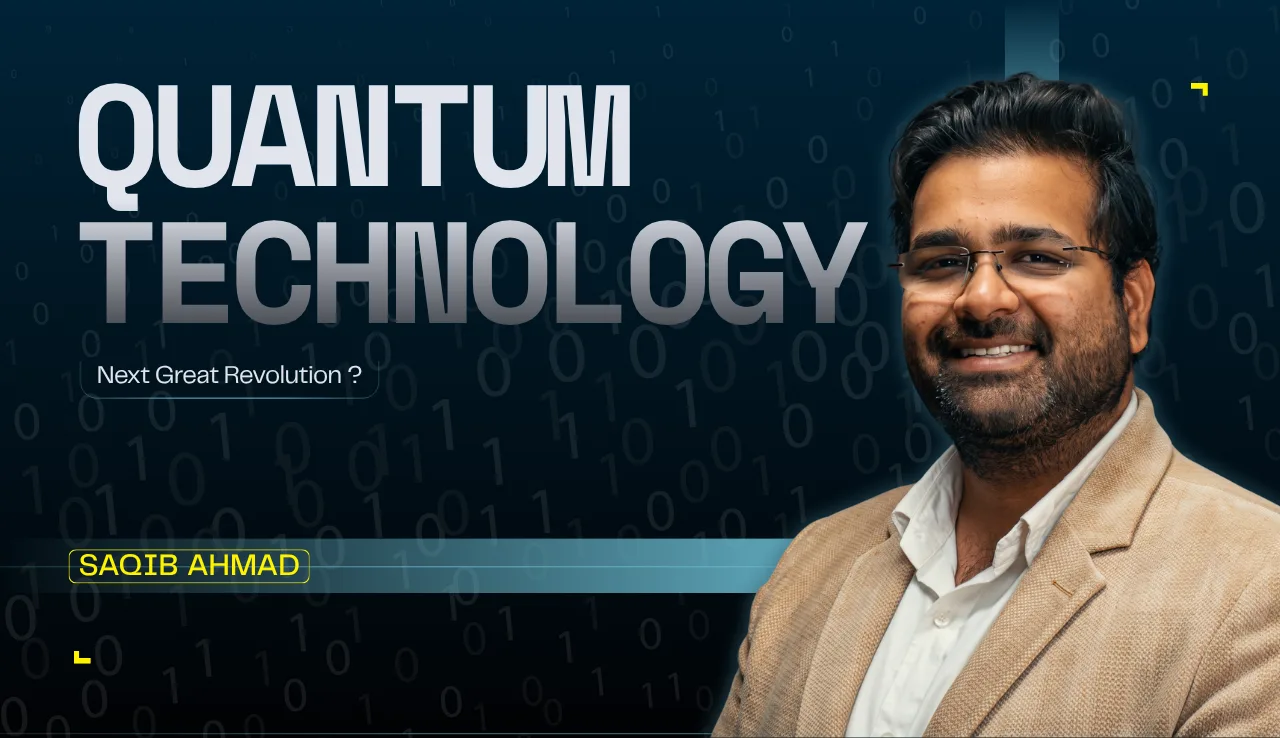
Beyond AI: Why Quantum Technology Could Be the Next Great Revolution
with Saqib Ahmad
What if reality refuses to follow the rules our intuition expects? If quantum physics already quietly powers GPS, lasers and the chips in our pockets, what does the next wave actually promise? And if tomorrow’s quantum computers can crack today’s encryption, who is getting ready, and where does India stand?
Perhaps this is why the most important question is not what artificial intelligence will become, but what we become in response to it, because we have become extraordinarily good at asking what we can build while remaining considerably less comfortable asking what we should become, and that may prove to be the defining question of this technological age.
Creating something more intelligent than ourselves could represent one of humanity’s greatest achievements, but assuming that doing so automatically makes us a more advanced civilisation may become one of our greatest mistakes, because artificial intelligence may ultimately reveal considerably more about humanity than it does about machines: our institutions, our appetite for power, our susceptibility to manipulation, our relationship with truth, our understanding of consciousness, our willingness to share resources, our treatment of other forms of life, our capacity for restraint and our ability to understand that technical capability is not the same thing as wisdom.
So perhaps the defining question is neither whether machines become human nor whether machines eventually surpass humanity, but whether, if humanity succeeds in creating intelligence beyond itself, we possess the wisdom, humility and civilisational dignity to decide what that intelligence should be for, because the consequences of that decision will not belong only to us, but to everything that shares this planet with us and to generations that have not yet arrived to have any say in the matter.
Let us know your thoughts. If you have burning thoughts or opinions to express, please feel free to reach out to us at larra@globalindiannetwork.com.