


On faith, forgiveness, mortality, perspective, and what more than 76 countries have taught me about being human.
There comes a stage in life when we begin to hear that familiar invitation to unburden ourselves, to become authentic, to reveal our authentic selves to the world. It is a phrase so commonplace in the language of leadership, personal development, and even spirituality that I wonder whether we have lost sight of what it actually means.
Because authenticity, at least in my understanding, is something incredibly sacred. Almost spiritual. It is not something we can simply announce to the world, nor something that arrives through a moment of fashionable self-discovery. It requires experience, movement, exposure, travel, conversation and, perhaps most importantly, the uncomfortable recognition of the masks we see in others, because eventually we begin to recognise those same masks within ourselves.
I have been extraordinarily fortunate to have travelled to more than 76 countries, encountering thousands upon thousands of people, from heads of state and business leaders to priests, taxi drivers, entrepreneurs, survivors of war and people whose extraordinary contributions to humanity will probably never receive the recognition they deserve. Yet the more people I meet, the less convinced I become that any of us truly possesses the complete picture of existence. We are all, in some way, attempting to negotiate our understanding of the world through the limited experiences available to us, and what fascinates me is how readily we mistake those experiences for universal truths.
I remember that around the time my daughter was born, I found myself increasingly drawn to poetry, trying to capture, through modern-day allegory, some of the extraordinary contradictions I had witnessed through my travels. By then I had already encountered so many different expressions of humanity, from remarkable generosity to widespread injustice, and perhaps writing became a subconscious attempt to negotiate those experiences within my own mind.
But I wonder whether something else was happening. Whether becoming a parent brings with it an awareness of our own impending fragility, a recognition that the world we spend so much of our lives attempting to understand will eventually become the world our children inherit. We want to be there for as long as possible, to guide them, protect them and share in their discoveries, yet somewhere within that extraordinary experience of becoming a parent lies the uncomfortable recognition that their tomorrow may exist only as a dream within our own imagination.
And nothing brings that reality into sharper focus than losing your own parents. Suddenly you begin to understand the passage of generations in a way that no amount of intellectual contemplation could ever quite prepare you for. The people who once represented permanence in your life are no longer there, while those who now look towards you for that same permanence are growing into a future you may never fully witness.
Perhaps that is why I found myself writing, why those encounters and experiences became my muses, and why the questions of identity, forgiveness, existence and the legacy we leave behind have continued to occupy my thoughts. Not because I had discovered the answers, but because I was becoming increasingly conscious of the limited time we have to explore them.
Some of those poems found their way into newspapers across Birmingham and the Midlands, but their significance was never really about publication. They were my way of making sense of what I had seen, of giving expression to experiences that didn’t always fit neatly into the conventional explanations we give ourselves about the world. Over time the poetry became writing, the writing became conversations, and those conversations began to reshape the way I understood myself. Yet I have come to recognise that despite spending much of my adult life encouraging others to share their stories, I have rarely spoken openly about the beliefs that underpin my own.
Those who know me will probably find this amusing, particularly because I am notoriously poor at small talk. At the tender age of 43, having spent much of my life making conversation something resembling a profession, I have developed an unfortunate habit of seeking the quickest exit when a discussion remains stubbornly superficial. Perhaps it is impatience, perhaps curiosity, or perhaps simply the consequence of having encountered so many extraordinary people that I find myself constantly searching for what lies beneath the obvious. But I digress, which is rather ironic for someone attempting to explain the importance of meaningful conversation.
So what do I actually believe?
I believe we are all sparks of divinity looking upon itself.
I believe that existence, in some extraordinary way, is divinity experiencing itself through the lives we lead. Through our memories, our relationships, our suffering, our achievements, our mistakes and the countless encounters that shape who we become. I do not claim this as some definitive theological truth, nor do I expect others to share it. It is simply the understanding that has emerged from my own journey, and one that continues to evolve. But if we entertain that possibility, even momentarily, it raises a rather profound question. If we are all expressions of the same divinity, what responsibility do we have towards one another?
For me, the answer begins with forgiveness.
Not simply forgiving others, but learning to forgive ourselves, acknowledging the experiences that have shaped us and recognising that the person standing opposite us is also navigating a world of memories, identities, assumptions and beliefs. Yet forgiveness must never be confused with forgetting. I believe passionately in accountability, justice, and building institutions that prevent the repetition of wrongdoing. Forgiveness should never become a convenient escape for those who cause suffering, nor should it be demanded from those who have experienced it. But we should not underestimate the extraordinary weight of carrying anger, resentment, and unresolved experiences throughout our lives.
I think our ideas carry weight. Real weight. The identities we inherit, the stories we tell ourselves, the assumptions we make about others and the conclusions we reach about our own worth can become so deeply embedded that we no longer recognise them as ideas. We recognise them as ourselves. And sometimes that weight can quite literally hold us to the ground, preventing us from moving beyond experiences that have already taken so much from us.
I use the word negotiation deliberately, because I believe much of what we call self-discovery is actually a negotiation with ourselves. A negotiation between what happened and what we believe it means, between the identity we have inherited and the person we might still become. It is not about denying suffering or pretending that trauma can be overcome through positive thinking. It is about asking whether every conclusion we have drawn from our experiences must remain permanent.
And why, I wonder, do we so often wait until the end of our lives to begin that examination?
Why wait until death to confront our regrets, seek forgiveness, question our beliefs or reconsider the way we have treated others? Why do we imagine that the great reckoning with ourselves must happen at the end, when we possess the extraordinary opportunity to begin again while we are still alive?
I did not arrive at these questions through books alone. They have emerged from experiences that continue to stay with me, sometimes decades after the conversations themselves have ended.
I remember being in Sierra Leone during the Ebola crisis, a country whose people were still carrying the consequences of a devastating civil war. I encountered men whose hands had been chopped off during the conflict, people whose bodies carried the unmistakable evidence of human brutality. No metaphor in those encounters, no philosophical abstraction. These were human beings standing in front of me, people with families, memories, ambitions and lives that had existed long before violence interrupted them.
One taxi driver told me a story that has never left me. He had picked up a passenger, someone he recognised immediately as a man who had abused him during the war. Imagine that moment: the person associated with one of the darkest chapters of your existence suddenly sitting inside your vehicle, with no warning and no opportunity to prepare yourself. They spoke, and somewhere within that conversation they sought forgiveness. When I asked him how he could possibly move forward, his response was remarkably simple. “Rajan, life goes on. We don’t have the money or the ability to heal. So we accept, we move on.”
There was something profoundly poetic about that response, but also something deeply troubling. Because what happens when forgiveness is not simply a spiritual choice but a practical necessity? When the luxury of psychological support, prolonged reflection or meaningful justice is unavailable? When tomorrow’s survival demands more attention than yesterday’s suffering? I have thought about that conversation many times, wondering whether moving forward is necessarily the same as healing, or whether some people simply become extraordinarily skilled at carrying the weight.
Another man I encountered in Sierra Leone became a close friend and, in very practical terms, helped save my life. I became incredibly ill during my time there, and the prospect of hospitalisation was frightening given the circumstances. He helped me navigate a situation in which I was vulnerable and entirely dependent upon the judgement and kindness of others. Yet his own history was one of extraordinary suffering. His family had fled the civil war towards the borders, escaping violence involving different sides of the conflict, including those who were supposed to provide protection. His sister died during their displacement, in the camps where his family had hoped to find safety.
And yet here was this man, whose own family had endured such unimaginable loss, extending kindness to someone from another country, someone whose life had followed an entirely different path. He did not deliver a lecture about compassion, nor did he seek recognition for his actions. He simply helped. I have often wondered how many people like him exist across the world, quietly practising principles that others spend entire careers discussing.
Thousands of miles away, in Cambodia, I encountered another history of almost incomprehensible brutality. I remember visiting the Killing Fields with a colleague, standing in solemn silence before a tree at Choeung Ek, where children had been murdered during the Khmer Rouge period. The accounts of children being smashed against the trunk, of people being beaten to death with crude implements to conserve ammunition, remain profoundly disturbing. And I think they should. Why should we make the reality of human cruelty comfortable to contemplate? Why should we sanitise the consequences of ideologies that transform human beings into something disposable?
I remember looking at that tree and trying to understand what happens within the human mind when another person’s existence becomes so meaningless that even a child can be subjected to such brutality. What belief, what political ambition, what imagined vision of a better society could possibly justify it? And perhaps the most disturbing question of all: how do ordinary people come to surrender their own moral judgement to the authority of a collective idea?
I also remember meeting a Cambodian man who told me how his brothers and sisters had been taken away and murdered. He knew what had happened to them. Yet there he was, sharing his experiences with a stranger from another part of the world. I remember wondering how many people we encounter every day whose outward appearance conceals extraordinary histories, how many smiles exist alongside grief, and how readily we mistake someone’s ability to continue living for evidence that their suffering has somehow disappeared.

Sierra Leone and Cambodia are separated by thousands of miles, their histories shaped by different circumstances, ideologies and conflicts. Yet I found myself encountering similar questions in Serbia and Kosovo, and in other parts of the world where historical grievances continue to influence the way communities understand themselves and one another. Different wars, different perpetrators, different justifications, yet the same extraordinary human struggle to continue living in the aftermath.
I do not believe we should romanticise resilience. There is nothing inherently noble about being denied the opportunity to heal, nor should forgiveness become another burden imposed upon those who have already suffered. Some people forgive, others cannot, and some spend their entire lives pursuing justice that never arrives. But these encounters have shown me something extraordinary about the human condition: our capacity for compassion is not always extinguished by our experience of cruelty.
And that brings me back to the way we understand faith.
I have encountered people across the world who speak loudly in the name of religion while demonstrating remarkably little understanding of its fundamental teachings. Those who preach compassion while practising exclusion, who invoke divine authority to justify prejudice, or who use religion as a convenient disguise for their own immorality. Yet some of the most spiritually compelling people I have met have been those who rarely speak about their goodness at all.
More recently, Peter BenHur joined the Global Indian Network and participated in one of our audio briefings. His unconventional thinking, including his ambition to use scientific knowledge to bring free electricity to communities, reminded me that remarkable individuals need not fit conventional expectations. Sometimes the most interesting ideas emerge from people willing to imagine a world operating differently from the one we have inherited.
Elsewhere, near the Malawi–Zambia border, I remember a priest whose relationship with his temple was not about religious performance or controlling who might enter. It was his gateway towards understanding God, a place where those who came were welcomed rather than judged. That encounter did not require me to adopt another person’s theology. What mattered was the way belief translated into action.
I have often wondered whether the deeper significance of religious initiation lies not simply in the ceremony itself, but in the commitment to transformation that it represents. Consider baptism, for example. Water carries profound theological meaning within Christianity, but what fascinates me philosophically is the idea of crossing a threshold, consciously committing to a different way of living. The ritual marks the moment, but surely the real question is what happens afterwards. Are we genuinely prepared to reconsider our assumptions, challenge our prejudices and negotiate a different relationship with ourselves?
Perhaps the most important initiation of our lives requires no public ceremony at all. Perhaps it begins when we finally have the courage to ask ourselves questions we have spent years avoiding.
This is where my experiences of travelling and meeting people have become so important. Across more than 76 countries, from the Caribbean to Africa, Europe and Asia, I have encountered remarkable individuals whose perspectives have challenged and enriched my own.
People such as Mark R. Archer in the Cayman Islands, Vivek and Mohit Burman in India, Tony Matharu in the United Kingdom, and so many others across Malaysia, Mauritius, Guyana, Kenya, Malawi and beyond. Yashmal, Poncho, Nick, Abhy, Harun, Vimal, Donald, Rudy, Robin and countless others whose stories, ideas and experiences have contributed something to the way I understand humanity.
Some have achieved extraordinary commercial success; others have dedicated themselves to communities or causes that may never attract widespread recognition. But what interests me is not simply what they have accomplished. It is what their experiences reveal about the extraordinary complexity of human existence. Every encounter adds another fragment to a picture I suspect none of us will ever fully complete.
I remember standing with Vimal Shah in Nairobi, a man whose friendship and conversations have left a lasting impression upon me. In the early stages of getting to know one another, he asked me a rather direct question, delivered in that wonderfully characteristic Vimal manner: “Who are you?” It was a question that went far beyond the conventional introductions we so often make, the titles we carry or the things we have accomplished.
I suppose, looking back, we were both attempting to understand something about the other, not so much measuring one another’s souls as uncovering them. And I am grateful that we took the time to do so, because some of the most meaningful relationships emerge when we are prepared to move beyond the identities we present to the world.
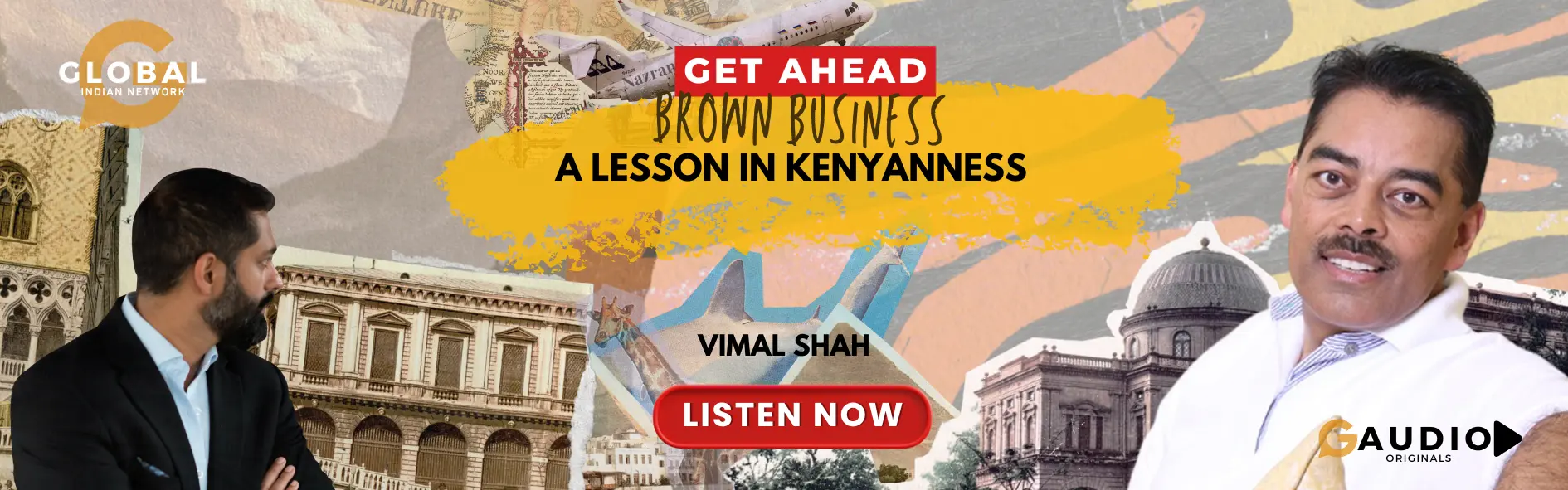
On another occasion, Vimal held up his mobile phone and began explaining something about Jainism. He turned the phone sideways, showing me its narrow edge, and asked, “What can you see?” I told him I could see the narrow side of the phone. He then turned it around, revealing the full rectangular screen, and asked the same question. Naturally, I described what was now in front of me. He smiled and explained that it was the same phone, the same object, yet what I could see depended entirely upon where I was standing. “It’s perspective,” he told me. “There’s no right and wrong. There are only perspectives.”
I have carried that simple exchange with me ever since. Not because it suddenly resolved the complexities of human existence, but because it illustrated something that we so often overlook. How many of our disagreements arise because we are looking at the same thing from different positions, each convinced that what we see represents the entirety of what exists?
Vimal subsequently took me into conversations and meetings that, quite frankly, I might otherwise have avoided. Not because I had necessarily agreed with the people I would encounter, but because I was beginning to appreciate the importance of understanding how they had arrived at their own view of the world. And there is something extraordinary about that shift. When we stop treating every unfamiliar perspective as something to be defeated, we create the possibility of discovering something we did not previously know.
Of course, I do not take this to mean that cruelty, injustice or dishonesty are simply matters of opinion. There are consequences to our actions, and accountability remains essential. But perhaps we should distinguish between understanding someone’s perspective and accepting their behaviour. The first can deepen our humanity without requiring us to surrender our principles. And I often wonder how different our conversations, our institutions and even our relationships might become if we approached one another with a little more curiosity and a little less certainty.
What stays with me most is the simplicity of that moment. No elaborate lecture, no grand philosophical declaration. Just a friend in Nairobi holding up a mobile phone, inviting me to see something I had been looking at all along, but from another angle.
It reminds me of Plato’s allegory of the cave, the suggestion that human beings can spend their lives mistaking shadows for reality, unaware of the greater world beyond their immediate experience. I wonder how many of us remain within our own caves, surrounded by familiar opinions, inherited identities and comfortable assumptions that are repeated until they become unquestionable truths. Travel alone does not necessarily liberate us from those limitations. You can visit a hundred countries and learn very little if you carry the same prejudices into every room. It is the willingness to listen, to question and occasionally to accept that something we have believed for decades might be wrong that creates the possibility of awakening.
Perhaps this is why I have become increasingly interested in the relationship between identity, nationalism and religion. I wonder how much of the anger we witness in the world is genuinely about the differences people claim to be defending, and how much emerges from deeper frustrations around fairness, opportunity, recognition and belonging. That does not excuse prejudice, nor does it diminish the responsibility of those who deliberately exploit division. But if we are serious about creating a world in which progress becomes possible for everybody, surely we must be willing to examine the conditions that allow resentment to become hatred.
And surely we must begin by examining ourselves.
I believe every perspective offers an opportunity for exploration. That does not mean every claim is equally true, or that every action can be justified. Cruelty remains cruelty, injustice remains injustice, and accountability must never be surrendered in the pursuit of reconciliation. But an idea does not become worthless simply because it differs from our own, and understanding why someone believes something is not the same as agreeing with them.
Through debate, experience, exposure and honest introspection, we begin to distinguish between what we have inherited and what we have genuinely come to understand. Consider how much of our identity is shaped before we are old enough to question it: our nationality, our religion, our understanding of success, our assumptions about people who look or think differently from us. How many of these convictions have we truly negotiated within our own minds, and how many have simply become the unquestioned foundations of the people we believe ourselves to be?
I find myself returning to the idea that perhaps the most difficult conversation we will ever have is not with someone who disagrees with us, but with ourselves. The conversation in which we acknowledge our contradictions, confront the consequences of our actions and accept that the beliefs we have defended so passionately may not represent the entirety of what is possible. And perhaps that is where authenticity really begins.
Not in the performance of revealing ourselves to the world, but in the willingness to examine who we are becoming.
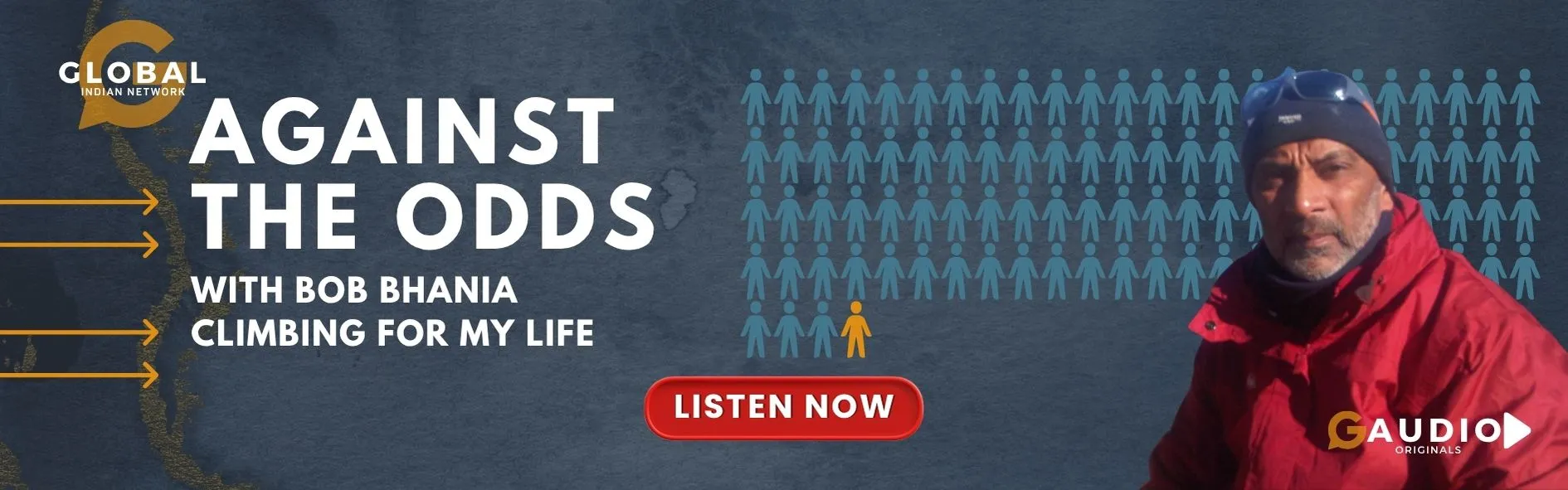
At 43, I find myself still learning, still questioning, still occasionally impatient, and still capable of misunderstanding others and being misunderstood myself. There are experiences I continue to carry, people I am still learning to forgive, and beliefs I may yet have to reconsider. But I have come to believe that authenticity does not require perfection. It requires the courage to acknowledge that we remain unfinished.
I believe I am here for a purpose, just as I believe every one of us is. And if we truly are sparks of divinity looking upon itself, then perhaps our purpose is not as complicated as we sometimes imagine. To spread peace, to practise love and to encourage awakening, not as abstract spiritual slogans, but through the choices we make, the way we treat others and the opportunities we create for people to understand one another.
This is ultimately what lies behind my work with the Global Indian Network and my belief that we can change the world one conversation at a time. Not because I possess some extraordinary wisdom or claim to know the answers, but because I have been fortunate enough to encounter people whose experiences deserve to be heard. I sometimes think of myself as something of a shepherd of conversations, bringing remarkable souls together, allowing their ideas to challenge one another and hoping that something worthwhile emerges from those encounters.
Not because of me, but because of all of us.
I cannot claim to know the ultimate nature of existence. I cannot tell you with certainty what happens after death, whether divinity experiences itself through us, or whether the conclusions I have reached will remain unchanged as my own journey continues. But I know what I have experienced, I know what extraordinary people have taught me, and I know that despite witnessing some of humanity’s most appalling acts of brutality, I remain convinced of our extraordinary capacity for goodness.
And perhaps that is why I believe forgiveness matters so deeply. Not because we should forget what has happened, or abandon the pursuit of justice, but because we owe it to ourselves and to those who come after us to prevent the past from becoming the only possible future. We must build stronger institutions, challenge the ideas that enable cruelty and recognise that compassion without accountability can become another form of injustice.
But we must also ask what we are carrying within ourselves.
What memories have become identities? What assumptions have become certainties? What grievances have become permanent companions? And what conversations have we avoided because we are afraid of what they might reveal?
Why wait until death to begin that examination?
Why not begin while we are alive, while there is still time to apologise, to listen, to reconsider, to seek help, to make amends and to change the way we live?
I do not need you to see the world as I do. In fact, I would be disappointed if these reflections simply encouraged agreement rather than introspection. I would much rather they provoked a conversation, perhaps even a disagreement, that allowed us both to reconsider something we had previously taken for granted.
Because the more I experience the world, the more convinced I become that the greatest danger is not necessarily ignorance, but the certainty that we have nothing left to learn.
So I will continue travelling, listening, questioning and bringing people together. I will continue seeking those extraordinary individuals whose lives remind me of what humanity can become, and I will continue attempting to understand the contradictions within myself.
Perhaps we are all sparks of divinity looking upon itself. Perhaps our encounters are simply different expressions of existence attempting to understand its own nature. Or perhaps there is another explanation entirely, one that I have yet to encounter.
I remain open to discovering it.
Because I do not believe authenticity is about arriving at the final answer to who we are. I believe it is about having the courage to keep asking the question, and the humility to recognise that the next person we meet may change the answer.
And if we can do that, if we can learn to negotiate our beliefs, forgive without forgetting, seek justice without surrendering compassion, and remain open to the extraordinary perspectives of others, then perhaps we might begin to change the world.
One conversation at a time.

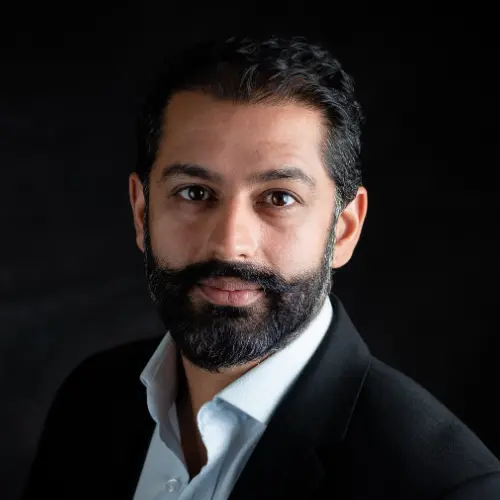
Rajan Nazran is the founder of the Global Indian Network, an international community connecting people, ideas and opportunities through the power of conversation. His work has taken him across more than 76 countries, exploring the human experiences that shape our understanding of the world.
Let us know your thoughts. If you have burning thoughts or opinions to express, please feel free to reach out to us at larra@globalindiannetwork.com.