



One of the many touted advantages of social media is that it has democratised reach by allowing anyone to reach anyone. This, however, has inadvertently created a loop in which creators who spend most of their time on social media feel the need to curate their personhood. This is primarily because social media cultivates the need to be witnessed while simultaneously converting the self into a performance. Because in order to be witnessed, you need to compete with all the better and more perfect selves, so you can draw enough attention. And your uniqueness needs to be distilled into the shortest script that fits into a ninety-second video.
In this article, we will explore how this has permeated into spaces of trauma and mental health on social media.
Aestheticisation of Disorders
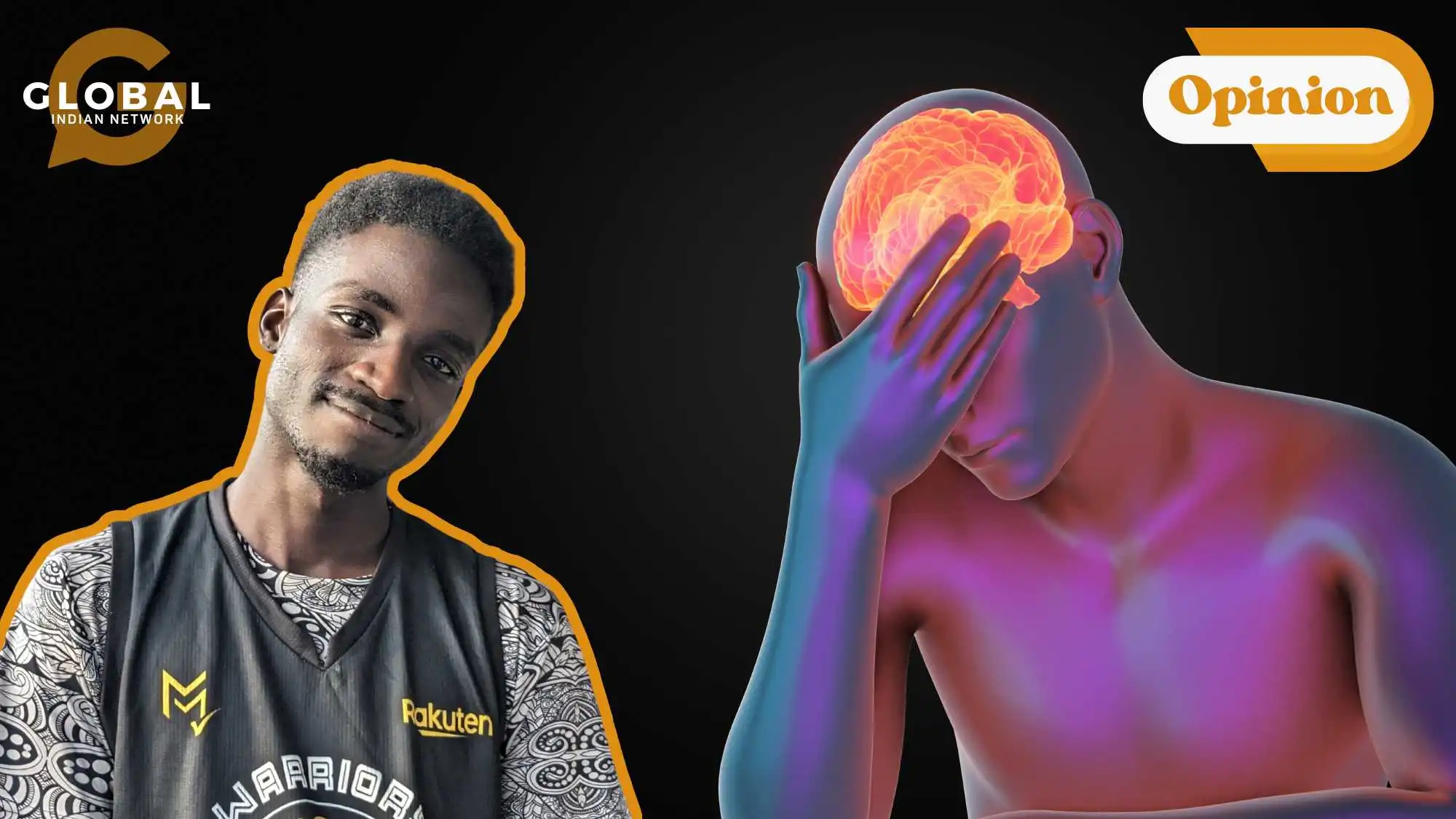
The algorithms that drive short-form content reward emotional and aesthetic content. Put the two together, and you get the output of posts that reframe serious lows with poetic quotes and melancholic music, or (orchestrated) “confessional” crying with pretty lighting and a filter on. While it is healthy to experience a full range of emotions, aestheticising sadness strips it of its usual causes, making it accessible and, in the process, distorting how we view and process the emotion. Depression becomes a brooding state from which artistically tortured souls introspectively derive meaning. Other disorders such as Anxiety, Bipolar disorder, Eating disorders, Autism, etc. all experience a similar application of aestheticisation.
Pop-culture Psychology and Self-diagnosis
With the proliferation of simplified consumable media, misinformation proliferates. Complex disorders are decontextualised and moulded into bite-sized lists. Symptoms are simplified, and anything about you could explain everything wrong with you. Inattention is ADHD. Cleanliness is OCD. Shyness is Anxiety. Sensitivity is BPD. And it’s a simple way to earn both a “quirk” and validation.
And there’s also the reverse, and by reverse, I mean the exact same thing projected onto someone else, just with different terms. Labelling someone as a Narcissist, Sociopath, or Psychopath, especially over an argument. Circumstantial selfishness or ego-centricism (whether perceived or real) seems to fit the criteria for “clinically diagnosable villain”. And even simply lying or disagreeing can easily be equivalent to Gaslighting or Manipulation.
Romanticised Toxicity and Trauma as Trends
Social media enables oversharing, and people who disclose information about their romantic relationships online tend to fall into a pattern of laying out their partner’s faults and then defending them. It normalises obsessive or neglectful behaviours and trivialises toxicity as humour in the context of romance. Then there’s also the trend of “testing” or “pranking” a partner’s faithfulness or reaction to something extreme for content, often heedless of both privacy and boundaries.
In a similar but distinct vein, the “trauma candy salad”, which garnered significant attention on tiktok by mid-2024, was a trending group activity among teenagers to pour candy into a bowl while nonchalantly reciting traumatising life events. Whilst everyone has ownership over their lived experiences, the trivialisation that comes with social media, particularly short-form content, can also be harmful, as it diminishes the weight of an event. Discussions of trauma ought to be treated with the utmost care, as trauma mostly arises in areas which are at best blind spots or at worst neglected by society.
Conclusion
Ultimately, the issue is not that social media has made conversations about trauma and mental illness more common. In many ways it has reduced stigma and encouraged people to seek help. The problem arises when visibility becomes inseparable from performance. Algorithms reward engagement regardless of whether content informs, trivialises or misrepresents.
This creates an environment where suffering becomes something to package rather than process and where mental illness is increasingly understood through trends instead of evidence. As a result, people experiencing genuine psychological distress may struggle to recognise themselves in the simplified portrayals they consume, while others develop distorted ideas of what trauma or mental illness actually look like.
Personal stories can educate, foster empathy and encourage others to seek help. They also require context and responsibility. Mental health deserves conversations that are nuanced and compassionate because behind every diagnosis and every traumatic experience is a person whose reality cannot be reduced to a ninety-second video.
Let us know your thoughts. If you have burning thoughts or opinions to express, please feel free to reach out to us at larra@globalindiannetwork.com.