


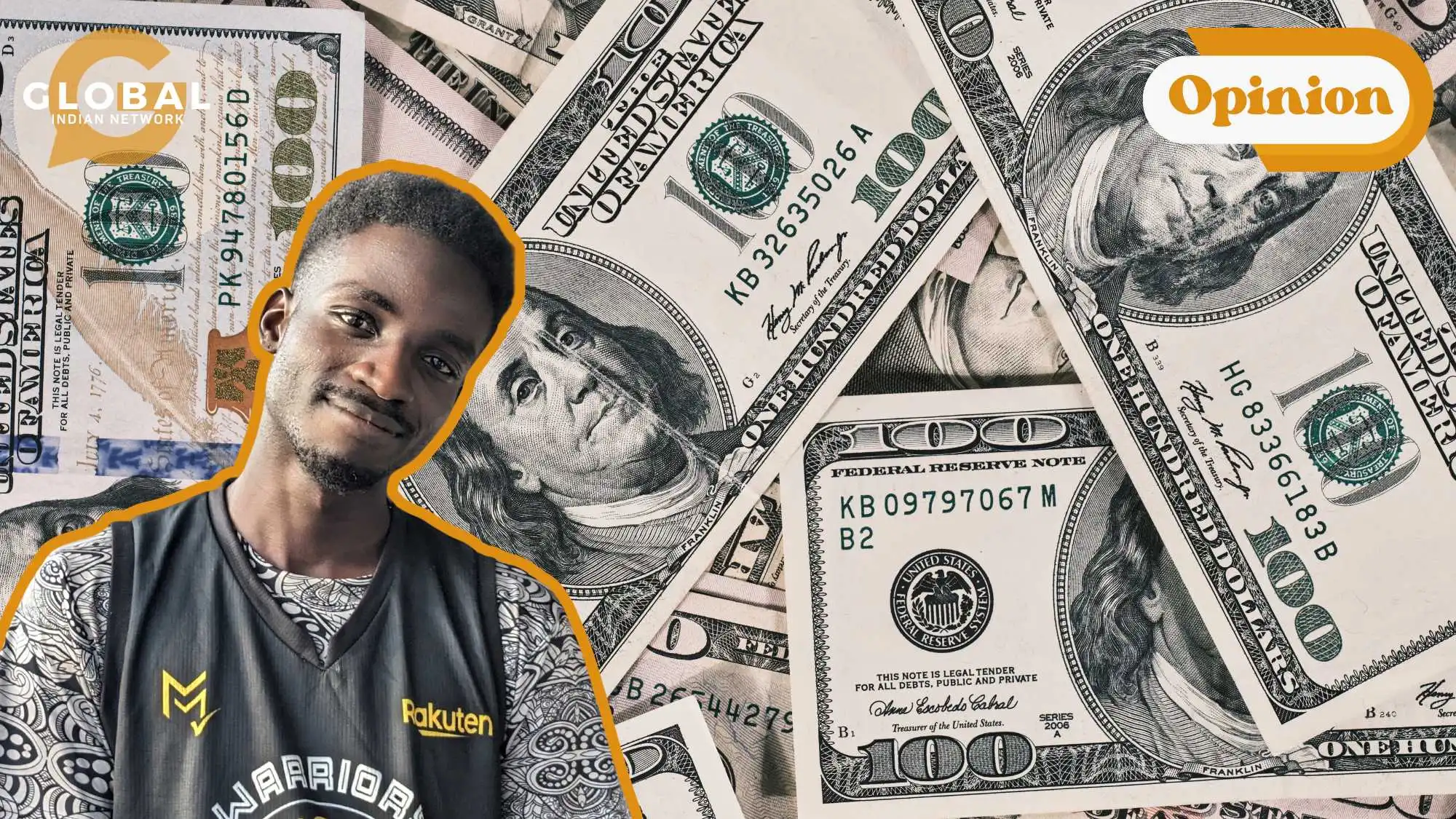
Whenever the concept of affirmative action, particularly DEI as it relates to people of African descent in the West, is brought up, it is often countered as being an affront to meritocracy. One counterargument has always been that there remains a significant African American presence in sports, particularly in basketball, athletics, and American football. However, this argument fails to account for the fact that, in certain sports, the barrier to entry is low, monetarily speaking, and the human body is itself one of the more valuable assets. In this article, we will dissect how the human body serves as capital and what it often indicates.
How the Body Serves as Capital
At first glance, it seems obvious to consider the body as a form of capital, since our ability to interact with the physical world is inherently dictated by our physical capabilities. It is for this very reason that the discourse around accessibility arises when discussing members of our societies with visible and invisible disabilities, since engineering the world, from everyday use tools to public spaces, to suit only able-bodied people, inherently eliminates a significant portion of the physical body capital that people with disabilities have.
But why should we refer to physical ability as capital? The strict definition, at least in business terms, is the financial assets, wealth, or physical resources used to generate income or produce goods and services. It goes without saying that the body itself is a physical resource.
Conversely, some may diminish the importance of the body as a physical resource, as in the modern day, there are a variety of means of generating income. However, at the crux of that statement is the assumption that one has access to some or all other forms of capital that supersede the singular capital of the human body, and while that may be true for some, or even the majority, of a population. It is not always the case.
The Body as Sole Capital for the Marginalised
The Notorious B.I.G once said, “The streets is a wicked short stop, either you’re slinging crack rock or got a wicked jump-shot.” What he was referring to was the limited avenues of upward social mobility available to the marginalised underclass, specifically black people in this context, being limited to crime, either you’re slinging crack rock, or have an above-average aptitude for sports, or have a wicked jump-shot. What these lyrics highlight is how, when all or most means of climbing the social and financial mobility are shut off, the body becomes one’s only viable capital. As such, reliance on the body, or overreliance on it, is indicative of a lack of other forms of capital and access.
This is why, since desegregation in the United States, there has been an influx and over-representation of especially black men in sports. Though some may point to people of West African descent being more genetically predisposed to certain sports, it is primarily because most of them hail from disenfranchised backgrounds with poor educational funding and no other means, rather than their own talents to succeed in life.
Abuse of the Body as Capital
The excellence of marginalised communities in sports and the arts paints a very hopeful picture; however, it is important to bear in mind that elite sports and the arts filter out large swathes of the population. Many people who end up using their bodies as a last resort for capital do not always do so in the most glamorous manner. Additionally, not every country is the United States, where marginalised people have institutions such as High School and University scholarships that allow them to gain access and apply their capital.
For instance, despite the presence of affirmative action in the form of reservation quotas in India, there still remains significant disenfranchisement and discrimination. As such, the presence of lower-caste people in areas such as sports is remarkably low.
Comparatively, women of these communities find themselves in sex work or adjacent professions, similar to disenfranchised women from other parts of the world. Conversations around sex work need to be had, especially when voluntary; however, it is no secret that it puts women in vulnerable situations and makes them more susceptible to abuse. In a parallel manner, in the United States, the prison-industrial complex disproportionately targets black people as a way to generate cheap labour, which also leads to a different form of abuse. When one’s body is their only form of capital, they are more vulnerable to abuse.
Conclusion
The relationship between one’s body and society is complicated. It is one shaped by when and where one is born, social stigma, one’s gender and a myriad of other factors. However, it is important to recognise its utility, especially as capital, its associated vulnerabilities, and what they indicate. It is only through this that we can begin conversations about achieving social and financial liberties across the board.
Let us know your thoughts. If you have burning thoughts or opinions to express, please feel free to reach out to us at larra@globalindiannetwork.com.