




“There are already parasites of society who attack the system, and you want to join hands with them? There are youngsters like cockroaches; they don’t get any employment, and they don’t have any place in a profession. Some of them become media, some of them become social media, some of them become RTI activists, some of them become other activists, and they start attacking everyone… And you people file contempt petitions.”
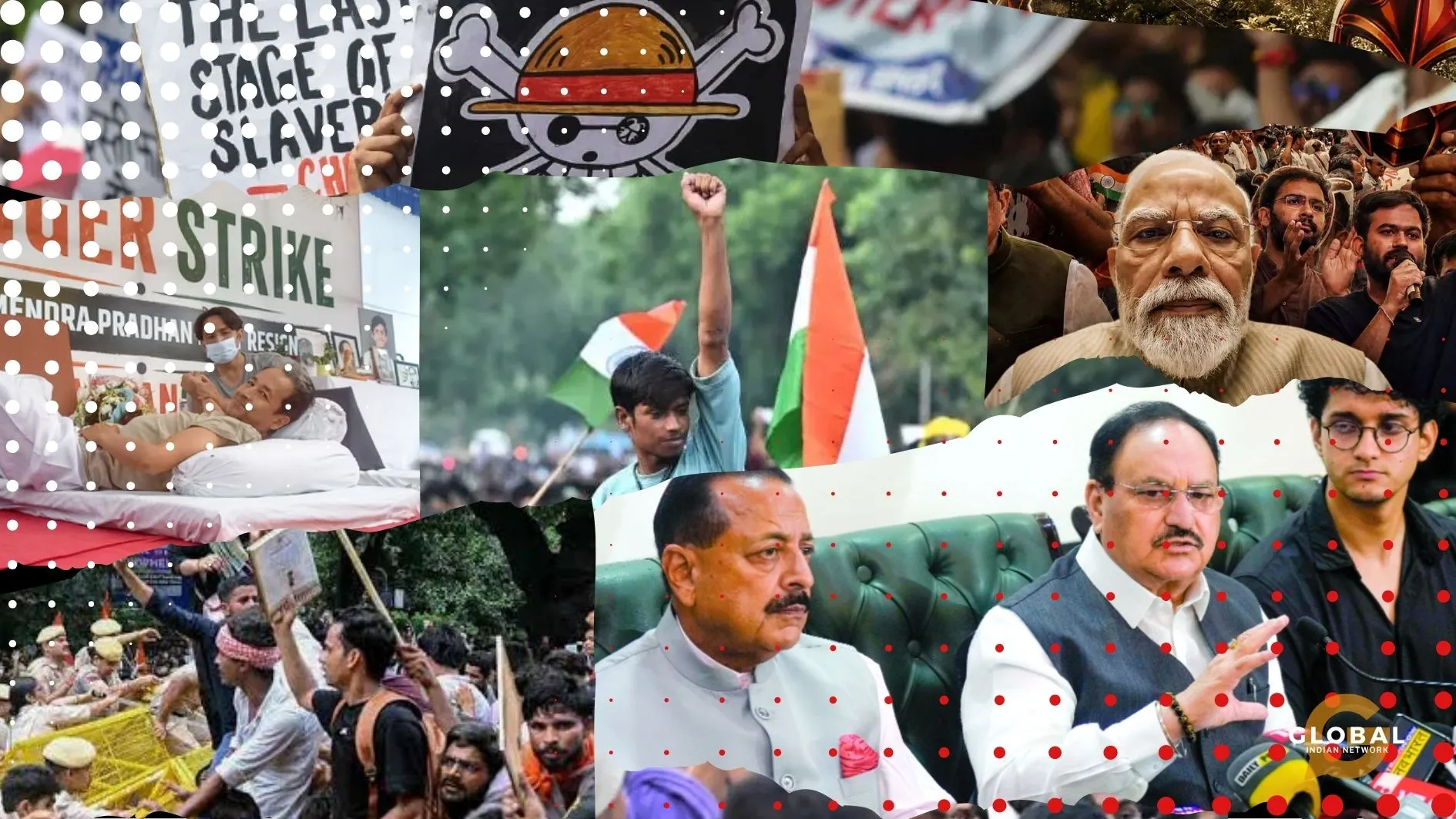
The now-infamous rant by Indian Chief Justice Surya Kant has since unintentionally created a movement and one of the largest youth and student-led movements since independence. This has since catalysed a protest that turned violent, with allegations of police overreach and brutality in Delhi as scores demanded accountability and the resignation of the Minister of Education over the leaking of a series of scandals involving NEET (National Eligibility cum Entrance Test) medical exam leaks and irregularities with the Central Board of Secondary Education marks evaluation processes.
The protests, which started in early June, have since grown in scope, scale and attention, joining a legacy of global student-led protests spanning many decades, where youths from classrooms and beyond rose to challenge the status quo and demand change. This article aims to dissect the importance of student-led protests and why their significance can supersede the eventuality of one specific case.

Why Do Students Protest?
From the Soweto uprising in South Africa to the Greensboro sit-in in segregated America, students have been an active and vocal component of protests against the established order. But why are students as a separate entity often at the forefront of movements that demand change?
It is sometimes said that the future is borrowed from the youth and the earth is borrowed from the children. University students sit at the junction of being old enough to understand most of the mechanisms that govern the systems of everyday life, whilst not having vested interests in either upholding or dismantling those apparatuses, beyond a better world they’ll step into. This is not to say that students are saintly and untainted; however, their interests as a body are in the betterment of the society that has been promised to them and thus the betterment of the world as a whole.
When 100,000 students descend on the road from Jantar Mantar to the Parliament House, asking for the resignation of a minister whose term has been riddled with scandals of incompetence, it is not for political gain but to salvage a future that has been jeopardised by years of ineptitude. This idealism that is at times criticised as naivety is a core reason as to why students helm many movements for change.
In tandem, the lack of vested interests also means students have less to lose in the present. Most students are not property or business owners but, as mentioned, have the future to lose; therefore, potentially putting themselves in harm’s way in the present, where they own nothing to save tomorrow, is a reasonable trade-off.
Why Student Protests Matter Even if They Fail
One major criticism of the Delhi protests is that the demand for Dharmendra Pradhan’s resignation is born of naivety. This, of course, ignores the other criticisms ranging from claims of manipulation to grievances associated with the disruption caused by protests, the former being a legitimate but unsubstantiated concern and the latter being what makes a protest a protest; therefore, for the basis of this section, we will focus on the initial criticism of naivety.
Now, whilst wading through mainstream and influencer-based opposition, police confrontations and overreach as well as statements of neglect from the Supreme Court, the protests face another contender, that of unrealistic naivety. This deemed flaw, often by those claiming to be pragmatics, is not entirely without basis. Many have lived through years of promises, teased change and disappointment and to them, great and significant demands from the people to the ruling class are a bridge too far to realistically cross.
However, the significance of protests led by the youth lies exactly within what those (either willingly or unwillingly) have become subservient to the status quo call naivety but in actuality is a call to oftentimes realistic idealism. Throughout history, demands from student movements that were deemed unreasonable in the moment have aged well. Protests against the Vietnam War were treated as anti-national in the United States, with prominent figures facing the judicial system, but decades later, proponents of the war have lost favour with the public. The same is even more applicable to Apartheid South Africa, the Civil Rights movement in the United States and even the rise of Palestinian solidarity.
Here lies the major significance of youth protests. As they are often decentralised yet organised, championed, and led by a demographic with no interest beyond a better world, they often do not fail, even if they seem to in the short term.
The Soweto Uprising is often remembered as a flashpoint in which 176 people were killed by the Apartheid government in1976 and whilst it seemingly squashed the movement in the moment, the memory of it survived decades and catalysed global solidarity that eventually led to the end of the Apartheid, in similar order the JP Movement which was started by Bihari students in 1970s India demanding accountability from Indira Gandhi’s government faced suppression and political persecution in the short term, however the awakening it caused materialised in the ballots in 1977 during which the ruling party lost.
Conclusion
This article draws heavily from the 2026 Delhi Protests, which have seen a satirical party mobilise 100,000 youths, opposition leaders detained and released and even a hunger strike, but it rides a wave of many communities that have been protesting. Farmers and Adivasi Women have received little to no mainstream media attention as they demand rights to their land and livelihood. This is in part due to the sheer scale of many student protests happening simultaneously nationwide.
The other is that, for the most part (ignoring clear situations of segregation such as Jim Crow America and Apartheid South Africa), youth-led protests are classless and casteless. As the point of demarcation is not caste, creed, or class, it forces solidarity among those with the ability to raise their voices. As such, it is important that this solidarity continues.
Let us know your thoughts. If you have burning thoughts or opinions to express, please feel free to reach out to us at larra@globalindiannetwork.com.