



Submitted By: Shingirai Mupfupi
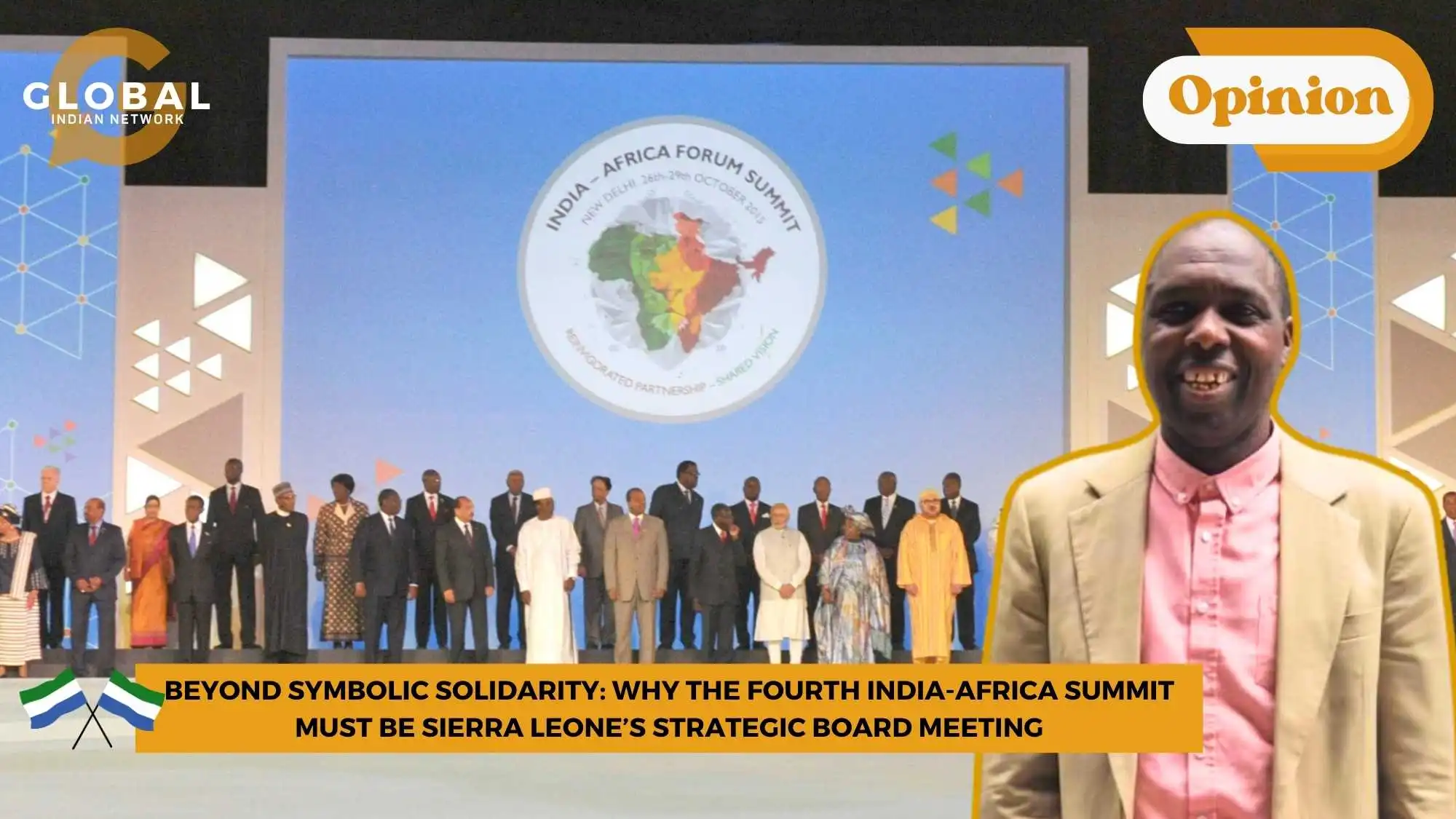
The history of India-Africa relations is often “built on the practical framework of South-South cooperation” and the shared struggle against colonialism. But as we approach the fourth India-Africa Forum Summit (IAFS-IV), tentatively set for October 2026 in New Delhi, the romanticism of the past is hitting the hard pavement of 21st-century geopolitics. For a nation like Sierra Leone, the upcoming summit is not just another diplomatic date on the calendar; it is a critical juncture to pivot from being a passive recipient of “goodwill” to a strategic architect of its own industrial future.
To understand where we are going, we must look at the road behind us. The IAFS framework was established in 2008 as a formal mechanism to institutionalise India’s engagement with the continent. That first New Delhi summit focused on the Banjul Formula, engaging with 14 African nations, the African Union and regional blocs, while setting the stage with the ‘Duty-Free Tariff Preference Scheme’ for least developed countries.
By the second summit in Addis Ababa in 2011, the needle moved toward capacity building, with India pledging five billion dollars in Lines of Credit and thousands of scholarships under the ITEC program to focus on human resource development. The third summit in 2015 remains the largest to date, welcoming all fifty-four African nations and shifting the focus toward infrastructure and energy, specifically the International Solar Alliance.
What has been achieved is significant. Collectively, India has extended over $12 billion in credit to Africa, completed nearly 200 projects in over 40 countries, and provided over 50,000 scholarships. For Sierra Leone, this has manifested in practical wins such as water supply projects in Freetown, the construction of the ultra-modern Ministry of Foreign Affairs building, and critical support for the electricity sector.
However, despite these successes, an “elephant” in the room remains: the Implementation Gap. While India’s “no-strings-attached” model is a welcome alternative to more rigid Western or Chinese frameworks, it has historically suffered from a lack of speed and structural depth. Credit lines often get mired in bureaucracy on both sides, and projects can sometimes feel like one-offs rather than parts of a cohesive national strategy.
Furthermore, the competition with China’s “Belt and Road” is the unspoken subtext. India cannot outspend China, nor should it try. The true challenge is the realisation that the old narrative of “symbolic solidarity” is no longer enough to sustain a partnership in a world of fragmented supply chains and climate crises. IAFS-IV arrives in a post-pandemic, multipolar world where the difference this time is agency. India has successfully championed the African Union’s permanent membership in the G20, effectively moving the relationship from “donor-recipient” to “global rule-makers.”
For Sierra Leone, the fourth summit offers a chance to approach the table differently. Instead of seeking more credit for general infrastructure, the focus must shift to Integrated Economic Corridors, where the narrative shifts from “aid” to “equity.” Sierra Leone is uniquely positioned to lead this new wave of engagement by moving beyond traditional narratives and focusing on three forward-looking strategies.
First, it should treat Digital Public Infrastructure (DPI) as the new “hard” infrastructure. India’s greatest export today is not steel or textiles; it is the “India Stack.” The digital transformation of India’s economy through biometric ID and instant payments is a blueprint for Sierra Leone to leapfrog legacy banking systems and provide the digital plumbing for a modern state.
Secondly, President Julius Maada Bio’s “Feed Salone” initiative is the perfect hook for Indian agri-tech, but the approach must move beyond simply buying tractors. Sierra Leone should negotiate for ‘Value-Added Processing Zones’ where Indian firms like Mahindra or TATA can set up regional hubs to process raw materials into finished goods for the West African market. Finally, the strategy for critical minerals must be “no extraction without education.” If Indian firms seek lithium or iron ore, the agreement must include local processing plants or technical institutes to ensure Sierra Leone owns “In-Country Value.”
Perhaps the most significant shift in IAFS-IV will be the dominance of the private sector. While earlier summits were government-led, the next decade of India-Africa relations will be driven by the likes of Reliance, Adani, and Airtel, alongside a burgeoning start-up scene. Sierra Leone should consider establishing a ‘Dedicated India Investment Desk’ within its National Investment Board to act as a fast-track for entrepreneurs, navigate financial nuances, and reduce the “hassle factor” for Indian capital.
The history of the India-Africa Forum Summit is a proud one, but the future cannot live on pride alone. The transition from the third to the fourth summit marks a shift from South-South Solidarity to South-South Sovereignty. For Sierra Leone, the opportunity is to stop being just a point on a map and become a bespoke partner. By addressing implementation delays and raw extraction models with structured, digital-first strategies, Sierra Leone can usher in a new era.
The 2026 India-Africa Forum Summit should be remembered as the moment Sierra Leone and India moved from being friends who remember the past to partners who are building the future. The elephant is ready to move, and it is time for Freetown to take the lead in showing it the way.
About Shingirai Mupfupi:
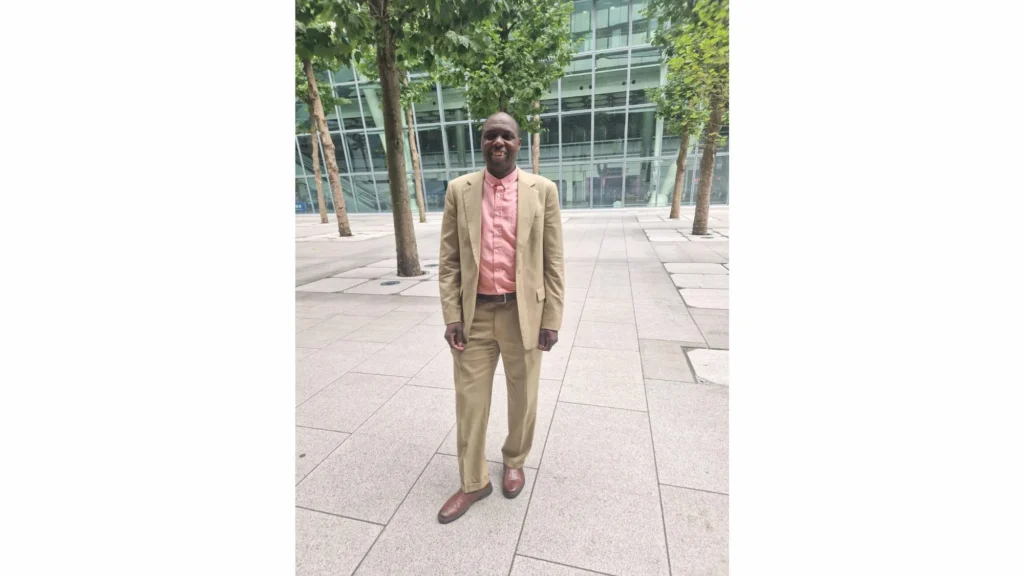
Shingirai Mupfupi is a multimedia journalist committed to advancing democratic values and amplifying voices that shape society. With over three years of experience in journalism, he has built a diverse reporting portfolio spanning investigative journalism, international affairs, and sports coverage.
Skilled in interviewing, fact-checking, and delivering accurate reporting under tight deadlines, Shingirai brings both discipline and curiosity to his work. Known for his strong news instinct and ethical approach to storytelling, he is passionate about community-focused journalism and dedicated to producing reporting that informs, engages, and holds power to account.
We welcome your thoughts! If you have burning thoughts or opinions to express, please feel free to reach out to us at larra@globalindiannetwork.com.