


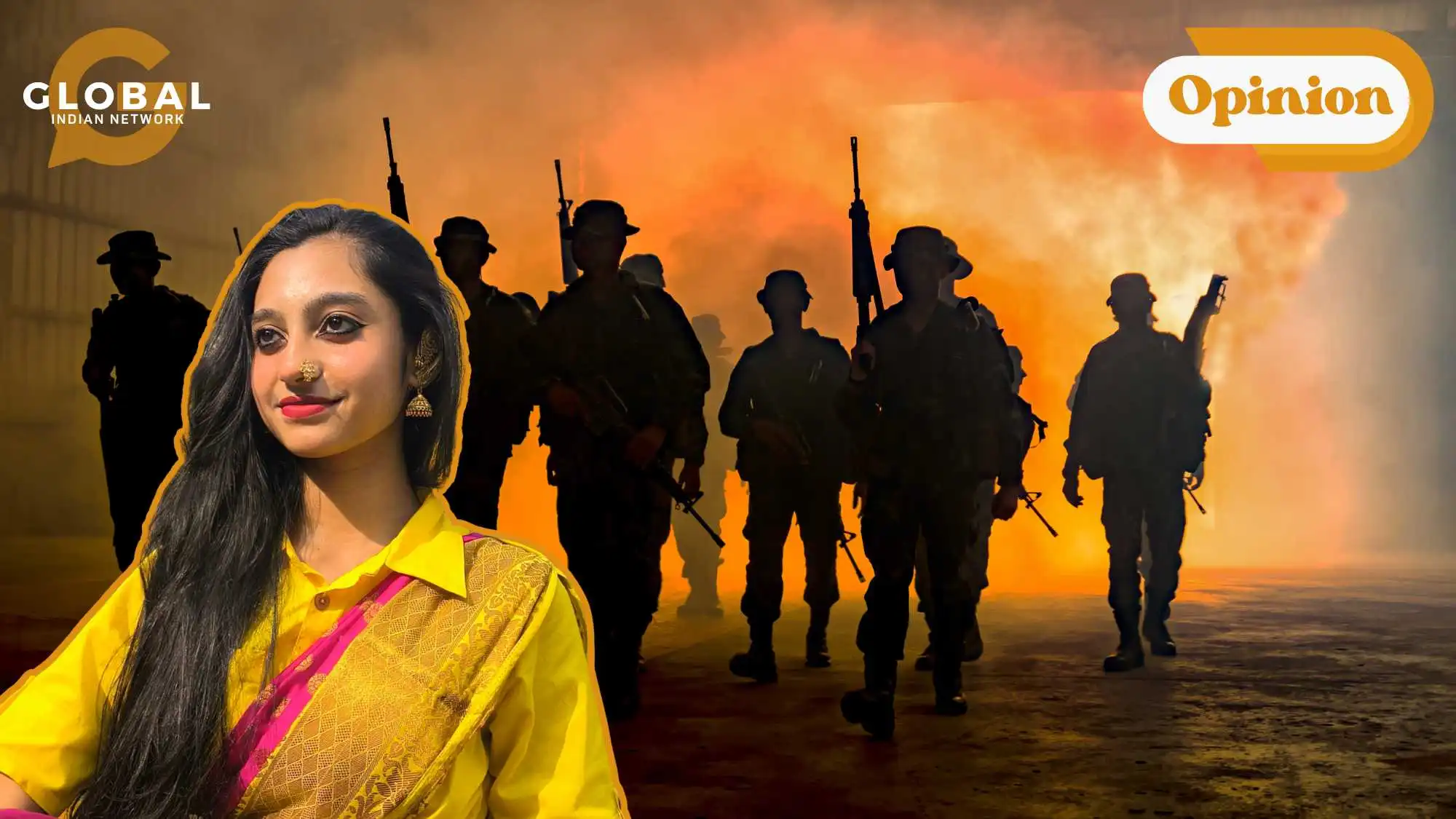

Bollywood’s obsession with the India versus Pakistan trope is very concerning. I’m saying this because this particular obsession doesn’t feel like a visual art anymore. It’s like conditioning. War was a significant blood-boiling topic that helped to spread awareness and display the ongoing happenings all across the world, but in recent times, we see how almost all the new releases are in the same genre.
Again and again, the same emotional machinery, including a familiar enemy, a familiar slogan and a familiar surge of anger disguised as patriotism. And because it works great and fills theatres, and produces instant applause, Bollywood returns to it like a reflex. No, the conflict is no longer treated as a complex political wound, but rather is performative, sold as spectacle, and consumed as a collective adrenaline rush.
This is where the concern begins. When a film industry repeatedly relies on the same geopolitical rivalry, it does not merely mirror public sentiment but shapes it. Cinema is not an innocent medium in a country where films are religion-like experiences. In such a space, repetition becomes ideology. The audience is trained to see conflict in the same narrow frame- India as righteous, Pakistan as villainous, and any attempt at nuance as weakness or betrayal. The trope gradually turns into a lens through which millions interpret the world by simplifying the ever-complex history and reducing a real, painful relationship between two nations into a permanent battlefield of stereotypes.
Over time, the “India vs Pakistan” thing becomes a kind of cinematic addiction: it offers easy catharsis, easy outrage, and easy heroism. But easy narratives often come at a high cost.
What makes this obsession even more alarming is its timing and its convenience. These films rarely appear as neutral artistic expressions. They often arrive when nationalism is already brimming, when political tensions are high, and when society is hungry for certainty. Instead of encouraging reflection, it encourages reaction. Instead of exploring grief, it sells revenge. Instead of showing the human cost of hatred, it turns hatred into a heroic mood. This is not simply a creative choice. And habits, when repeated long enough, stop being noticed. The audience no longer asks whether the narrative is fair or truthful; they only ask whether it is thrilling.

Most importantly, this obsession narrows the moral imagination of the viewer. It teaches people that conflict must have a single villain, that patriotism must always be tumultuous, and that peace must always look like surrender. It makes hostility feel normal, even necessary. It also trains suspicion, where the “enemy” is not just across the border but also within the nation, disguised as a traitor, a sympathiser, a doubtful citizen. The trope becomes dangerous not only in what it shows but in what it encourages, a culture of emotional aggression, where complex questions are replaced by convenient answers.
Even worse, the India-Pakistan trope often slips into stereotyping and communal suspicion. Pakistani characters are frequently reduced to narrow representations, and the imagery used, language, symbols, and religious cues sometimes create a subtle association between identity and threat. A film may claim it is only against terrorism, but the emotional design of the narrative can encourage fear and hostility toward entire communities. When a society consumes such portrayals repeatedly, it becomes easier to dehumanise the “other,” and harder to imagine peace without war.
War is not an element of pride. It is the last resort of a political uproar, which takes place when all the nation’s intelligence systems have failed. Miserably. And the nation has no other option left than to declare war. It’s the FAILURE of a nation. And these movies have propagated the idea of glorification of war, of martyrdom. They don’t realise the power of visual media.
If Bollywood truly wants to engage with political conflict, it must learn to do so with responsibility. It must show all the angles of it. Because the India versus Pakistan trope is not just a theme but a cultural pressure point. And when cinema repeatedly presses the same wound for entertainment, it doesn’t heal society. It becomes infectious. Indians are not collectively superior, and Pakistanis are not collectively hazardous. There are unethical individuals on both sides.
Bollywood’s increasing dependence on extreme gore is another worrying trend, because violence is now often treated as an extravaganza instead of making people feel its impact. Many films seem to believe that the more blood is shown, the more “serious” or “realistic” the story becomes. But gore is not the same as depth. In fact, the most disturbing and effective portrayals of violence in cinema have often come from what is suggested rather than what is displayed. When gore is shown excessively, it can become numbing. The audience stops feeling pain and starts normalising it.
The truth is, violence does not need to be visually explicit to be emotionally devastating. Great cinema understands restraint. It trusts the viewer’s imagination, and imagination can create horror that no camera can fully capture. The same principle applies to romance, too.

Take Piku, for example. The film never relies on exaggerations, dramatic proposals, or overflowing gestures to establish romance. The romanticism is hidden in ordinary conversations, and the emotional comfort that two people slowly begin to offer each other. It is not an electrifying kind of love, yet it becomes pivotal and deeply moving. That is what good storytelling does; it proves that intensity is not always in what is shown directly, but in what is felt underneath, far from superficial effects.
Terrorism is not based on religion, yet the mainstream cinema has sprung into action to condemn Islam. The beauty of Urdu is looked at by the eyes painted with a green poison.
However, it would also be unfair to dismiss such narratives entirely. For many filmmakers and audiences, these films are not simply propaganda, but are emotional expressions of real historical wounds, national trauma, and the lived reality of border tensions. Cinema has the right to reflect the fears of a nation, to honour soldiers, and to tell stories of sacrifice and security. Portraying war on screen is not always an attempt to spread hatred, but sometimes a way of acknowledging the seriousness of terrorism and conflict. In this view, such films can even unify people, create gratitude for the armed forces, and remind citizens of the cost of freedom.
Therefore, the problem may not be the trope itself, but the careless way it is sometimes executed. If handled with nuance, responsibility, and human depth, without reducing entire nations or communities into stereotypes, such films could become not just thrilling but meaningful, and the proper usage of media would be executed.
Let us know your thoughts. If you have burning thoughts or opinions to express, please feel free to reach out to us at larra@globalindiannetwork.com.