



A first-person dispatch from a Global Indian Network member shaping their industry.
As Co-Founder and MD of Dubswork Mobile Pvt. Ltd., the company behind cinedubs, I have spent the last several years building at the intersection of language, technology, and cinema - and what I see ahead is a fundamental shift in how the world experiences films." – Aditya Kashyap
Cinema has always been one of humanity’s most powerful storytelling mediums. Yet for decades, one invisible wall quietly limited its true reach: language.
A brilliant Malayalam film may never find its rightful audience in Rajasthan. A Kannada blockbuster may struggle to connect with viewers in West Bengal. Even globally celebrated films have historically depended on expensive dubbing, subtitles, and fragmented distribution strategies to cross linguistic borders. For all the progress made in filmmaking technology, cinema has remained surprisingly regional.
But that reality is changing, and we believe an inflection point has arrived.

How Streaming Began the Transformation
The rise of streaming platforms marked the start of something significant. Audiences became more comfortable consuming content in languages other than their native ones. Korean dramas, Spanish thrillers, Japanese anime, and regional Indian cinema found global audiences because digital platforms reduced access barriers. Viewers discovered that compelling stories transcend geography.
Yet theatrical cinema still faced a hard constraint. Unlike OTT platforms, where users can switch audio tracks instantly, movie theatres rely on fixed-language versions. A theatre in Chennai cannot realistically screen six language variants simultaneously. Single-screen cinemas face a structural limit: one screen, one language. The personalisation revolution that streaming delivered had not reached the movie hall.
This is precisely where innovation begins to redefine the cinematic experience.
Featured Conversation
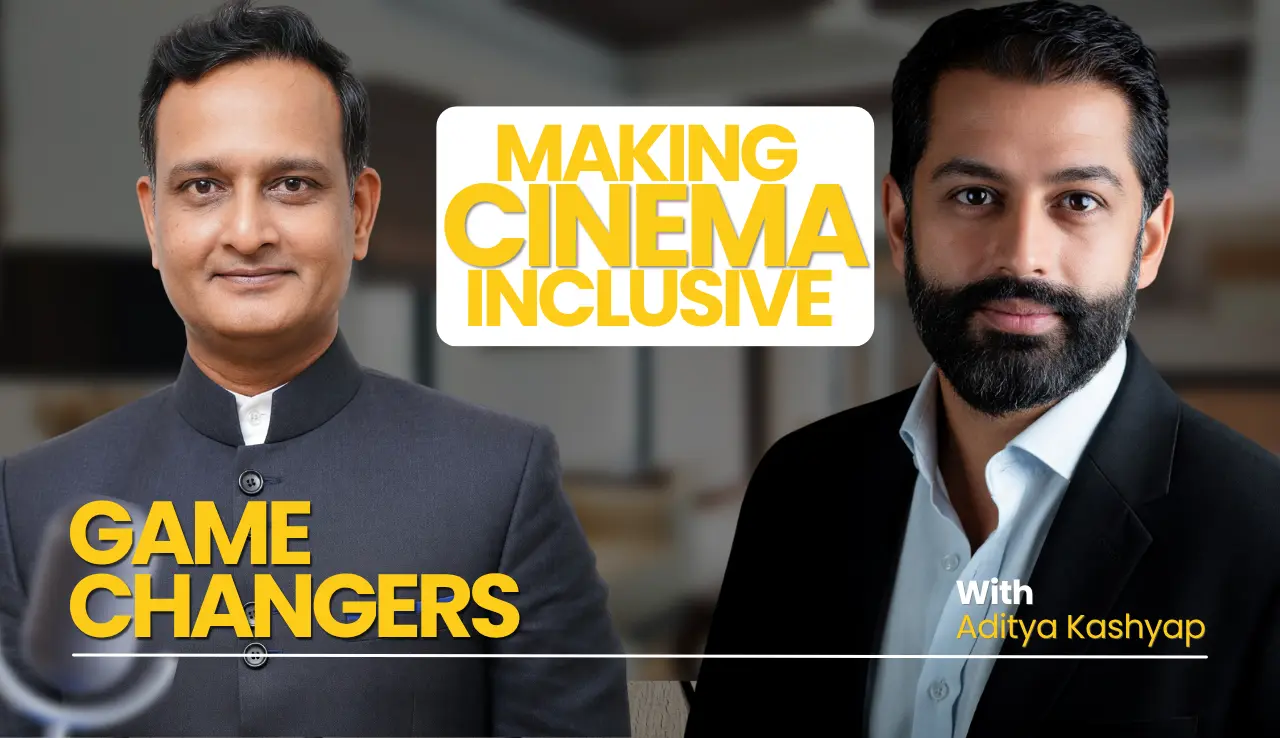
How Technology is Making Cinema Truly Inclusive
with Aditya Kashyap
As part of our Member Stories series, Aditya Kashyap, Co-founder and Managing Director of cinedubs, explores a deceptively simple but deeply transformative idea: everyone deserves to experience cinema in a language, and in a way that feels personal to them.
A Radically Different Model
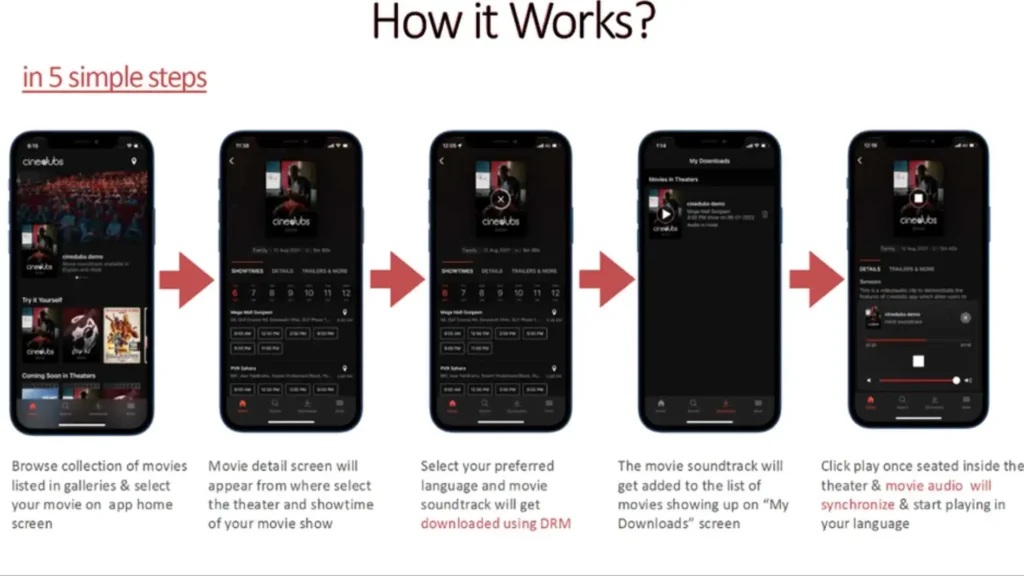
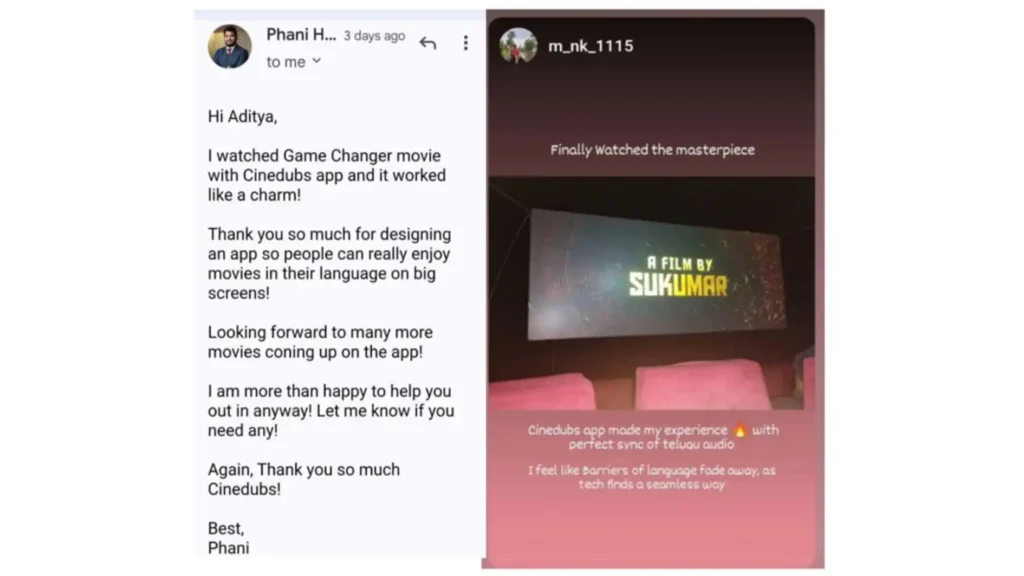
At cinedubs, we have been building toward a model where the language layer becomes personalised rather than fixed. Rather than changing the film itself, our technology allows audiences to experience the same film in their preferred language through synchronised audio delivered via smartphones and headphones. One screen. One showtime. Multiple linguistic experiences are happening simultaneously in the same auditorium.
The implications extend far beyond convenience. India alone has hundreds of languages and dialects, with dozens of commercially significant film markets. Historically, producers had to make difficult decisions about which languages justified dubbing budgets and theatrical distribution. Many extraordinary films simply never reached audiences who would have loved them.
Technology now makes it possible to rethink that limitation entirely.
The Cultural Shift Underneath the Technology
What excites Kashyap most is that the real transformation is not technological alone; it is cultural. Multilingual cinema challenges the idea that stories belong to only one linguistic audience. It democratizes access in a way that subtitles never fully could.
Cinema is emotional. Humour, drama, and nuance become more powerful when experienced in one’s native language. Subtitles help comprehension, but they rarely replace emotional immersion. Language personalisation creates a more intimate relationship between audiences and stories.
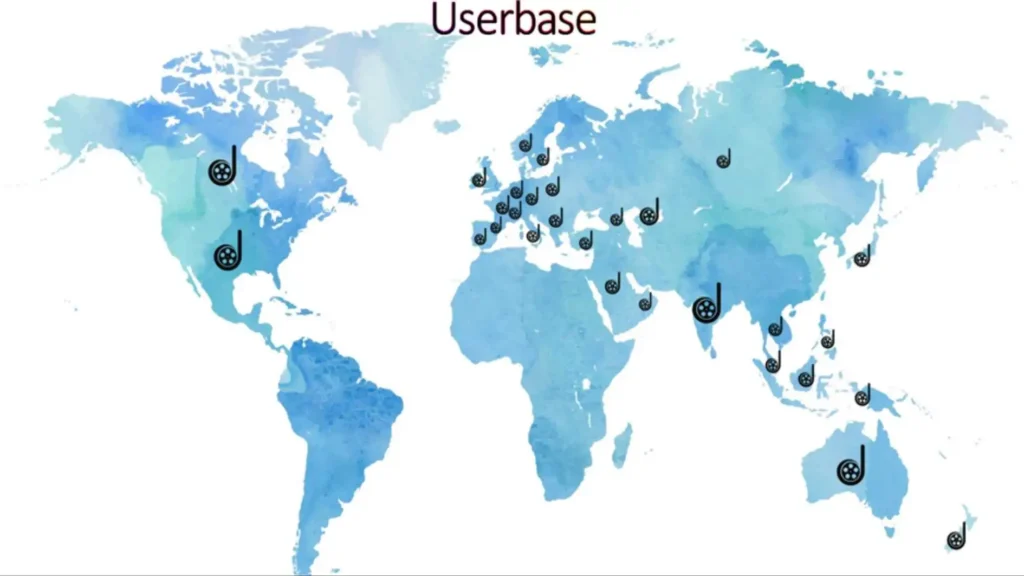
Consider what this means for a Tamil-speaking family settled in Delhi, or a Malayali engineer working in Hyderabad, or a Telugu-speaking professional living in London. These are not edge cases. Over 56 million Indians live outside their native state, and 35 million more live outside India entirely. Each of them has, at some point, watched a film they loved slightly less because it wasn’t in the language they feel at home in.
What Does This Change Mean for the Industry
The business implications are significant on every side of the cinema ecosystem. Producers can unlock underserved audiences without multiplying the cost of theatrical infrastructure. Exhibitors can increase occupancy by attracting linguistically diverse viewers to the same screening. Independent filmmakers gain opportunities to expand reach beyond traditional markets without the overhead of separate regional distribution campaigns.
The economics improve most dramatically where they were previously most constrained: the single-screen cinema in a multilingual city, where choosing one language has always meant excluding a portion of the potential audience.
What Comes Next
Advanced dubbing technologies are evolving rapidly, enabling more natural synchronisation, more emotionally authentic voice rendering, and increasingly scalable language adaptation. But technology alone will not guarantee great cinematic experiences. Poor dubbing still risks emotional disconnect. Audiences are highly sensitive to authenticity, timing, and performance quality.
This is why the future of multilingual cinema will belong not simply to translation tools but to platforms that understand storytelling itself – platforms that treat language not as a distribution variable but as an essential dimension of emotional experience.
Cinema has always been called a universal language. Ironically, for most of its history, it was not. For the first time, we believe technology may make that promise genuinely real.
Membership
A Private Circle for Global Indians
Join a trusted community of founders, investors, policymakers, and cultural leaders shaping the global Indian story across 46+ countries.