




A first-person dispatch from a Global Indian Network member shaping their industry.
Journey of India from Data Entry to Industrial Innovation through AI: The India GCC Story Is Also Our Own Leadership Growth Story
That may be the most important story behind the transformation of India’s Global Capability Centres, or GCCs.
We usually hear this story told through numbers – how many centres have opened, how many people they employ, how much technology capability they’ve built, and how much they now contribute to the global economy.
But behind every one of those numbers is a person: a young professional starting their first job, an analyst learning a new skill, an engineer wrestling with a hard problem, a manager taking charge of a larger team, or a leader stepping into an unfamiliar role. Millions of people, growing alongside an industry that was growing around them.
Many of us started out in work that doesn’t always make headlines: data entry, transaction processing, finance and accounting operations, customer support, back-office services, and routine technology support. That work mattered – it built the foundation on which everything else stands. But it was never meant to be the end of the story.
Over time, the work changed from simply processing data to actually analysing it. And as the work changed, so did the people doing it.
India’s Growth Story Is a Human Story
The transformation of India’s GCC ecosystem is really the transformation of its people. Many of today’s senior leaders started their careers at a time when India was seen mainly as the back office of the world – a place for operational delivery, not decision-making.
The opportunities, the technology, and the expectations were all different then. But professionals across the country kept learning, adapting, and taking on more – moving from individual roles to leading teams, from managing processes to redesigning them, and eventually to running large, complex organisations that span continents.
India’s GCC Ecosystem
Scale. Momentum. Innovation. Global Impact.
The Scale of India’s GCC Ecosystem
Strong Momentum Since FY2021
Growth in the number of GCCs in India since FY2021
AI Leadership from India
The Future is AI-First
Of new GCCs established in India since FY2021 are AI-first
Global Confidence in India
Forbes Global 2000 companies operate GCCs in India
That kind of journey takes more than technical skill. It takes curiosity, adaptability, courage, and resilience.
India didn’t just build capability. It built people who could keep creating new capability, again and again.
The Courage to Take the Next Step – Jumping Off a Cliff! My own Leadership Journey
Leadership growth is rarely a straight line. There are moments when you’re asked to take on responsibility before you feel ready, when decisions don’t work out as planned, when failure shakes your confidence – and when you have to choose between staying safe and betting on yourself.
For me, courage has been at the centre of that journey. It isn’t about having all the answers. It’s about being willing to take a risk, own the outcome, make the call, and learn as you go. Some of the most valuable lessons of my leadership journey came from setbacks, not successes—and it all began with saying “yes” to the unknown.
One of the most defining moments in my leadership journey came when I said “yes” to an individual contributor role after having previously led a large business unit.
The role required me to step away from traditional organisational leadership and take on a highly complex, large-scale transformation programme with significant ambiguity, multiple stakeholders, and no direct organisational authority. However, the challenge proved to be one of the most valuable leadership experiences of my career.
It tested my ability to influence without authority, build alignment among diverse stakeholders, navigate complexity, create clarity amid ambiguity, and drive execution across a broad ecosystem of teams and leaders. More importantly, it challenged me to redefine what leadership meant to me. I was able to deliver high-impact outcomes through innovation & digital labs, building in-house products and automation tools, and delivering more than $30M in savings in a year. Leadership is the ability to create clarity, build conviction, and mobilise people towards a shared outcome—even when one does not have direct authority.
This one “Yes” put me in front of the world and straight into the spotlight. Went on to win many prestigious awards and receive industry recognition. This one decision led the way for greater opportunities and catapulted my career to new heights.
India is Building Products for the World – Buying Products to Building Them
For years, the question the world asked of India was simple: how can India help us deliver more efficiently? Increasingly, that question is changing. It’s becoming the question: How can India help us build something new?
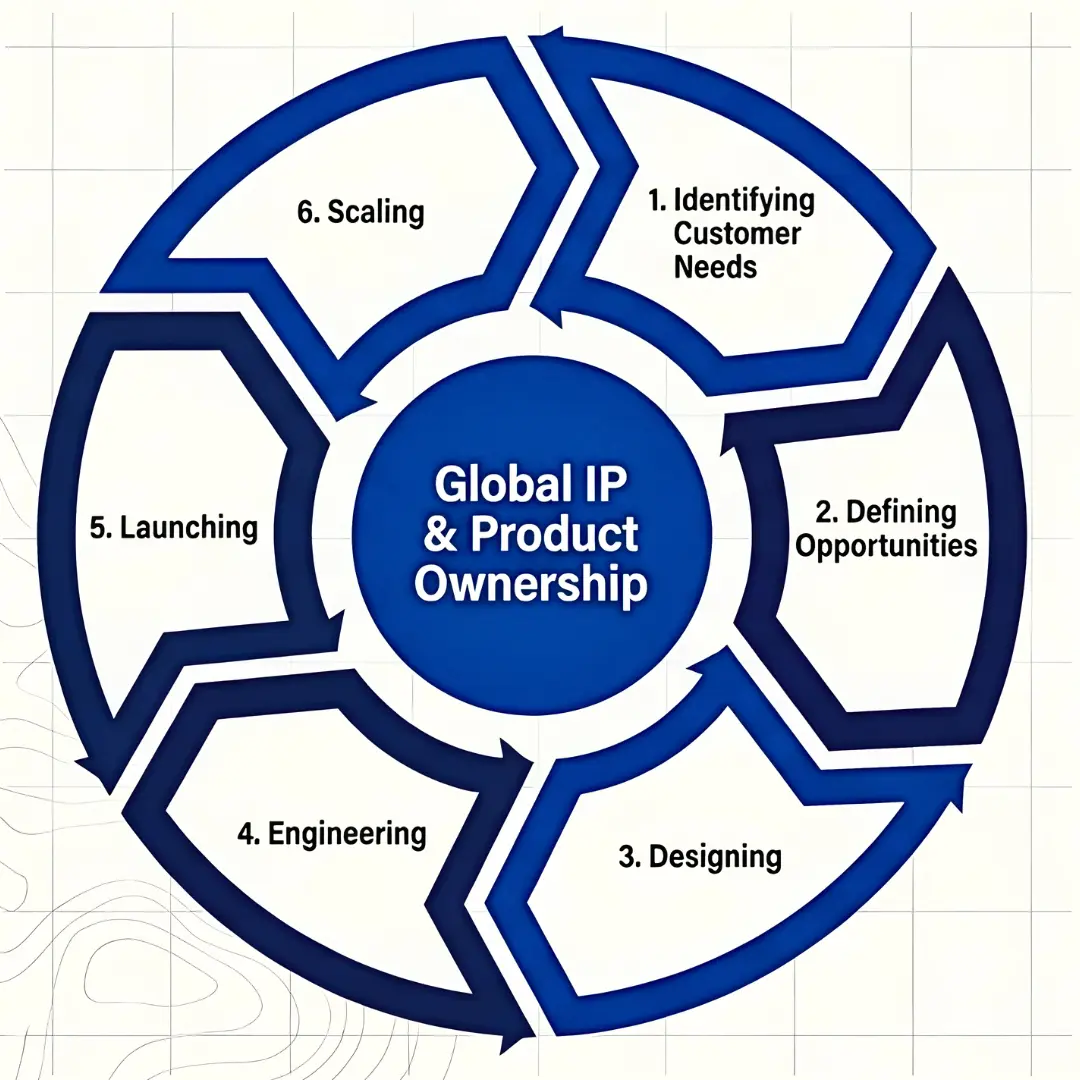
One of the most exciting shifts in the GCC world is how much ownership India-based teams now hold over entire products and platforms – not just executing someone else’s plan but being involved from the very start: spotting the opportunity, then designing, engineering, launching, scaling, and improving the product itself.
Many of these teams are now earning global recognition and industry awards for what they’ve built — not because awards are the only measure of success, but because they show how far the ecosystem has come.
India is no longer just supplying talent to global innovation. It is increasingly leading it.
For the next generation of engineers, analysts, technologists, and leaders, that opens a powerful possibility:
You don’t have to leave India to work on something global. You can build it here, lead it from here, and let the world use it.”

The Rise of Niche Capabilities
Evolving from operational delivery to capability depth
The Foundation (Operational Delivery)
Role Focus: Data entry, transaction processing, routine tech support, back-office.
Action Focus: Processing data, following technology, supporting innovation.
The New Frontier (Capability Depth)
Role Focus: Artificial intelligence, machine learning, data engineering, cloud, cybersecurity, product management.
Action Focus: Analysing data, creating technology, leading innovation.
The next phase of GCC growth won’t be defined by scale alone but by depth – how specialised the capability really is.
India is building genuine expertise in engineering, digital transformation, advanced analytics, artificial intelligence, machine learning, data engineering, cloud, cybersecurity, automation, and product management. These aren’t generic, interchangeable skills – they demand real expertise, continuous learning, and close collaboration between technology and business.
That’s what makes the individual journeys so remarkable. A career in data processing can turn into one in data science; an analyst can grow into a transformation leader; a software engineer can become a product leader. This ability to keep reinventing ourselves has been one of India’s greatest strengths.
The GCC Transformation Blueprint
If there’s a blueprint behind all of this, it isn’t a strategy document or an org chart. It’s people – leaders who found the courage to take on new challenges, the humility to learn from failure, and the resilience to keep growing anyway.
India’s GCC story, then, isn’t just a story about companies, technology, or economic growth. It is a story of human potential.
India created the opportunity. Millions of professionals stepped forward to grow with it and, in doing so, helped build the very capabilities that moved India forward.
The dual transformation of India’s GCC ecosystem
Scale of Employment & Economic Contribution
Professional Responsibility & Capability
What This Means for You
That’s why India’s transformation is also our story: a country that moved from delivering global work to building it, from following technology to creating it, from supporting innovation to leading it – and millions of professionals who grew alongside that shift.
The next chapter will be defined by even greater ownership of products, platforms, intellectual property, artificial intelligence, digital transformation, and enterprise strategy. India is no longer just where global work gets delivered; it’s becoming the place where global products are built, global innovation is created, and global leaders are developed.
Full-Lifecycle Product Ecosystem
 1080 × 1080 px
circle image goes here
If you’re early in your career, the lesson isn’t to wait for the “right” moment. Say yes to the stretch assignment before you feel ready for it. Pick one area – data, AI, cybersecurity, product – and go deep rather than staying a generalist. Ownership isn’t handed to you; it’s taken, one decision at a time.
If you’re leading others, the lesson is different. Give your people real problems to own, not just tasks to execute. Let them fail sometimes, and stay close enough to help them learn from it. The next generation of GCC leaders is already on your team – the only question is whether you’re building the conditions for them to grow into it.
And perhaps the most powerful part of this story is this:
We did not simply watch India change. We changed with it. We helped build it. And we made that journey together.”
This article has been created in collaboration between the Global Indian Network and Vaishnavi Kudige. The Global Indian Network is a community connecting Indian-origin changemakers, entrepreneurs, and thought leaders across the globe who are working to build a more sustainable and resilient future.