





India is one of the world’s most dynamic wealth markets. According to Knight Frank, its ultra-high-net-worth population is projected to grow by approximately 27% by 2031, reinforcing its position as a major global wealth-creation hub. Yet, simultaneously, it consistently ranks among the top nations globally for the emigration of its wealthiest citizens. This phenomenon has birthed a massive market for investment migration, where Indian nationals are now leading the world in enquiries for residency and citizenship options.
For the modern “Global Indian,” a second residency or citizenship is no longer seen as a permanent departure from their homeland, but rather as a strategic “Plan B” or a tool for “domicile diversification”.

The Scale of the Migration: Following the Money
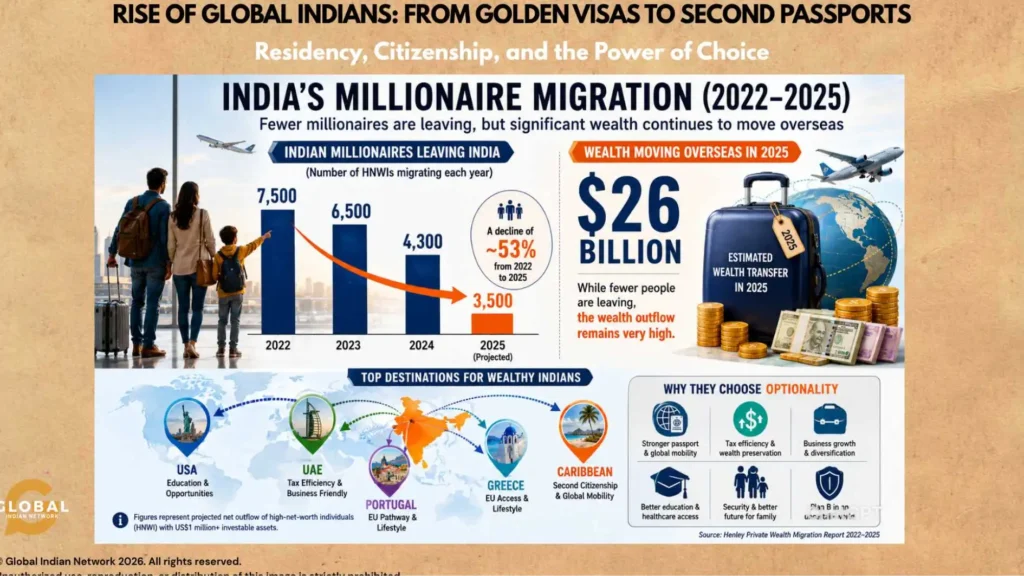
The scale of this wealth transfer is significant and well-documented by global intelligence firms. According to the Henley Private Wealth Migration Report, the numbers show a steady, high-volume outflow of Indian millionaires (individuals with investable assets of $1 million or more):
- 2022: Approximately 7,500 Indian millionaires emigrated, marking a record single-year outflow at the time.
- 2023: Between 5,100 and 6,500 HNWIs relocated, placing India second globally in net outflows, behind only China.
- 2024: Estimates projected another 4,300 millionaires leaving the country.
- 2025: Projections suggest approximately 3,500 millionaires will migrate, potentially carrying an estimated $26 billion in wealth with them.
While these numbers represent the ultra-wealthy, the broader trend is even larger. In 2021 alone, over 163,000 Indians renounced their citizenship entirely. Of these, nearly half – 78,000 – chose the United States, followed by Australia, Canada, and the United Kingdom. This highlights a growing appetite for global integration that spans various economic strata, though the investment migration pathway represents a smaller, more elite cohort.
Top Destinations for the Indian Diaspora
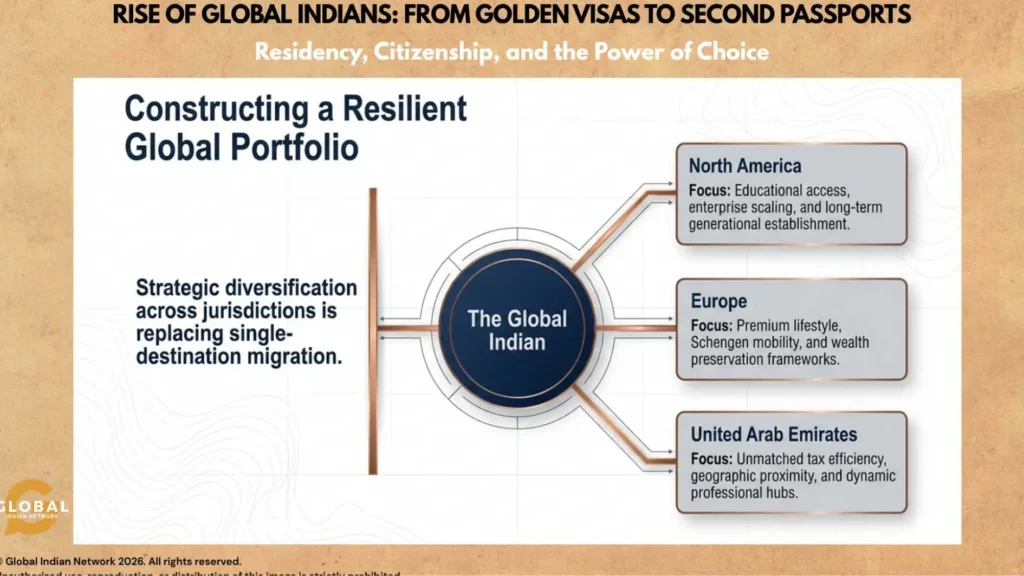
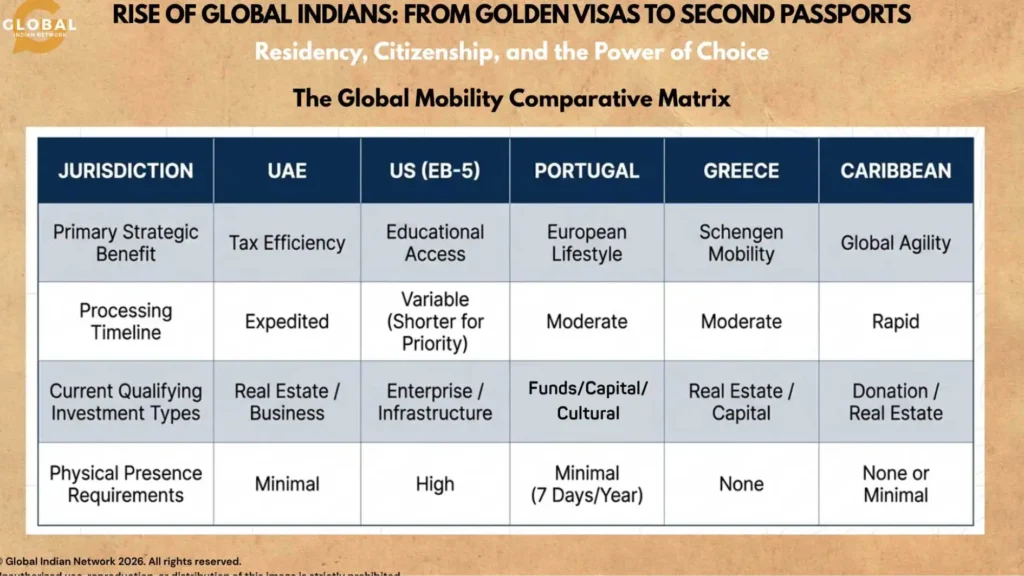
Wealthy Indian investors are highly selective about where they plant their flags. Their choices are dictated by a mix of tax efficiency, business opportunity, and lifestyle quality.
The UAE: The “Golden” Magnet
The United Arab Emirates is, by a wide margin, the top choice for wealthy Indian emigrants. The UAE already hosts the world’s largest Indian diaspora – 3.55 million people – and its Golden Visa program has been a major catalyst. In 2022, the UAE issued nearly 78,000 Golden Visas across all nationalities, a 40% increase from the previous year.
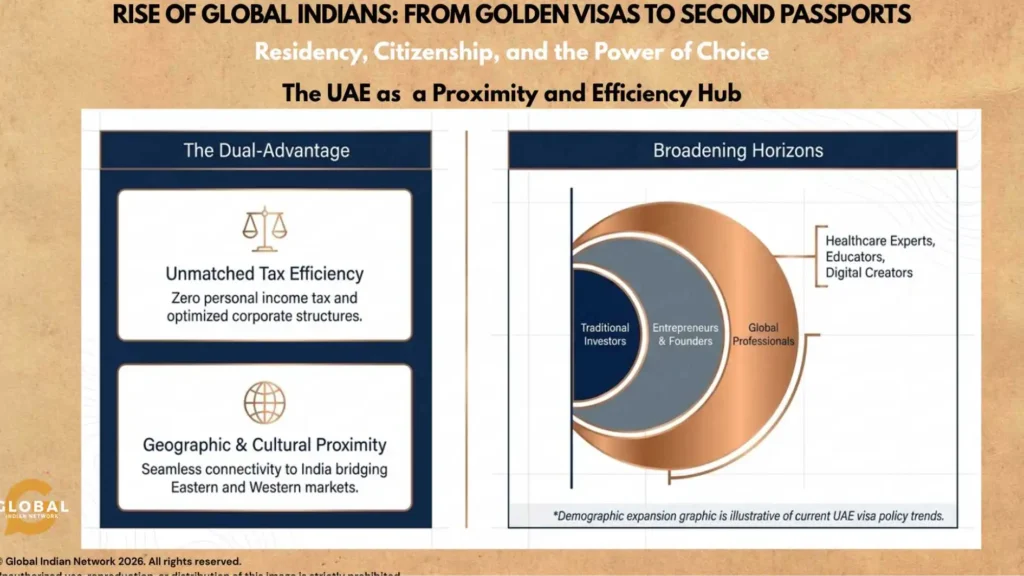
Indians are drawn to the UAE for its:
- Zero personal income tax and 100% business ownership rights.
- Proximity to India (only a 3-4 hour flight) allows business owners to manage operations in both countries.
- High-quality real estate in Dubai and Abu Dhabi, which remains the most popular route for applicants.
The United States: The EB-5 Route
The US EB-5 Immigrant Investor Program remains a gold standard for those seeking a permanent Green Card. While Indian applicants have historically faced massive backlogs, the 2022 EB-5 Reform and Integrity Act introduced reserved categories for rural and high-unemployment areas, offering a faster path. For many, the US is the ultimate goal because of its world-class education system and tech-sector dominance.
Portugal and Greece: The European Gateway
In Europe, Portugal’s Golden Visa has been a consistent draw. In 2023, 199 Indian nationals received residence permits there, making them the fifth-largest applicant group. Even after Portugal removed real estate as a qualifying investment in late 2023, fund-based and scientific research routes remain popular. Meanwhile, Greece’s Golden Visa offers Schengen-area access for a minimum investment of €400,000, attracting those who value mobility and a Mediterranean lifestyle.
Caribbean Nations: Speed and Mobility
For those specifically seeking a second passport rather than just residency, Caribbean nations like St. Kitts and Nevis, Grenada, and Dominica are the primary targets. These programs offer citizenship for donations starting from $200,000, and some, like Vanuatu, can provide a passport in as little as 60 days. The primary value of these passports is global mobility; they often provide visa-free access to over 140 countries, including the UK and the Schengen Area.

Why Are They Leaving? The Drivers of Migration
The motivations for seeking a “Golden Visa” or a second citizenship are multifaceted. Industry experts and advisory firms like Henley & Partners point to several key drivers:
- Passport Strength: The Indian passport currently ranks modestly, offering visa-free or visa-on-arrival access to approximately 60 countries. A second passport from Europe or the Caribbean dramatically expands a business traveler’s ability to move globally without the friction of constant visa applications.
- Global Education and Healthcare: Families often move to ensure their children have easier access to elite international universities.
- Lifestyle and Environment: Urban congestion and air pollution in major Indian metros are frequently cited as “push” factors, driving families toward the cleaner environments of Europe, Australia, or the UAE.
- Tax and Regulatory Efficiency: India’s complex regulatory environment and the tax burden on HNWIs push many to explore tax-efficient jurisdictions like Dubai or Singapore to diversify their portfolios.
- Geopolitical Hedging: A second residency is often viewed as an insurance policy – a “Plan B” – against potential domestic political or economic instability.
The Strategic Shift: Emigration vs. Optionality
One of the most striking changes in recent years is the mindset of the Indian investor. A decade ago, obtaining a foreign passport was often viewed as a permanent departure or a “brain drain.” Today, it is viewed as leverage.
Many HNWIs who obtain residency in the UAE, for example, do not close their businesses in India. Instead, they live a “transnational” life. Major Indian private banks like Kotak Mahindra and Nuvama have even expanded their presence in the UAE specifically to serve these “Global Indians” who maintain assets and interests in both jurisdictions.
Furthermore, because India does not permit dual citizenship, many investors prefer Residency-by-Investment (RBI) over Citizenship-by-Investment (CBI). By holding a Golden Visa in Portugal or a Green Card in the US, they can enjoy the benefits of global residency while retaining their Indian passport and citizenship.
Comparative Overview of Popular Programs for Indians
| Country / Programme | Type | Minimum Investment | Key Attraction |
| UAE Golden Visa | Long-term residency | AED 2 million (~$545,000) | Tax efficiency, proximity to India |
| USA EB-5 | Permanent residency | $800,000–$1,050,000 | Path to US citizenship, education |
| Portugal Golden Visa | Residency → EU path | $500,000 | Schengen access, EU pathway |
| Greece Golden Visa | Residency → EU path | €400,000 | Schengen access, processing speed |
| Malta CBI | Direct citizenship | €690,000+ | EU passport |
| Caribbean CBI | Direct citizenship | From $200,000 | Fast second passport, travel mobility |
Is This a Problem for India?
The departure of thousands of millionaires and billions of dollars in capital has naturally raised concerns in Indian policy circles. Some political figures have voiced worries about the loss of tax revenue and human capital.
The challenge for India is not necessarily to stop people from leaving, but to improve domestic “pull” factors – such as air quality, infrastructure, and regulatory ease – that might encourage its most successful citizens to stay or keep more of their capital at home.
Role of the Global Indian Network
As Indians expand their global presence through investment, entrepreneurship, education, and residency programmes, maintaining strong ties with the motherland becomes increasingly important. This is where the Global Indian Network (GIN) plays a vital role.
The GIN seeks to strengthen connections among Indians and people of Indian origin worldwide, fostering business, socio-cultural, intellectual, and civic engagement. Its vision transcends geography and citizenship, bringing together a global community united by shared heritage and common aspirations.

In an era of growing global mobility, the GIN serves as a bridge between India and its diaspora, encouraging collaboration, knowledge exchange, investment, mentorship, and philanthropy. It helps ensure that Indians abroad remain connected to India’s growth story while contributing to the societies in which they live.
Ultimately, the GIN’s mission is to nurture a dynamic global Indian community – one that remains rooted in its heritage while leveraging opportunities across borders for collective progress and prosperity.
From Insight to Execution
The Global Indian Network also reflects the breadth of work across investment migration and global mobility. Through our features on Malta, Portugal, St Lucia, Grenada, and St Kitts and Nevis, we have tracked how the market is moving beyond simple residency or citizenship toward wider strategic optionality.
Our work also includes the story of how we initiated Henley and Partners’ entry into India, building on our Malta report and direct conversations with their team. Together, these experiences show how GIN serves not just as a community platform but as a bridge between insight, execution, and long-term value.

Conclusion: The Future of the Global Indian
The trend of investment migration shows no signs of slowing. As the Indian economy grows, so does the sophistication of its investors. What was once a path reserved only for the ultra-wealthy is slowly democratizing, with programs like the UAE Golden Visa now accessible to doctors, scientists, and senior executives.
Ultimately, the rise of the Global Indian through residency-by-investment is a testament to the global nature of modern wealth. For India’s affluent families, the world is no longer a place to move to, but a portfolio of locations to move between.
Through our articles and podcasts featuring voices from India and across the world, we continue to foster conversations that connect the global Indian community to ideas, opportunities, and one another.
Sources: The information in this article is drawn from the provided source material, including Henley & Partners Private Wealth Migration Reports (2023-2025), Portugal AIMA statistics, and industry analyses from various news outlets.