


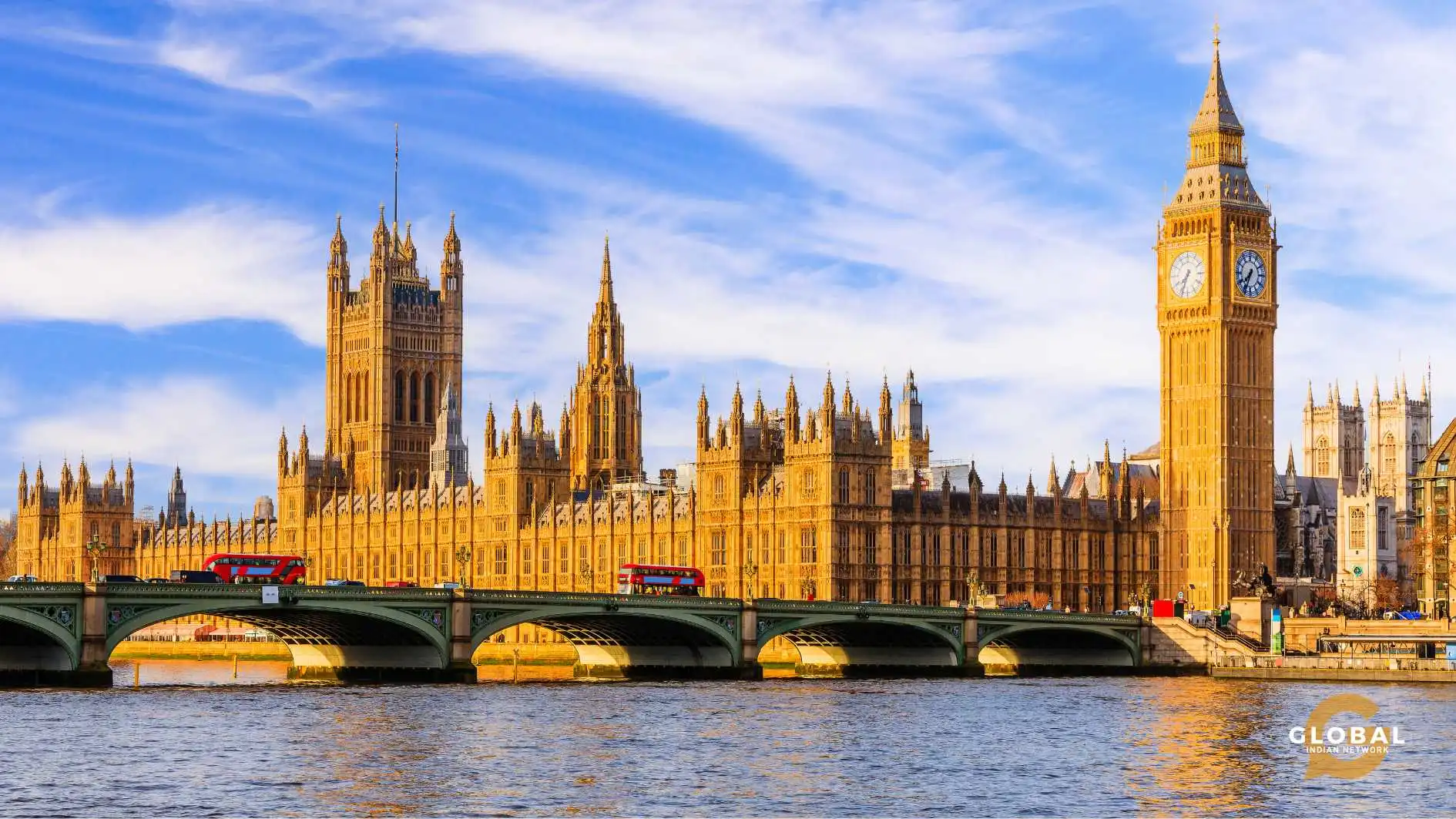

Britain has been in a bad mood for a while now.
It is there in the slow collapse of public trust in politicians, in institutions, in the idea that the country is being run by people who understand what ordinary life actually costs. It is there in the post-Brexit fatigue, that particular flavour of national exhaustion that comes not from winning or losing an argument but from having it so loudly, for so long, that nobody can quite remember what they were arguing about. It is there in the way conversations about immigration have hardened from debate into dogma, where nuance arrives late and leaves first.
And it is there, more darkly, in the incidents that keep surfacing in news feeds, mosques with smashed windows, gurdwaras with hateful graffiti, South Asian families who have lived in the same English town for three generations suddenly feeling that some of their neighbours have decided they do not quite belong.
The summer of 2025 was not a good advertisement for British social cohesion. The riots that swept through parts of England that August, sparked by misinformation, accelerated by an algorithm, exposed fault lines most people knew existed but preferred not to look at directly. When the immediate shock subsided, the harder question remained: what kind of country does Britain actually want to be?
It is against that backdrop, barely twelve months later, that something quite extraordinary is happening in a suburb of North-West London.
From 14 to 21 June, in the grounds of the Shree Swaminarayan Temple in Stanmore, a Soma Yagna will take place, a ceremony so rare that it has not been performed on British soil since 2011. The word “ceremony” undersells it. This is a week-long ritual of extraordinary precision and ambition: more than seventeen trained Brahmin priests, known as Ritviks, gathered around a consecrated yajna fire, chanting Vedic recitations that were old when the Roman Empire was young.
Their task, conducted under the guidance of a Yagnacharya, a chief officiating priest whose role requires years of specialist preparation, is to prepare and offer into the sacred fire the sanctified juice of the Soma plant. Within the tradition, this act is understood as devotion, communion, and an invocation of universal well-being.
It is also, the organisers are at pains to emphasise, open to absolutely everybody.
Not just Hindus. Not just South Asians. Not just believers of any stripe. The entire event, organised by the UK-registered charity Unity in Divinity, welcomes visitors regardless of religion, nationality, ethnicity, or background. Attendees can observe the rituals, listen to ancient Vedic recitations, or join the parikrama, a slow, contemplative walk around the sacred space that requires only a willingness to be present. The blessings invoked by the ceremony, the organisers say, are not reserved for anyone in particular. They are meant for the world.
Raju Mashru, the event’s Lead Organiser, puts it plainly. “The Soma Yagna is ultimately about the greater good of the community. It is about sacrificing one’s ego into the fire altar,” he says. “It encourages people to come together, reflect collectively, and move beyond individual interests. That change in mindset can influence families, communities, and society as a whole.”
That is either a beautiful sentiment or an overly optimistic one, depending on your mood. In the current climate, perhaps it is both.
There is a version of this story that writes itself too easily, the ancient wisdom arriving to heal a fractured modern world, the incense smoke clearing the fog of Brexit, the sacred fire burning away racism and economic anxiety. It would be dishonest to lean into that framing. Ritual cannot fix housing costs, and no amount of Vedic chanting will resolve the contradictions in Britain’s immigration policy. Critics of such events are right to note that communal gestures can become substitutes for structural change, feel-good moments that let governments and institutions off the hook.
But there is a different, more modest argument worth making, one that does not require anyone to believe in the spiritual dimensions of the ceremony at all.
Societies are held together by stories and experiences as much as by laws and institutions. What people share, not just materially but also imaginatively and emotionally, shapes whether they see themselves as part of a common project or as competitors in a zero-sum game. The research on this is fairly consistent: contact between communities, genuine and sustained contact rather than the performative kind, tends to reduce prejudice. Shared experiences create the conditions for that contact. They do not guarantee it, but they make it more possible.
A Soma Yagna held in a North-West London temple, with the doors open and the public invited in, is not going to transform British race relations. But it might give a few thousand people an experience they would not otherwise have had, an afternoon spent in the company of something ancient and serious, something that does not belong to the cultural vocabulary they grew up with, something that asks them, gently, to pay attention.
That is not nothing.
The ceremony itself bears explaining, because it is genuinely unusual. The Vedic tradition describes the Soma Yagna as one of the most sacred rituals in the scriptures, and its rarity is no accident. The expertise required is formidable, years of training in precise recitation techniques and the exact protocols of Vedic scripture. The priests performing it in Stanmore this June will have devoted serious portions of their lives to mastering a body of knowledge that most people alive today will never encounter.
Within the tradition, Lord Vishnu is associated with Agni, the sacred fire, and Lord Indra is believed to be present in the ceremony, making the ritual, for devotees, an act not merely of community but of divine communion.
For the non-believer watching from the perimeter, what registers is something else: the discipline, the care, the evident weight of it. There is something striking about encountering human endeavour that has been refined over centuries, that takes itself seriously in an age that increasingly rewards the quick and the shallow. Whatever one thinks of the metaphysics, the spectacle of that many people devoting that much sustained attention to something together is, in itself, increasingly rare.
The last time Britain witnessed a Soma Yagna was thirty years ago. The country has changed considerably since then, more diverse, more connected, and in some respects more divided than at any point in living memory. The ceremony returns to a Britain that is arguing, with unusual ferocity, about who belongs here and what belonging even means.
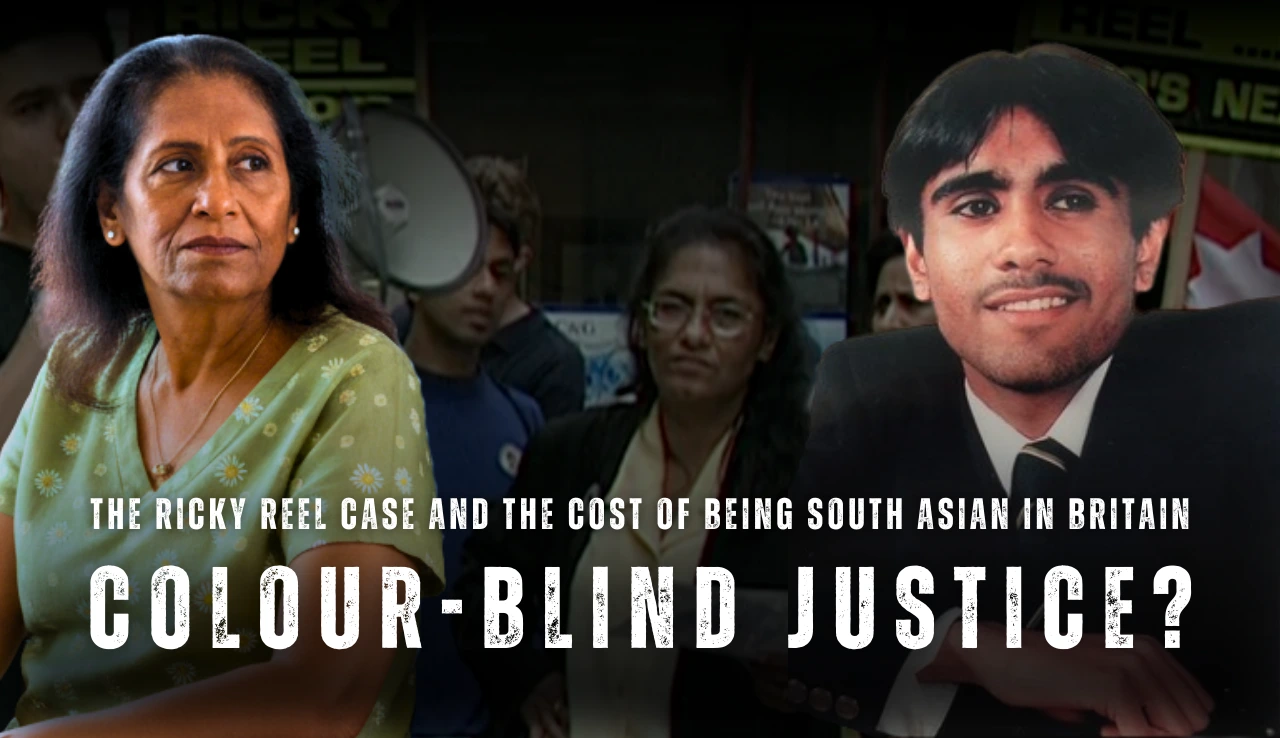
Featured Conversation
Colour-Blind Justice? The Ricky Reel Case and the Cost of Being South Asian in Britain
with Sukhdev Reel
If Britain claims to be a society governed by equal justice, why does that equality fracture so predictably along racial lines? If representation has increased, why does protection still feel conditional? And if silence is so often demanded of the bereaved, who does that silence really serve?
Stanmore, for what it is worth, is a reasonable place to host this argument. North-West London has been home to one of Britain’s largest South Asian communities for decades, a fact that has shaped the neighbourhood’s character in ways both visible and invisible, in its temples and its restaurants, in its schools and its community networks, in the confidence with which it occupies space that might, a generation or two ago, have felt less certain. It is also a place where that community has not been immune to the broader currents of hostility washing through the country.
The choice to open the ceremony to all-comers is, in that context, a particular kind of statement. It says: ” This is not a retreat. This is not a community circling its wagons and turning inward in response to pressure from outside. This is an invitation. Come and see.”
Whether enough people take up that invitation, and whether the experience, for those who do, amounts to anything more than a curious afternoon out, is genuinely uncertain. Raju Mashru’s conviction that a changed mindset can ripple outward from individuals into families and communities is the kind of thing that sounds idealistic until you think about how social change actually works. It has almost always begun with people doing something together that shifts, even slightly, how they see themselves in relation to one another.
The Soma Yagna will take place in Stanmore from 14 to 21 June. The fire will be tended with extraordinary care. The chants will be ancient. The questions being asked, quietly, around its edges, are very much of this moment.
Britain might learn something valuable by paying attention.