

Between 14 and 21 June, a rare Soma Yagna will take place in North-West London, bringing an ancient Vedic tradition to one of the world’s most multicultural cities. Last held in the UK in 2011, this sacred ceremony is far more than a religious gathering. For some, it is an opportunity for spiritual reflection. For others, it is a chance to explore how traditions rooted in harmony and collective well-being might contribute to broader conversations about identity, belonging, and social cohesion in contemporary Britain.
What Is a Soma Yagna?
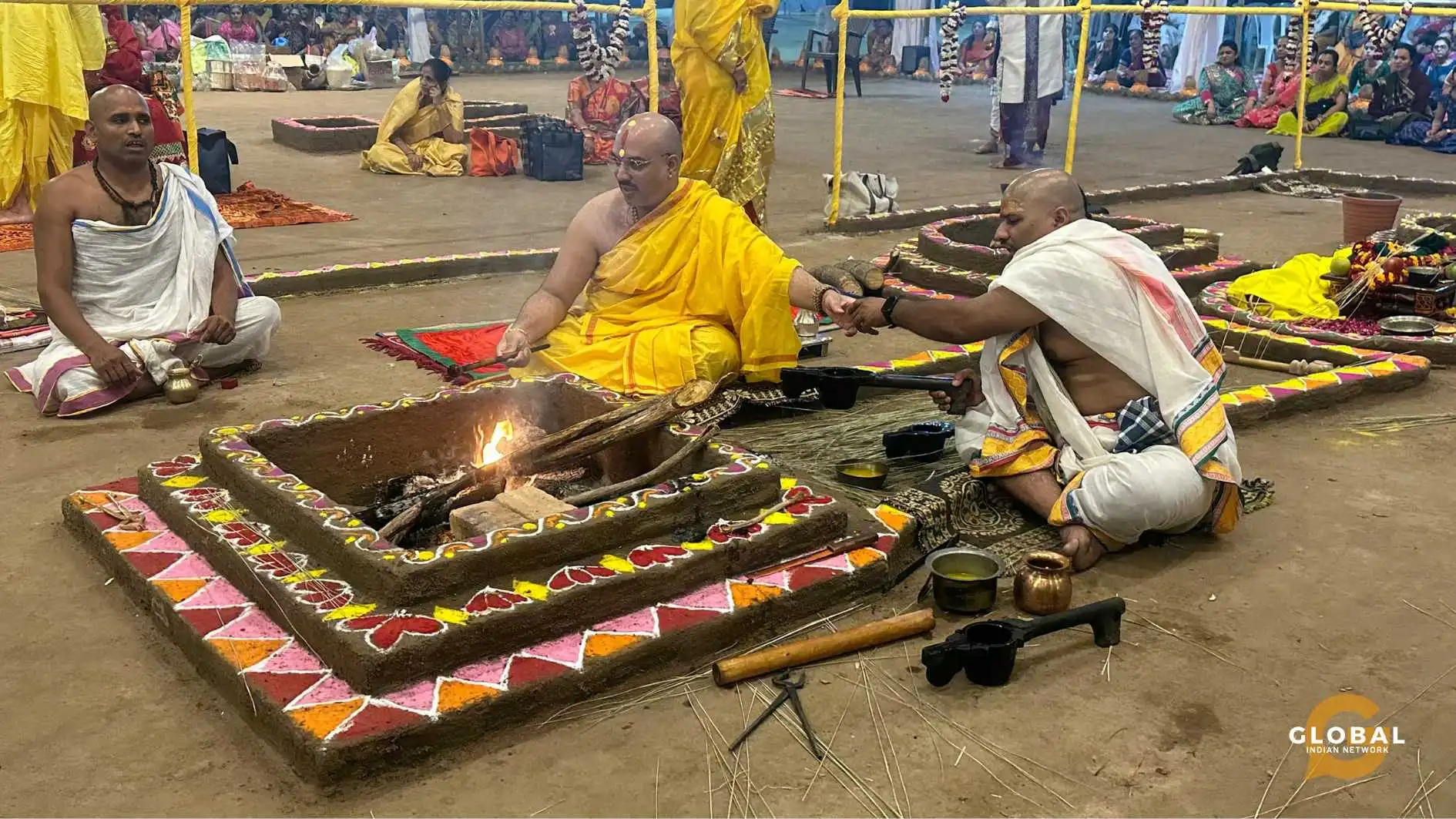
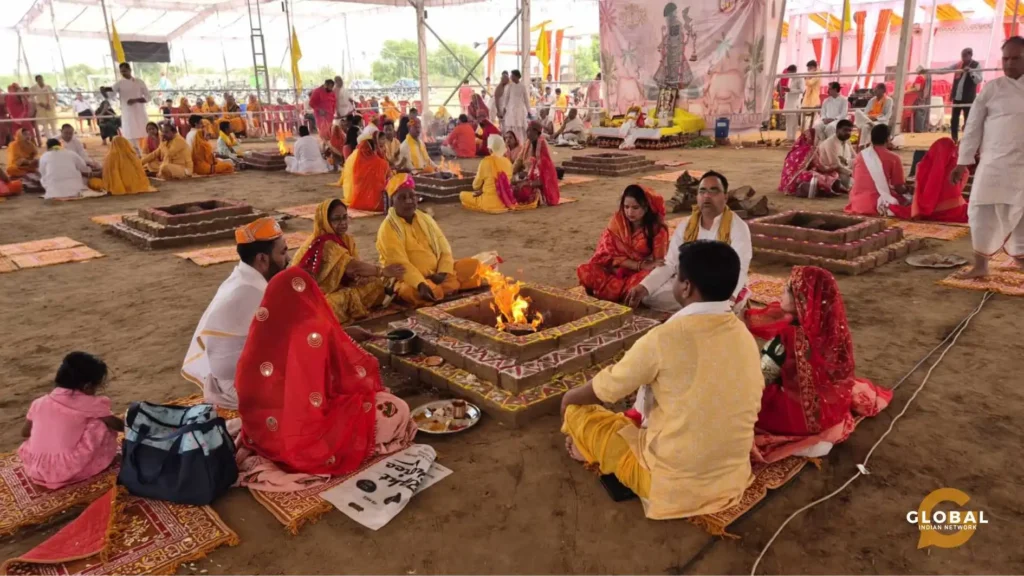
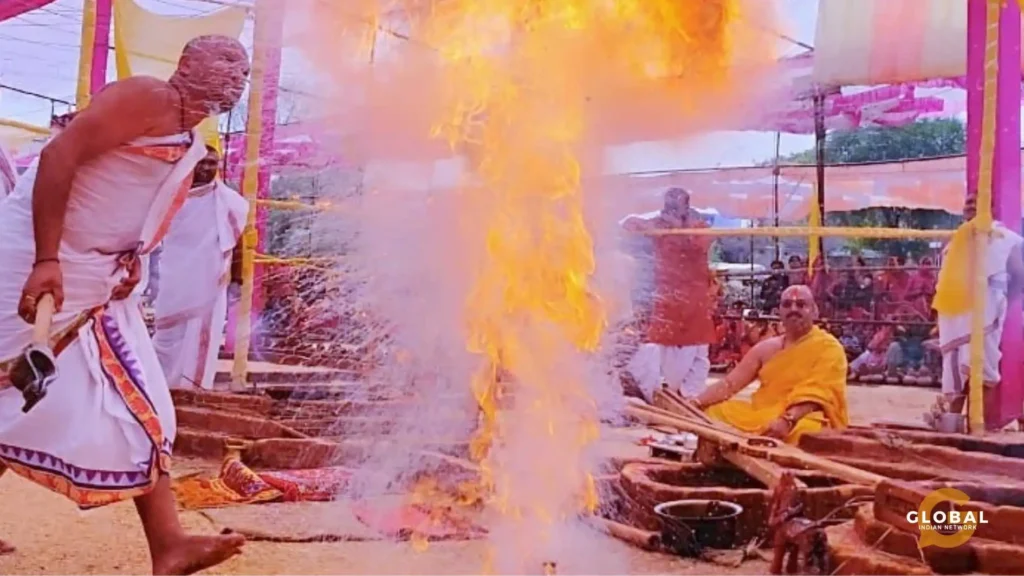
A Soma Yagna is one of the most sacred rituals described in the Vedas (the oldest Hindu scriptures, composed more than 2,000 years ago). At the heart of the ceremony is the preparation and offering of Soma, a sanctified juice derived from the revered Soma plant, into a yajna fire (sacred ceremonial fire).
The ritual is conducted according to precise Vedic instructions and involves a highly specialised team of more than 17 trained Brahmin priests known as Ritviks (expert Vedic ritual priests), led by a Yagnacharya (chief officiating priest). Their chants, offerings, and prayers form part of an elaborate ceremony that practitioners believe promotes universal well-being, spiritual awakening, and harmony between humanity and the divine.
The upcoming Soma Yagna in London is being organised by Unity in Divinity, a UK-registered charity.
When, Where, Who and How?
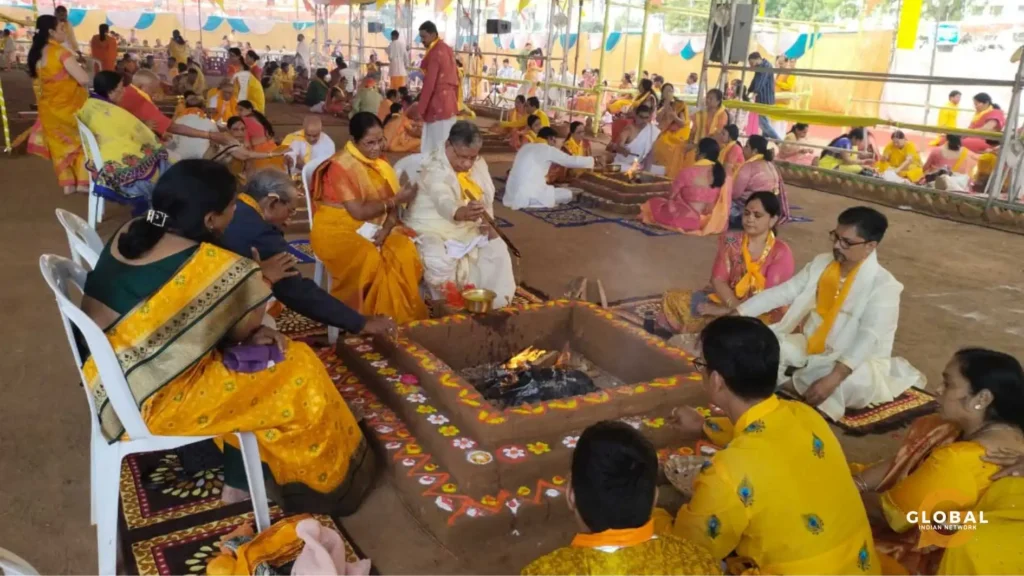
The second major, once-in-a-generation ceremony, the Soma Yagna will take place from June 14–21, 2026, at the Shree Swaminarayan Temple in Stanmore, North-west London.
Unlike many religious ceremonies that are intended primarily for followers of a particular faith, this event is open to all devotees, regardless of religion, ethnicity, nationality, or background. Throughout the week, attendees will be able to observe the rituals, listen to Vedic recitations, and participate in parikrama (walking around a sacred space as a gesture of reflection and reverence).
The ceremony itself requires years of preparation and training. Only qualified Ritviks with extensive knowledge of Vedic scriptures and precise recitation techniques can perform the ritual. Such expertise helps explain why a Soma Yagna remains relatively rare.
Why Does the Soma Yagna Matter Today?
For believers, the significance of the Soma Yagna lies in its spiritual dimensions. Within the tradition, Lord Vishnu is associated with Agni (the sacred fire), while Lord Indra is believed to be present during the ceremony. The ritual is therefore regarded as an act of devotion, gratitude, and divine communion.
Yet the broader relevance of the Soma Yagna may extend beyond matters of faith.
The event arrives at a time when Britain continues to grapple with questions surrounding identity, immigration, integration, and social cohesion. Recent years have witnessed a rise in concerns over racial and religious discrimination, including incidents affecting South Asian communities. Public debate around migration, multiculturalism, and national identity has become increasingly polarised, often amplified by social media and political rhetoric.
Against this backdrop, gatherings that emphasise collective well-being and shared humanity inevitably take on a broader social dimension.
Soma Yagna and the Question of Community
History suggests that communities are often defined not only by laws and institutions but also by shared rituals, stories, and experiences.
The organisers of the Soma Yagna believe that the ceremony’s blessings are intended for everyone, not simply those who follow Sanatan Dharma (the spiritual tradition commonly referred to as Hinduism). In their view, the ritual is a symbolic reminder that human flourishing is interconnected.
The Soma Yagna is ultimately about the greater good of the community. It encourages people to come together, reflect collectively, and move beyond individual interests. That change in mindset can influence families, communities, and society as a whole.”
— Raju Mashru, Lead Organiser, Soma Yagna
Whether one accepts the spiritual claims of the ceremony is a personal decision. However, the underlying principle, that societies function best when people see themselves as connected rather than divided, has relevance far beyond any single religion.
This is particularly significant in a city such as London, where hundreds of languages are spoken and where cultural diversity remains both a strength and, at times, a source of tension.
A Timeless Ritual in a Modern Society
The upcoming Soma Yagna offers a fascinating intersection between ancient tradition and contemporary society.
Supporters may view it as a meaningful opportunity to promote unity, reflection, and cultural understanding. Critics may question whether rituals can meaningfully address the complex social challenges facing modern Britain.
Perhaps the value of the event lies not in providing definitive answers, but in encouraging a conversation.
Can traditions thousands of years old still contribute something meaningful to today’s world? Can shared experiences help bridge social divides? And can a society become stronger when its diverse communities engage with one another’s histories and traditions?
The Soma Yagna taking place in North-West London from 14–21 June invites the public to consider those questions for themselves.
For further information about the event, venue details, schedules, and participation, devotees can explore the organisers’ official website.
In a world increasingly defined by division, the enduring appeal of the Soma Yagna may ultimately rest on a simple idea: that collective well-being is a goal worth pursuing, regardless of one’s faith, background, or beliefs.