



In a world still grappling with pandemics, wars, and economic shocks, a new era is quietly emerging. This era is not driven by oil or gold but by something more elusive: silicon. Welcome to Pax Silica, the unspoken global order where chips, data, and AI take the lead. I have come to appreciate this term, as it evokes the delicate peace of Pax Romana yet is built on the shining wafers of semiconductors. I feel the heartbeat of Pax Silica not as cold code, but as human ambition mixed with uncertainty.
We have replaced empires of steel with stacks of servers. Pax Silica is not just tech talk; it is the force reshaping jobs, borders, and power itself. Imagine a young engineer from one of India’s vibrant tech centers arriving in Silicon Valley with a suitcase and an H-1B visa, only to contribute to the very AI that might eventually take over their role. That is the bittersweet core of it, hope mingled with quiet fear.
Table of Contents
The Silicon Bedrock
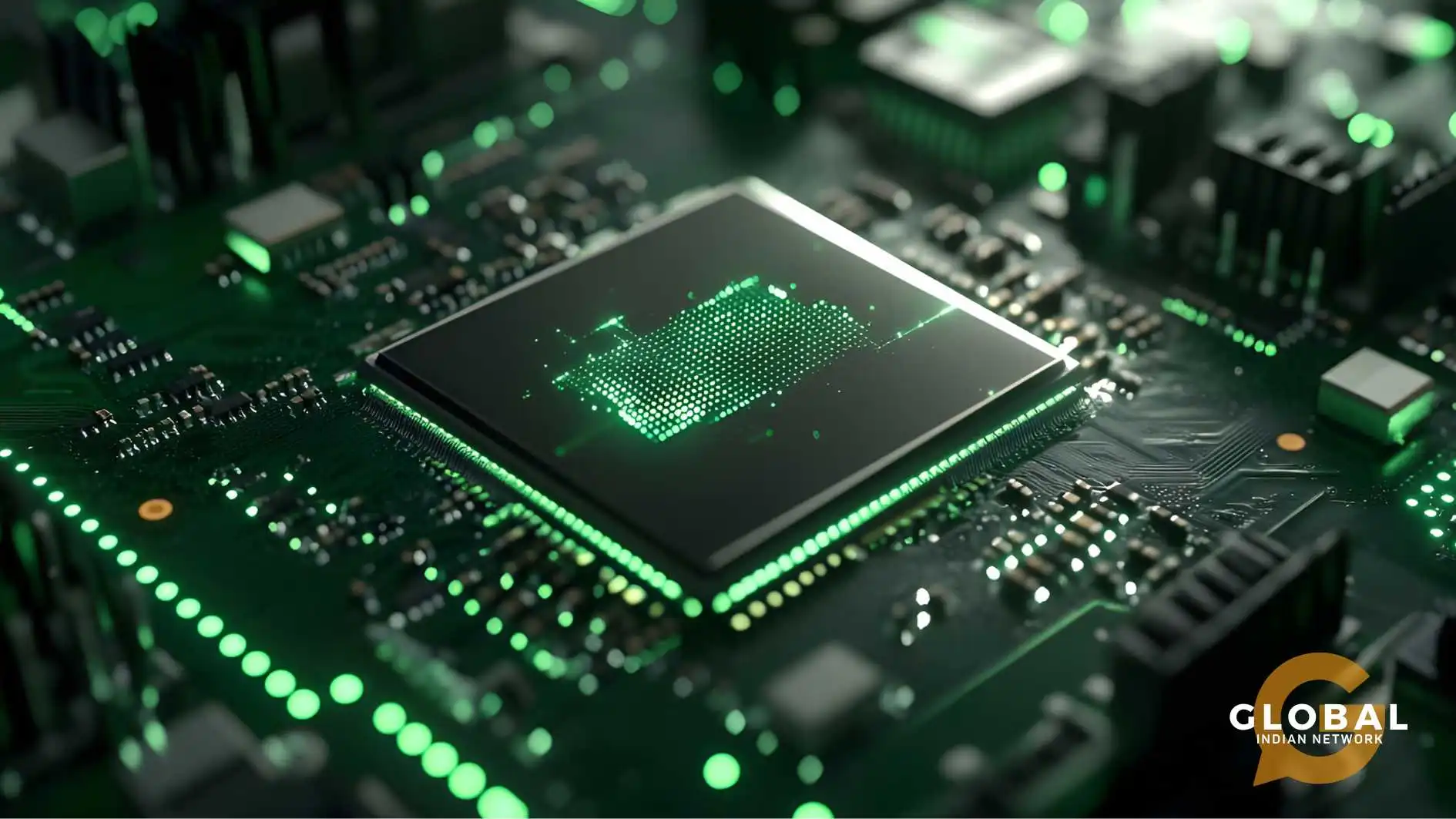
The main component of Pax Silica is the chip, a small, unobtrusive sliver of silicon etched with billions of transistors. These are not mere parts but the new oil that will power even smartphones and supercomputers. The keys to this kingdom lie with Taiwan, the mysterious giant TSMC, which manufactures 90 percent of the world high tech chips. When it is disrupted there, such as during the 2021 drought or geopolitical saber-rattling, it has a ripple effect throughout the world, raising prices and halting innovation.
However, Pax Silica does not just need chips; it needs size. Dump in the U.S. CHIPS Act, with $52 billion into the domestic fabs, and Europe staggers on with its own Chips Act, with $43 billion. The same goes for India, which is looking at a pie through its Semiconductor Mission, hoping to secure 10 billion dollars in incentives. It is a dream of the diasporas come true: the Indian businesspeople in Bangalore and the city of Austin narrow the distances, and their remittance is now equalized with the technology exports.
Nevertheless, under the hope, there exists strain. Supply chains are long, disrupted by earthquakes in Taiwan or trade wars with China. At Pax Silica, there is scarcity, which is strategy-making, and occasionally, no sleep for both CEOs and coders.

Data: The Lifeblood
Chips are nothing but dead matter that becomes alive when data is added to Pax Silica. Drowning in it, 2.5 quintillion bytes a day, it is feeding the voracious beast of AI. Hyperscalers such as AWS, Google Cloud, or Azure construct data centers that consume more electricity than entire nations, and which are served by cooling towers like mechanical hearts.
In this flood, human stories are present. Imagine a global Indian coder in Dubai who anonymizes datasets to an AI model that forecasts crop yields in their homestead in Maharashtra. Or the Filipino nurse in Canada whose medical history files are algorithms and health-saving globally. Pax Silica renders the power of data democratic; however, it reveals its dark side: it takes away privacy and introduces prejudice into black-box systems. Cambridge Analytica was a wake-up call; regulators are currently playing catch-up with GDPR and the DPDP Act in India. It is emotionally draining, that troubling uncertainty of seeing your life information run through a heartless machine, but promising change.
Data in Pax Silica is not stored, but it is sovereign. Countries preserve it like treasure-hoards. China censors its online space, whereas the U.S. exports its example. To migrants all over the world, it is a two-sided sword: data flows make it possible to use remittances apps such as Wise, but surveillance kills freedom of expression.
AI: The Brain Crown
If chips are muscle and data are blood, then AI is Pax Silica’s mind. From ChatGPT poetry to autonomous drones, AI is no longer science fiction; it is a business reality. The GPUs created by the company NVIDIA, the pickaxes of this gold rush, catapulted Jensen Huang into the ranks of billionaires, and his Taiwanese heritage bears witness to the success of the diaspora.
Pax Silica boosts AI titans: OpenAI, Anthropic, xAI. They are like us, except that with their wit, they have trained on petabytes of scraped web data, and they do not have our souls. I recall having interviewed a founder of a Mumbai-based startup, whose AI-powered tool outperforms blue-collar employees abroad, a savior to diaspora families, but a nightmare to employees. It is the emotional unconscious: the euphoria of curing illnesses through AlphaFold, the fear of artists replaced by DALL-E.
The stakes are increased by geopolitics. The China-AI arms race is a replay of the Cold War nukes, with export controls on chips cutting off Huawei. India, having 1,000+ AI startups, is a neutral space; its diaspora talent, e.g., Sundar Pichai at Google, neutralizes boundaries. But Pax Silica will be broken: when AI is concentrated in the hands of a few, inequality increases.
Challenges Fracturing the Promise
Pax Silica is glittering, and cracks appear. Energy requirements are catastrophic- GPT-4 fed 1000 American houses per year of power. Fab cooling water meets the agricultural needs of dry areas. Morally, artificial intelligence delusions are deceptive, deepfakes undermine confidence, and rogue machines are on the verge of becoming a reality.
To the diaspora, it is individual. An Indian expatriate in the UK could write about codes of ethics in AI on a Monday, and be concerned about family members in India trying to use discriminatory loans on a Thursday. Pax Silica makes some voices louder and others quieter; women and the minorities not represented in datasets keep recreating cycles of exclusion.
Climate cares least. The carbon footprint of Bitcoin mining matches that of Argentina; AI would increase the energy consumption of data centres by 2026. Pax Silica is forced to switch to green chips, edge computing, and quantum-resistant crypto.
Conclusion: The Human Horizon
Looking to the future, Pax Silica will be either utopian or dystopian. Optimists view AGI as the solution to climate ills, medicine, as personalized to all. Pessimists threaten unemployment on a scale, surveillance states.
Yet, humanity’s touch endures. Diaspora innovators, including Satya Nadella and Arvind Krishna, bring empathy, which propels responsible AI. The UPI of financial inclusiveness in India takes India to the top of the financial inclusion index; AI agri-tech startups are leaping in Africa.
Pax Silica is not a fatal desecration; it is our canvas. Control in the right manner, invest diversely, and it is a driver of good. Pax Silica can prevail, but it is our feeling, our ambition, our fear, our strength, that will form its soul.
In this new order, we will opt to be connected rather than being controlled. The chips are doing their humming, and the human story is writing itself.
FAQs
How does data fuel this era?
Daily data generation reaches 2.5 quintillion bytes. This supports AI training but raises privacy concerns, including algorithmic biases that can affect users worldwide.
What role does AI play?
AI serves as the “brain” behind significant advances, such as finding cures for diseases. However, it also raises concerns about job losses and a competitive race between the U.S. and China.
How does the Indian diaspora fit in?
Indian talent in places like Silicon Valley, such as Sundar Pichai, helps close tech gaps. Meanwhile, India is advancing in semiconductors and AI startups to promote global inclusion.