



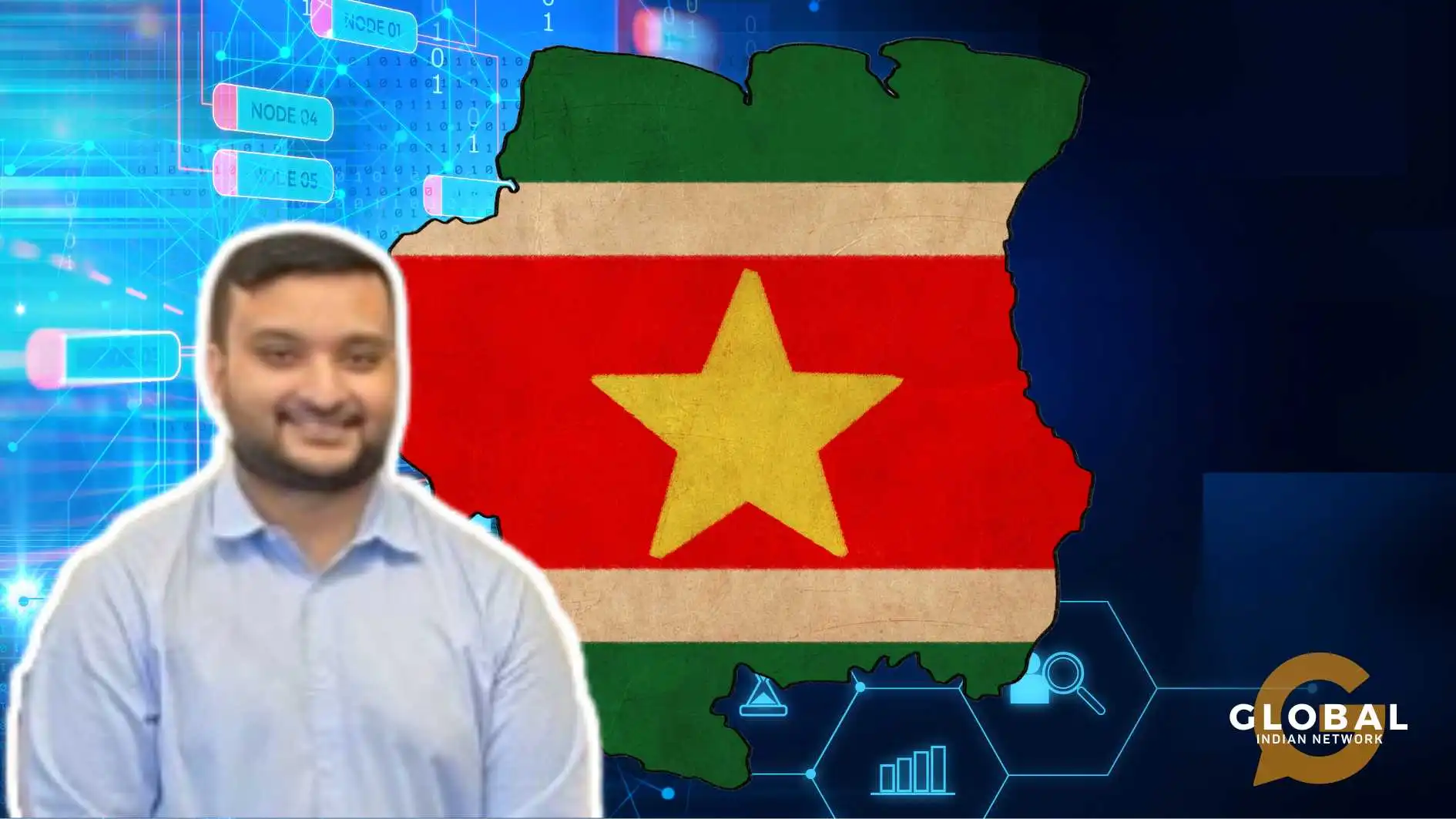

Suriname is currently at a transformative crossroads, navigating a comprehensive blueprint for a digitally enabled society through its ICT Vision 2030. At the heart of this evolution are emerging leaders who bridge the gap between private-sector operational excellence and national policy goals. One such figure is Shivash Mahespalsingh, whose professional trajectory and recent appointment to the ICT Associatie Suriname (ICT-As) board represent a pivotal moment for the nation’s digital economy.
Table of Contents
A Rising Leader in Suriname’s ICT Landscape
Shivash Mahespalsingh’s career growth is emblematic of the ‘new guard’ in Caribbean technology. As a Junior Manager at Qualogy Caribbean, Mahespalsingh has been at the forefront of private-sector efforts to drive innovation in Suriname. His journey from the University of Applied Science and Technology Suriname to a management role reflects a commitment to the technical and organizational competencies required to lead in the Fourth Industrial Revolution (4IR).
His recent election to the 2026–2028 Board of the ICT-As marks a significant step toward broader contributions across government and industry. As a Board Member, Mahespalsingh is part of a leadership team led by Chair Furgell Pinas, with a mandate focused on collaboration, innovation, and sector advancement. This role is vital because it enables him to shape the strategies that will define Suriname’s economic participation on a global scale.
How ICT-As Leadership Impacts the Digital Economy
The leadership of the ICT-As is a critical driver of Suriname’s digital economy, which aims to enhance the competitiveness of local businesses in a knowledge-based environment. Under the theme of #StrongerTogether, the board focuses on several core innovation priorities:
Advancing the ICT Sector: By fostering a productive environment for innovation, the board aims to catalyze societal transformation through technologies like Artificial Intelligence, the Internet of Things (IoT), and digital services.
Transparent Governance: The election of this board reflects a commitment to a transparent governance structure, which is essential for building trust among member companies and international partners.
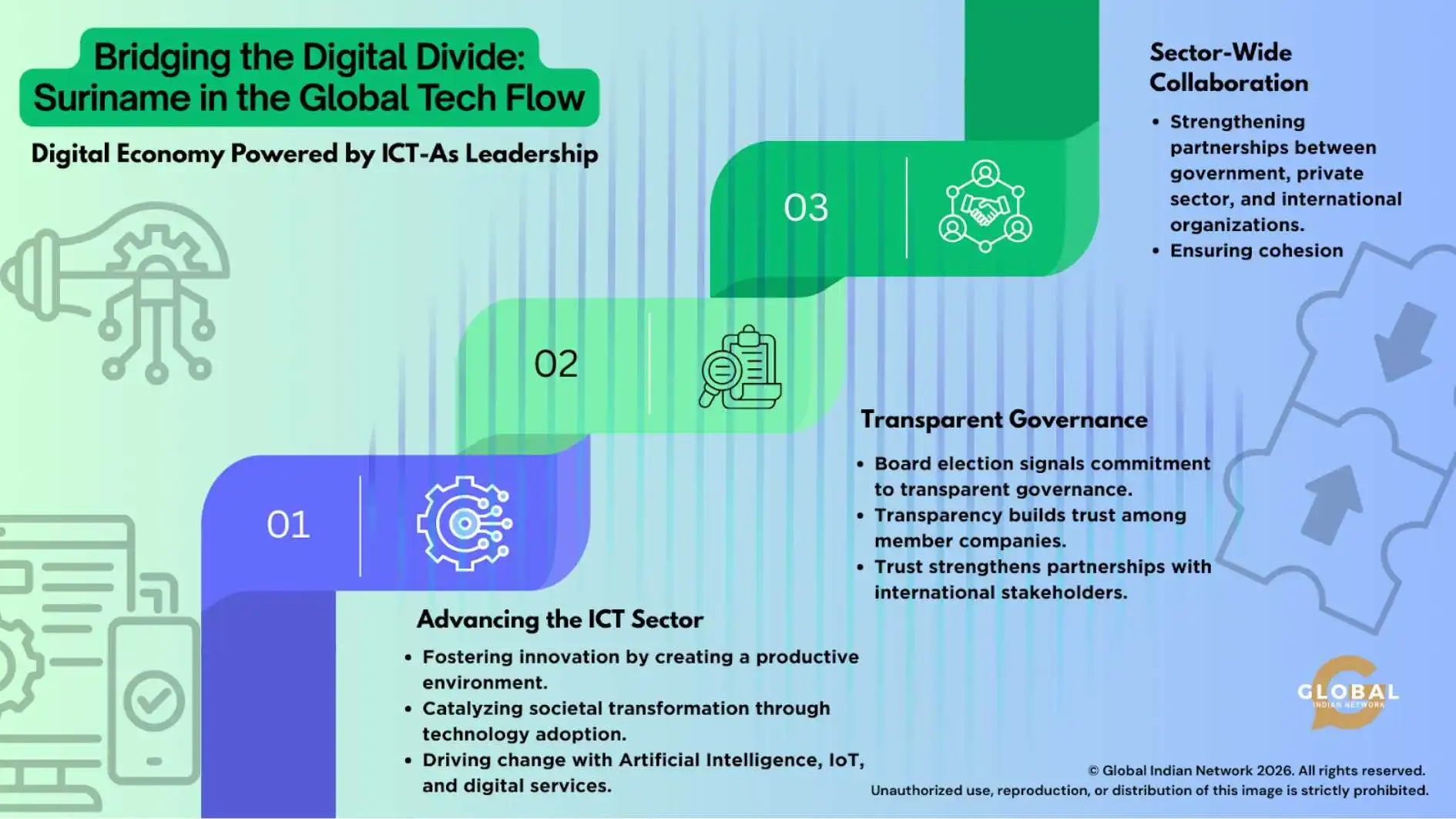
Sector-Wide Collaboration: By strengthening partnerships between the government, the private sector, and international organizations, the ICT-As ensures a cohesive approach to ICT development.
In this context, Mahespalsingh’s quote is highly relevant.
Digitization brings transparency, and transparency is the enemy of corruption.’
The efforts are not merely internal; they are pivotal links that align Suriname’s local capabilities with international standards, ensuring the nation is ‘future-ready.’

Qualogy Caribbean: A Pillar of National Development
The role of organizations like Qualogy Caribbean cannot be understated in the context of Suriname’s development. Within the national framework, the firm, as a private pioneer, serves as the vital link between high-level policy and real-world implementation.
By providing robust technical infrastructure and nurturing Surinamese talent, Qualogy Caribbean empowers local developers to deliver high-quality projects across the Caribbean and the Netherlands. The vision they champion drives productivity, lowers transaction costs, and cultivates professional growth and innovation.
Mahespalsingh exemplifies the alignment between organizational business strategies and Suriname’s broader ICT Vision 2030. Companies like Qualogy are instrumental in cultivating an environment where digital entrepreneurship can flourish, providing on-the-ground expertise to navigate the disruptive transformations of the digital age.
ICT Vision 2030
Suriname’s ICT Vision 2030 has targeted several e-services for streamlined implementation to boost digital innovation and societal development.
These services aim to become more user-friendly through targets such as cloud integration and broad accessibility, with many already past their initial deadlines by February 2026. While specific current progress reports are limited, the vision emphasizes their role in establishing a digital footing regionally via partnerships.
Implemented E-Services
The following e-services from Goal 1 (Innovation) were planned with measurable targets, focusing on sectors like safety, health, and finance to enhance efficiency and user experience:
| E-Service | Target Year | Key Details and Improvements | Global/Regional Footing Potential |
| Safe City Services | 2021 | Covers 50 strategic areas in Paramaribo for security. Streamlined monitoring via ICT. | Regional safety tech partnerships. |
| e-Gov Cloud | 2021 | For 80% of ministries; enables seamless data sharing. | Interoperable with international standards. |
| e-Payment Services | 2022 | Access for 30% population; supports retail/wholesale. User-friendly transactions. | Ties into global fintech ecosystems. |
| e-Health Services | 2022 | 60% hospitals connected; improves remote access. | Aligns with WHO digital health goals. |
| e-Education | 2023 | 80% universities linked locally/abroad. Hybrid learning. | Global platform integration. |
| e-Transport | 2024 | 60% licensed services; optimizes logistics. | Regional transport data sharing. |
| e-Tax Services | 2025 | 80% large/mid-size entities; simplifies compliance. | Attracts international business. |
Ongoing Enhancements
By 2030, IoE (Internet of Everything) and AI integration are slated to further streamline these, with 70% population consumption targeted under Goal 3 (Growth). The National Digital Strategy 2023-2030 builds on this, prioritizing digital ID and public services for broader adoption. These efforts position Suriname in global digital agendas, such as the UN SDGs, though full metrics post-2025 remain emerging.
Connecting Suriname to the Global Digital Economy
A central theme of Suriname’s current strategy is global connectivity. Connecting to the global digital economy is essential for driving sustainable growth and inclusivity.
Why Connect?
Beyond national growth, a stronger digital connection allows Suriname to align with global development agendas, such as the Sustainable Development Goals (SDGs). It is imperative for industrial innovation and helps ensure the nation remains competitive as global trade costs decline due to technological advances.
How to Better Connect?
To integrate effectively, Suriname is pursuing several strategic actions:
Modernizing Regulatory Frameworks: This includes updating the outdated 1913 Copyright Law and implementing a robust Privacy and Personal Data Protection Bill, which has been under consideration since 2021.
Joining International Treaties: Aligning with the WTO Information Technology Agreement (ITA I and II) and WIPO treaties would provide the legal certainty required for seamless international digital trade.
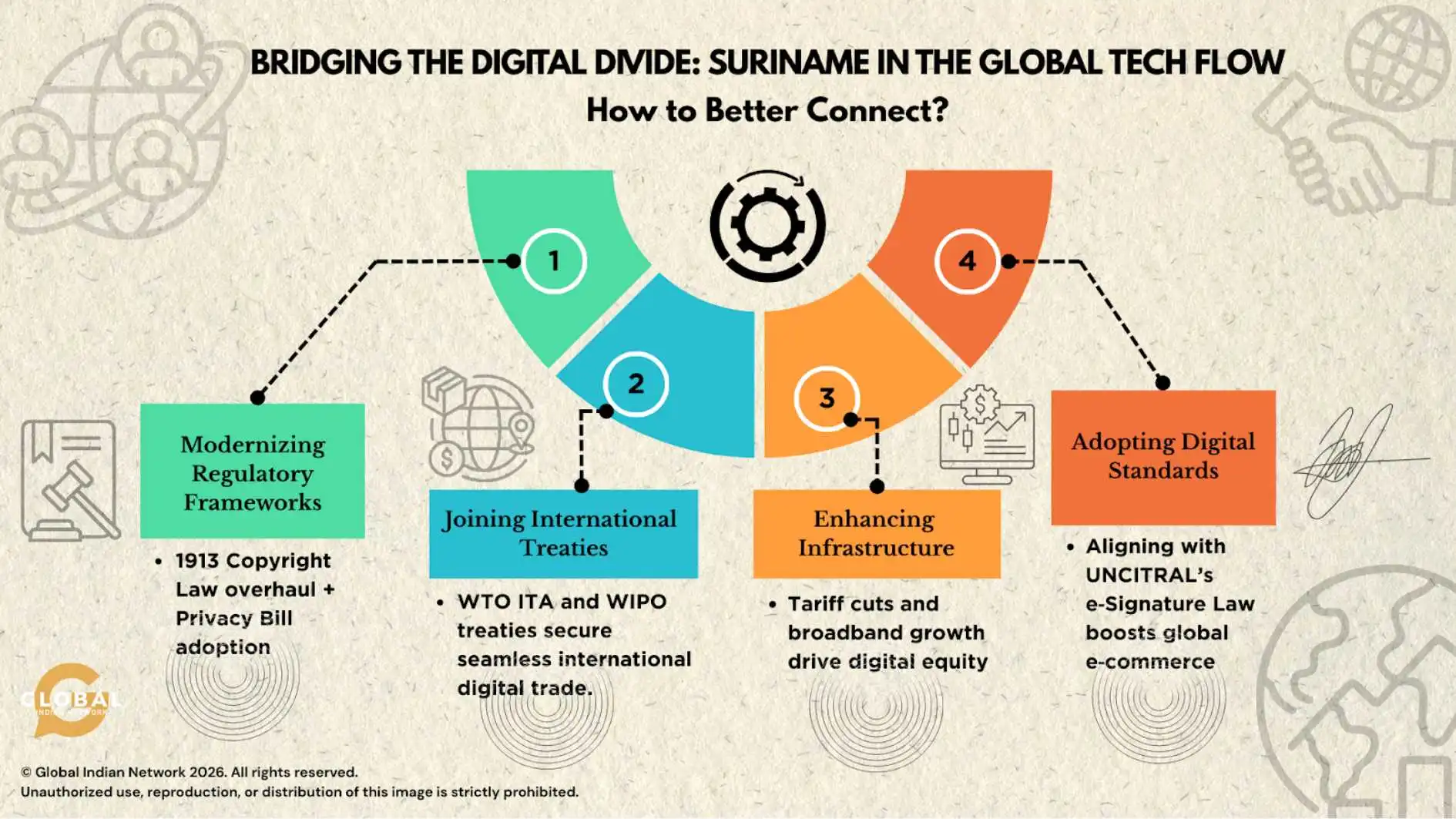
Enhancing Infrastructure: Reducing high ICT tariffs and expanding broadband access are key priorities for bridging the digital divide.
Adopting Digital Standards: Aligning with the UNCITRAL Model Law on Electronic Signatures (MLES) is recommended to facilitate global e-commerce transactions.
The Global Significance of Suriname’s Efforts
The efforts led by the ICT-As and individuals like Mahespalsingh have significance far beyond Suriname’s borders. As the CARICOM Single ICT Space aims to create a borderless digital layer across the Caribbean, Suriname’s progress serves as a model for regional integration. By fostering innovation and transparent governance, Suriname positions itself as an attractive hub for foreign investment and a participant in global digital value chains.
Furthermore, the focus on continuity and sustainability – specifically in cybersecurity and disaster preparedness – aligns Suriname with global best practices for building resilient digital societies.

Conclusion: A Vision for the Future
The professional trajectory of Shivash Mahespalsingh is inextricably linked to Suriname’s digital future. His work at Qualogy Caribbean and his new leadership role at ICT-As provide the foundation for a term focused on innovation and advancement.
As Suriname continues to modernize its laws, enhance its infrastructure, and empower its local leadership, it moves closer to the ICT Vision 2030 goal: a digitally enabled society where every citizen can participate in the global market. Through the solidarity of business excellence and national advocacy, leaders like Mahespalsingh are ensuring that Suriname is not just a consumer of global technology but a competitive, innovative contributor to the world’s digital economy. We at the Global Indian Network believe in human capital being utilized for the global good. Stay tuned for more such stories of dedication.