


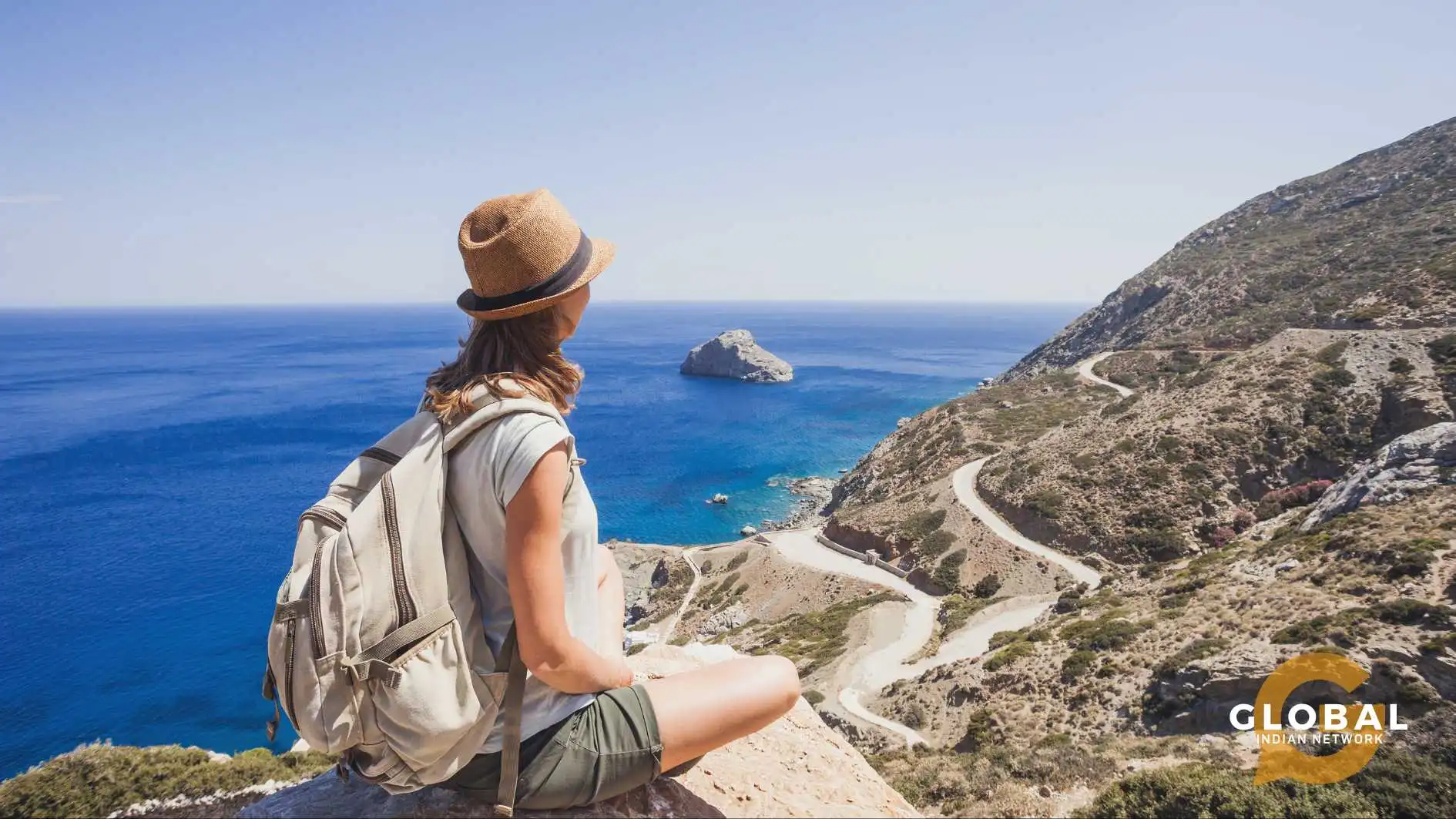

Meera’s first morning in Varkala began not with the hum of air-conditioning but with the sound of waves tumbling below red laterite cliffs and the faint melody of temple bells mingling with birdcalls. As she slipped out of her eco-hostel, the air smelled of briny seaweed and fresh banana leaves from a morning market. Streetside, the rough feel of coir mats guided her barefoot steps to a small café, where the taste of tangy, locally sourced ‘avial’ danced on her tongue, her meal served on upcycled plates. The bright sun filtered through palm fronds, making the green of reusable water bottles and hand-painted sustainability pledges pop in every corner.
Each sense tuned her closer to the place: the sight of fishermen hauling nets for a community feast, the chatter of travelers sharing slow, conscious journeys, and even the feel of recycled cloth napkins in her hands. For India’s new wave of globetrotters like Meera, travel is not only about immersion but also responsibility, letting every sight, sound, touch, taste, and smell remind them that sustainability is the true luxury.
A growing body of insights from the Global Indian Network underscores how this young diaspora is redefining the meaning of mobility, blending sustainability, cultural connection, and digital fluency into every journey.
Indian millennials and Gen Z are rapidly becoming the powerhouse of India’s booming travel sector. Their priorities: rich experiences, digital-first planning, and sustainability, are radically reshaping how travel services are designed and marketed, both within India and globally. Understanding these young travelers is essential for destinations, marketers, and service providers seeking to tap into what is considered the most dynamic and influential segment in the industry today.
Let us dive into this exploration of travel trends designed to encourage thoughtful and responsible participation.
Table of Contents
The Experience Revolution: Moments Over Monuments
Millennials and especially Gen Z voyagers in India are seeking more than just sightseeing; they crave experiences that resonate deeply and create lasting memories. For these young Indians, travel is not about luxury hotels or ticking off famous landmarks. Instead, it’s about sunrise hikes, cultural immersions, food trails, and personal growth journeys. Experiential travel dominates; from wellness retreats and spiritual sojourns to adventure sports and community volunteering, these travelers want authenticity and transformative moments over traditional luxury.
Gen Z sees travel as a pathway to self-exploration, using each trip to pause, gain a fresh perspective, and reshape how they define themselves within new cultures and places.
Travel for these generations is as much about self-discovery and storytelling as it is about relaxation.
According to community perspectives gathered by the Global Indian Network, global Indian Gen Z sightseers often describe their journeys as ways to ‘reconnect roots through new routes’, combining cultural rediscovery with wellness and creativity.
A significant portion of Indian Gen Z travelers show a strong preference for adventure-based vacations, though globally, Gen Z balances adventure with cultural and relaxation-focused travel. Social media adds to this ethos, with young wayfarers sharing digital journals and vlog series, underlining that emotional fulfillment and creative expression are as important as the destination itself.
Market Insights
According to research by the Global Indian Network, which maps cross-border travel and sustainability trends among diaspora youth, the following data highlights how experience-led and purpose-driven travel is gaining momentum.
Around half of global Indian Gen Z sojourners prefer experiences that mix adventure, culture, and leisure, balancing outdoor thrills with wellness, cuisine, and creative exploration.
Millennials and older Gen Z comprise 48% of Indian outbound international tourists, with 36% under 35 years of age, highlighting their strong role in international travel growth driven by rising incomes and global mindset.
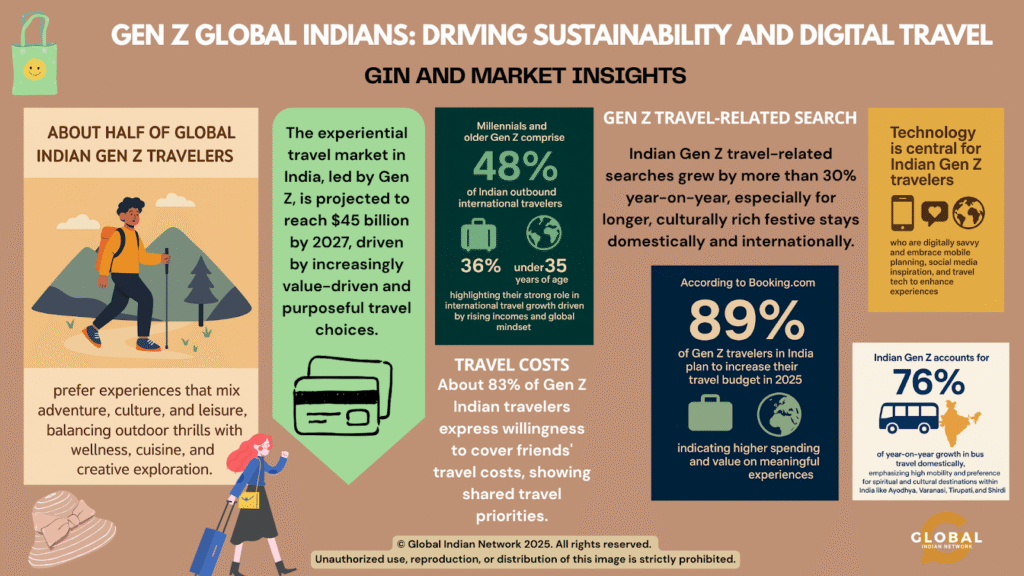
Indian Gen Z accounts for 76% of year-on-year growth in bus travel domestically, emphasizing high mobility and preference for spiritual and cultural destinations within India like Ayodhya, Varanasi, Tirupati, and Shirdi.
According to Booking.com, 89% of Gen Z explorers in India plan to increase their travel budget in 2025, indicating higher spending and value on meaningful experiences.
Technology is central for Indian Gen Z travelers, who are digitally savvy and embrace mobile planning, social media inspiration, and travel tech to enhance experiences.
Indian Gen Z travel-related searches grew by more than 30% year-on-year, especially for longer, culturally rich festive stays domestically and internationally.
The experiential travel market in India, led by Gen Z, is projected to reach $45 billion by 2027, driven by increasingly value-driven and purposeful travel choices.
About 83% of Gen Z Indian travelers express willingness to cover friends’ travel costs, showing shared travel priorities.
The data points to an evolving travel landscape where Gen Z’s curiosity, conscience, and connectivity are redefining what it means to move through the world.

Digital Planning and the Influence of Social Media
If one trait unites Indian millennials and Gen Z travelers, it’s a fierce embrace of technology. These cohorts are hyper-connected: they rely heavily on travel apps, AI-powered planning tools, and digital payment solutions for every stage of their journey.
Insights from the Global Indian Network’s market research show that Gen Z’s trust in peer recommendations and micro-influencers is growing faster than in traditional travel agencies, underscoring a shift toward decentralized travel discovery.
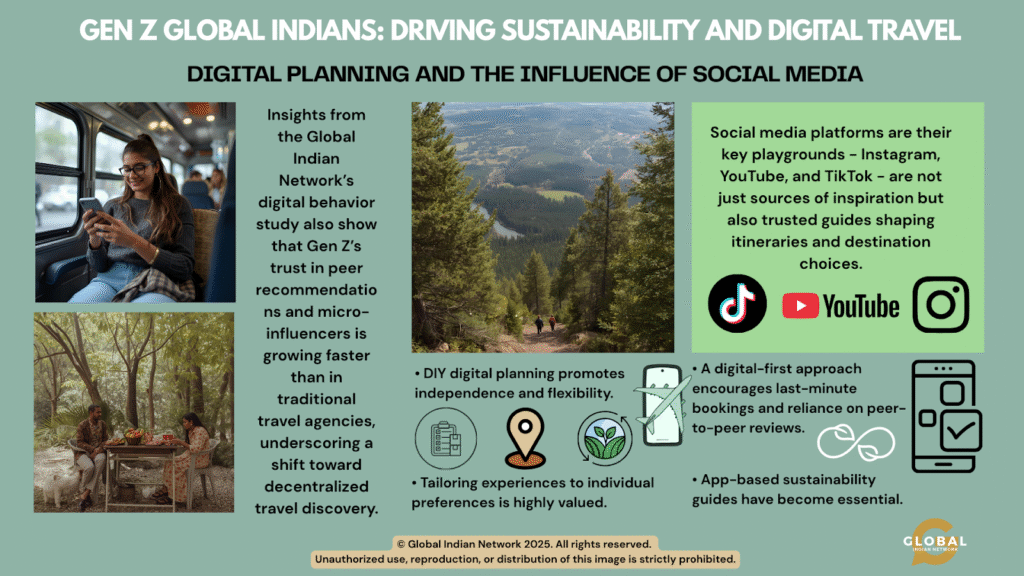
Social media platforms are their key playgrounds: Instagram, YouTube, and TikTok are not just sources of inspiration but also trusted guides shaping itineraries and destination choices.
Gen Z sightseers use social media to plan trips, and influencer-led campaigns have a powerful effect on travel behavior and destination popularity. Augmented reality features, virtual tours, and influencer collaborations have become essential tools for destinations hoping to grab their attention.
Notably, DIY digital planning allows for independence, flexibility, and the ability to tailor experiences, all highly valued by both millennials and Gen Z. This digital-first mindset means last-minute bookings, peer-to-peer reviews, and app-based sustainability guides are now must-haves for providers targeting these segments.
Budget, Empowerment, and Accessibility
Even as their spending power rises, these tourists remain budget-conscious. For many, international or even domestic trips are seen as post-paycheck achievements, earned through side gigs or savings, not parental handouts. Purpose-driven travel motivates millennials and Gen Z to spend wisely, seeking economical stays like hostels and homestays, co-living environments, and distinctive local experiences rather than traditional luxury.
Platforms that blend cost-effective options with authenticity, group treks, sustainable tours, or workcation bundles meet this demand.
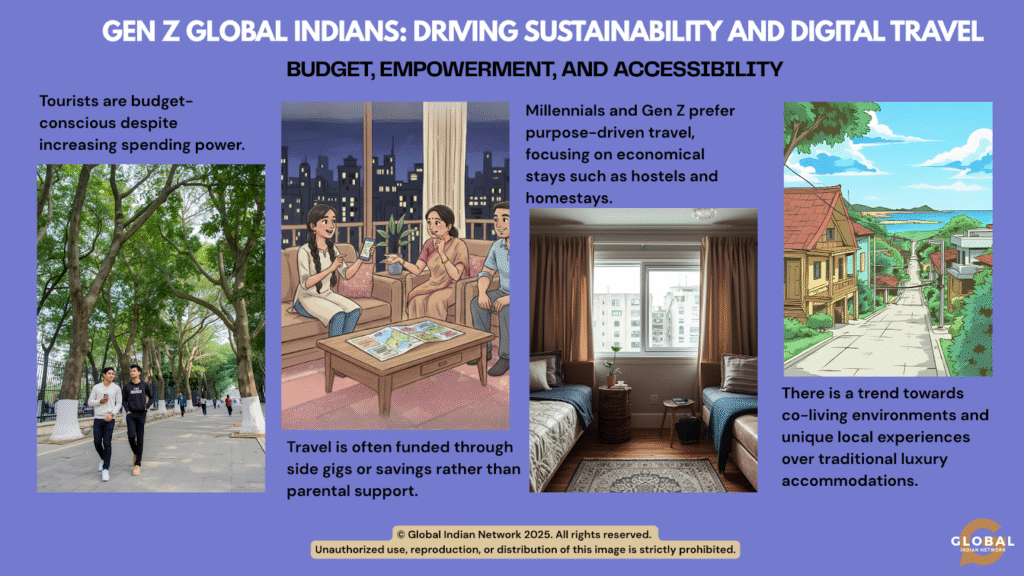
Globally, nearly 40% of Gen Z travelers save up independently; in India, that spirit of self-funded exploration is even stronger, with 81% planning their first solo trip post-paycheck.
Opportunities for Destinations and Marketers
For destinations, the ascent of millennials and Gen Z adventurers offers immense opportunities and also challenges. Success will depend on the ability to adapt marketing tactics, product offerings, and visitor experiences.
To tap into this powerful segment, destinations should prioritize:
- Digital storytelling and influencer partnerships to boost visibility on key social channels
- Sustainable choices are embedded in every aspect of the travel offering
- Flexible, personalized travel solutions that enable independence and creativity
- Authentic, culturally immersive experiences over generic luxury or “tourist trap” attractions
- Innovative tech like AR-guided tours, AI trip planning, and digital reward programs for engagement
It’s clear: Indian millennials and Gen Z are not just reshaping domestic tourism; they are setting new global standards for what meaningful, future-forward travel should be. Destinations that embrace these values and adapt quickly will earn the loyalty (and social shares) of this transformative generation.
Partnerships with platforms like the Global Indian Network, which actively engage this mobile and sustainability-driven demographic, can help destinations translate awareness into authentic engagement.
Conclusion
Meera’s sensory-rich and sustainable adventure in Varkala reflects a powerful movement sweeping across India’s millennial and Gen Z travellers. In a world where air-conditioned comfort can’t compete with the tang of sea salt on the wind, the chatter of conscious communities, and the joy of local, eco-friendly flavors, young Indians are rewriting the journey map, favoring authentic, meaningful experience over extravagance. Their digitally-driven choices and passion for responsible travel ripple far beyond personal memories, influencing how destinations approach marketing, product design, and storytelling.
As these young journeyers shape the future, the true luxury lies in the intentional details, moments that embrace nature, culture, and sustainability. The next wave of Indian tourism belongs to seekers like Meera, whose footsteps echo with the sounds, scents, and connections of travels that matter; journeys that not only enrich their own lives but also inspire destinations to evolve toward a greener, more inclusive tomorrow.
At the Global Indian Network, our lens on Gen Z travelers reveals a shared optimism: that purposeful journeys can build not just memories but movements, connecting people, places, and possibilities across continents.
Together, let’s pioneer a new era of travel, one rooted in awareness, cultural respect, and sustainability, leaving a world worth wandering for future generations.