


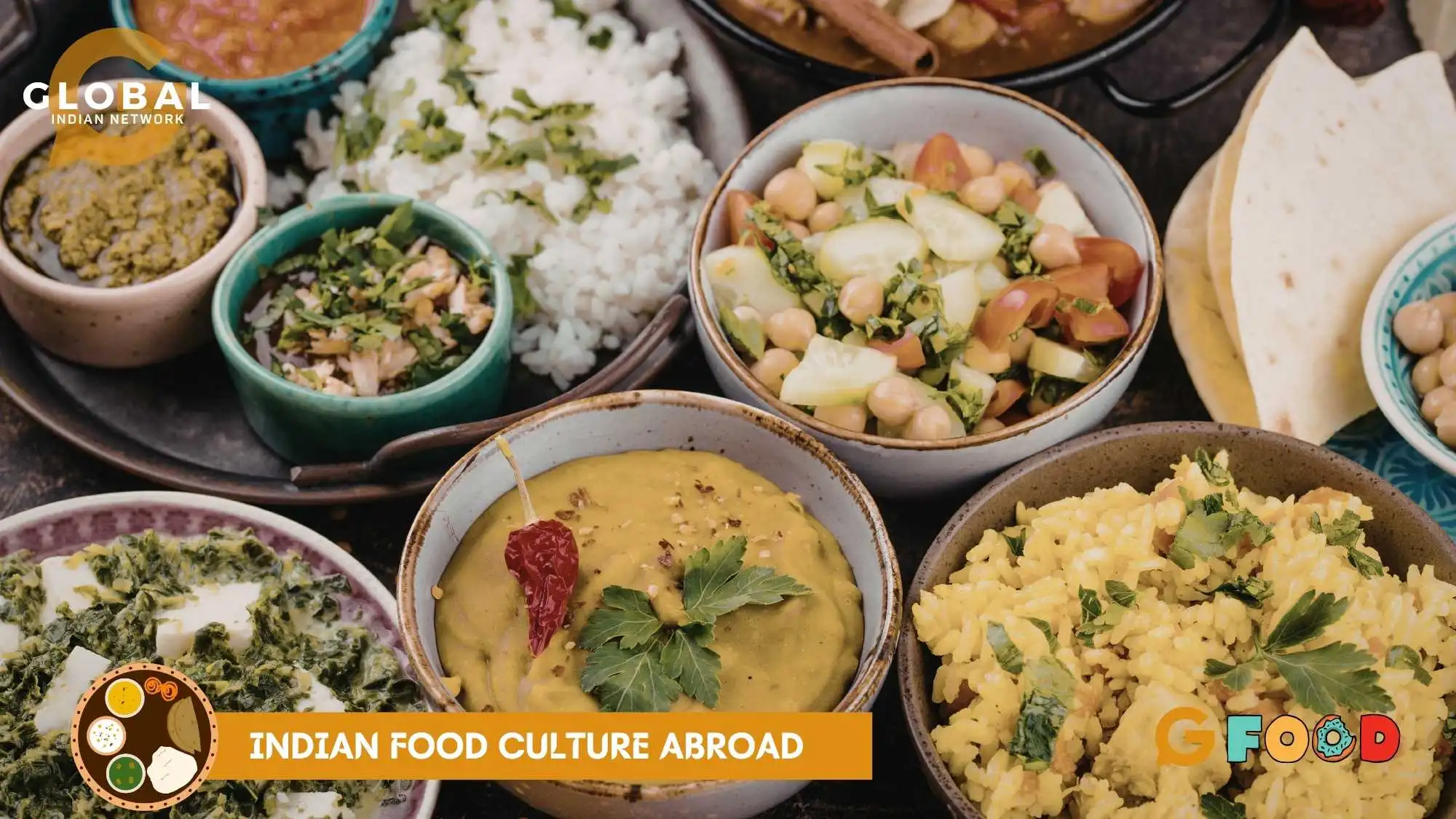

There is a particular smell that escapes an Indian kitchen when it travels. Not the obvious one like the cumin sputtering in oil or the coriander blooming into something citrusy, but something migratory. It is the smell of translation. I have come to think of Indian food culture abroad not as a replication of “home,” but as a language that learns new grammar the moment it lands in another place.
When I first encountered what people casually call “Indian food” outside India, I remember feeling a mild confusion. The dishes were familiar in outline but not in temperament. Butter chicken, that North Indian invention already shaped by colonial histories and restaurant logics, had softened further, as if it had been taught to stay in a room that preferred low voices. There is a tendency to dismiss this as dilution, to accuse Indian food culture abroad of losing its authenticity in pursuit of foreign approval. But authenticity is a slippery term, often wielded as a moral judgment rather than a historical observation.
Food historian Colleen Taylor Sen reminds us that what we consider traditional Indian food is already the result of centuries of exchange: Persian influences shaping courtly cuisines, Portuguese traders introducing chillies that now feel inseparable from Indian identity. If Indian cuisine has always been evolving, then Indian food culture abroad is not an aberration. It is simply evolution made visible.
Table of Contents
The Negotiations of Taste
Walk into an Indian restaurant abroad, and you are rarely just reading a menu; you are reading a negotiation. Between what the cook remembers and what the customer expects. Between what is available and what is possible.
In many Western cities, the menu becomes a kind of compression. Regional diversity-Gujarati, Chettinad or Kashmiri collapses into a handful of recognizable categories. Restaurants survive by being legible. A dish must be understood before it can be ordered.
Anthropologist Arjun Appadurai once wrote about how globalization produces both sameness and difference at once, and Indian food culture abroad sits exactly in that contradiction. It is simplified for visibility, yet constantly diversifying beneath the surface.
I’ve noticed how certain dishes become ambassadors, whether they want to or not. They carry the burden of representing an entire cuisine, smoothing out edges, avoiding extremes. Not because they are inherently simple, but because simplicity travels better. And yet, in smaller, less visible spaces, home kitchens or community gatherings, the food remains stubbornly specific, tied to region.
Indian Food Culture Abroad: Between Memory and Invention
Memory is an unreliable guide in the kitchen. It fills gaps with imagination. In diaspora kitchens, this unreliability becomes a kind of method. A missing spice is replaced. A vegetable is substituted, and a technique is altered. Over time, these adjustments accumulate, and the dish becomes something new.
Indian food culture abroad thrives in this space of stupid invention. It is not trying to recreate a fixed past but trying to make sense of a present shaped by distance and change. The children of immigrants grow up within this fluidity. Their tastes are not divided between “Indian” and “foreign”; they are layered, expansive, unconcerned with boundaries.
This makes the anxiety around authenticity feel misplaced. Authenticity suggests a stable origin, but migration unsettles that stability. What we are witnessing is not loss but transformation.
Who Gets to Define the Cuisine?
As Indian cuisine gains visibility globally, the question of representation becomes unavoidable. Figures like Padma Lakshmi have broadened the narrative, introducing audiences to regional diversity and personal histories. Chefs such as Vijay Kumar push further, insisting on specificity in spaces that once preferred simplification.
Yet there is a hierarchy in what is seen and what is valued. Fine-dining interpretations often receive attention and legitimacy, while everyday cooking- what happens in homes, in modest kitchens remains largely invisible. Indian food culture abroad is shaped not only by creativity but also by the structures of recognition.
Indian Food Culture Abroad: Kitchens That Speak Before Nations Do
Indian food culture abroad operates as an informal form of diplomacy, as argued by the Institute for Policy Research & Governance, where diaspora restaurants act as everyday sites of cultural influence rather than just businesses through repeated exposure in cities like London and New York City, Indian cuisine shapes perceptions by making unfamiliar flavours routine, aligning with gastrodiplomacy theories that food can influence attitudes without direct political messaging.
However, this influence is limited since appreciation of cuisine does not necessarily translate into social acceptance. Its impact is sustained by economic scale and migrant labour, not just cultural appeal, while menus often simplify India’s regional diversity to remain accessible, creating hybrid forms of cuisine that reflect adaptation rather than authenticity, positioning Indian food culture abroad as a continuous, everyday process of soft power rooted in habit, visibility, and survival rather than formal representation.

Kitchens As Living Archives
I have begun to think of diaspora kitchens as archives, though not the orderly kind. They do not preserve history, but reinterpret it. A recipe passed down through generations may lose its original context but gain new meanings in a different environment.
Institutions like the World Economic Forum often speak about diaspora communities in terms of contribution. But what happens in these kitchens resists any kind of measurement.
Indian food culture abroad does not simply introduce flavours to new places. It reshapes how food itself is understood, less as something tied to a fixed geography and more as something that moves, adapts, and absorbs.
The Taste of Movement
The study, published in Frontiers in Sustainable Food Systems, shows that Indian food culture abroad remains stable among Indian immigrant women in Southern California, with continued daily use of traditional herbs and spices such as turmeric, ginger, fenugreek, and cloves, primarily valued for both culinary and health purposes. It finds no significant decline in traditional food knowledge over time, indicating that migration does not weaken culinary practices, and it also highlights a convergence of regional cuisines as individuals from different parts of India adopt a broader, shared food identity in diaspora settings.
Ingredients are sourced through local markets, home gardening, and transnational networks such as carrying spices during travel, ensuring continuity of cooking practices; knowledge transmission occurs mainly within families across generations, and participants consistently perceive Indian diets as healthier than mainstream Western diets due to the functional and medicinal role of spices, demonstrating that Indian food culture abroad is maintained through adaptation, access, and intergenerational learning rather than loss.
Conclusion
Indian food culture abroad functions as a decentralized form of cultural and economic diplomacy, where diaspora kitchens and restaurants shape global perceptions of India through everyday interaction rather than formal policy; as highlighted by the Institute for Policy Research & Governance, these spaces act as informal soft power sites by normalizing Indian presence, reducing social distance, and contributing indirectly to broader diplomatic outcomes over time their impact is sustained not only through cultural expression but through economic viability, scalability, and integration into local markets.
While menus, branding, and narratives selectively represent aspects of Indian identity such as regional diversity, vegetarianism, and wellness together with evolving global interest in regional cuisines and ingredient authenticity, this positions Indian food culture abroad as a dynamic system shaped by adaptation, market forces, and diaspora agency, where influence is cumulative, indirect, and embedded in everyday consumption rather than formal representation.

FAQs
What is Indian food culture abroad, really?
It’s what happens when Indian cooking moves and adjusts. Not a copy of “home,” but a version shaped by new ingredients, new people, and new habits.
Does it lose authenticity?
No, it changes. And it was always changing anyway. What feels “original” is just an earlier version we got used to.
Why are menus abroad so limited?
Because they need to be quickly understood. Restaurants simplify to survive, even if that means hiding a lot of regional diversity.
How is Indian culture different from foreign culture?
Indian culture is characterized by collectivism, deep-rooted traditions, and extended family structures, while Western (foreign) culture emphasizes individualism, personal freedom, and egalitarianism.