


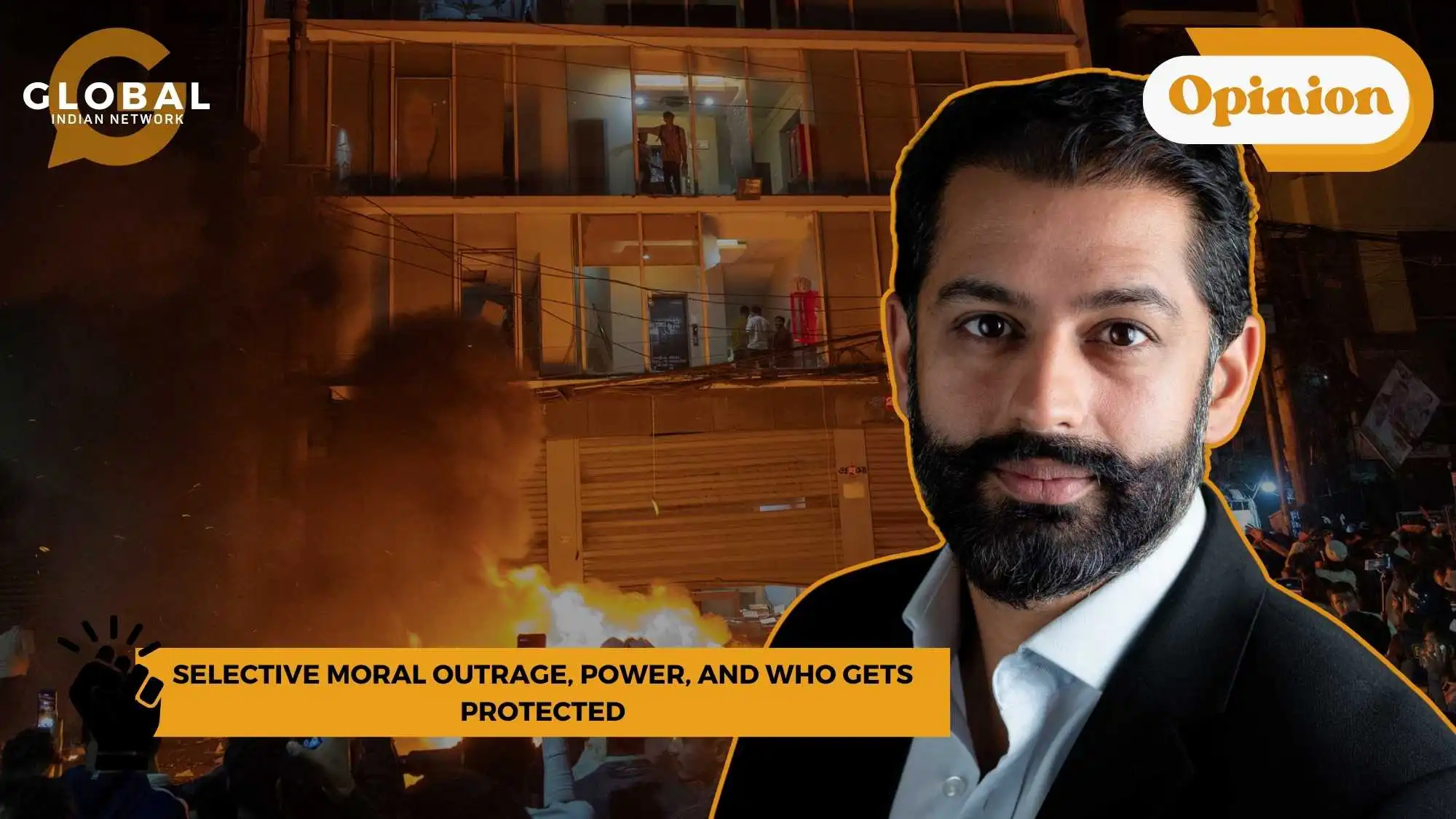
Two men were murdered recently. One in Bangladesh, accused of blasphemy. Another in India, accused of being Bangladeshi. Different countries, different accusations, same outcome.
What struck me wasn’t only the violence itself, but how quickly people rushed to explain it through religion, ideology, or belief systems. As if naming a faith somehow explains how a crowd forms, how a rumour becomes lethal, or why certain lives are so easily erased. It doesn’t.
What we are really talking about is power. Who has it, who doesn’t, and who society quietly decides does not deserve protection.
I have travelled extensively over the years, across South Asia, Africa, the Caribbean, Southeast Asia, and Latin America. And one pattern repeats itself regardless of geography, religion, or politics. People at the bottom live closer to danger. Not because they are guilty of anything, but because their lives are structurally fragile. One accusation, one whisper, one crowd is often all it takes.
In the case of Bangladesh, I haven’t sat on the ground there myself, but I have spoken at length with people who have come from Bangladesh. What they describe is not religious fervour, but fear, silence, and the knowledge that once a crowd forms, institutions are often too weak or too slow to intervene. A rumour does not need to be true. It only needs to land on someone with no protection.
The same pattern exists elsewhere. I have seen it firsthand in Sierra Leone, for example, where the mere suggestion that someone, even a child, is involved in witchcraft can lead to immediate ostracisation. Children have been cast out, isolated, and punished not because of religious doctrine, but because communities decide, collectively and quietly, that this person is expendable. Again, this is not about belief. It is about who gets protected and who does not.
The man accused of blasphemy in Bangladesh did not die because of faith. He died because an accusation landed on someone with no leverage, no wealth, no legal insulation, and no institution ready to act decisively on his behalf. The man killed in India did not die because of his nationality. He died because being labelled “other” becomes lethal when power is unaccountable.
We treat these incidents as isolated tragedies. They are not. They are predictable outcomes in systems where dignity is conditional, and protection is uneven.
What usually follows is outrage. Loud, immediate, emotionally charged outrage. I understand that instinct. Anger feels like action. Protests feel purposeful. Condemnation feels moral.
But outrage is often selective.
It appears that when a death fits a narrative we already hold, it is easier to accept. It fades when addressing the root causes becomes uncomfortable or implicates us more deeply.
Globally, governments spend billions of dollars every year on counter-terrorism and counter-extremism efforts. In the UK alone, international security and stability funds linked to these goals have operated at close to one billion pounds per year. International donor programmes aimed at preventing violent extremism have received hundreds of millions of dollars in pooled funding. That level of spending tells us something important. When a problem is framed as a security threat, resources are found.
Yet when it comes to poverty reduction, labour protections, legal access, and social mobility, the urgency disappears. Aid budgets are cut. Structural reform slows. Responsibility diffuses. The conditions that make people vulnerable to violence in the first place remain largely untouched.
I have seen this contradiction repeatedly through travel and conversation. In India, I have met people living one allegation away from disaster. Informal workers, migrants, religious minorities, people without documentation or legal literacy. At the same time, enormous sums are mobilised to fight “extremism,” while everyday inequality is treated as unfortunate but inevitable.
When I speak to people from Bangladesh, a similar tension emerges. Many are appalled by mob violence. Many reject it completely. But they also describe how fear and silence take hold when accountability is weak and how courage becomes a private emotion rather than a public act.
Different countries. Same pattern.
We say we want justice, but often what we want is emotional release. Outrage provides that. It allows us to express moral clarity without committing to long-term responsibility. It feels decisive while leaving the underlying conditions untouched.
This is where selective moral outrage becomes dangerous.
When a dead person’s name is used primarily to score points, harden identities, or justify revenge, we are not honouring their life. We are consuming it. Turning it into moral currency.
Real justice is not dramatic. It does not trend well. It does not deliver instant emotional payoff. It looks like enforceable labour rights, access to legal protection before accusations spiral, economic opportunity that reduces vulnerability long before a crowd forms, and institutions that act early rather than perform outrage after blood has been spilled.
Through travel and lived experience, I have learned that violence rarely begins with ideology. It begins with permission. Permission granted by inequality, silence, and the shared understanding that some lives are easier to erase than others.
Religion, nationalism, and identity are not the cause. They are the language violence borrows after that permission already exists.
This is not a failure of faith. It is a failure of courage at scale. A failure to prioritise dignity structurally rather than symbolically.
Anger is understandable. Wanting revenge is human. But neither addresses the conditions that made these men expendable in the first place.
Until we are willing to trade the comfort of outrage for the discipline of reform, the cycle will continue. Different names, different accusations, same graves.
If we are serious about justice, that is the truth we need to sit with, not just when a story trends, but long after the noise fades.
Let us know your thoughts. If you have burning thoughts or opinions to express, please feel free to reach out to us at larra@globalindiannetwork.com.