



India intends to buy an unprecedented volume of U.S. goods worth at least $ 500 billion over the next five years. The projections have led the Indian government to take a huge international and domestic political gamble that the purchase will bring about transformative change in the bilateral relationship. There are many other organizations and individuals that are questioning the overall feasibility of the India-US import commitment and the potential risks associated with purchasing such large volumes of foreign-made products.
Table of Contents
What The Pledge Really Means
Fundamentally, the India-US import commitment indicates a political and economic stake in a more intimate strategic alliance. It suggests a steep increase in import levels, not a slight change in margins.
To Washington, it is an encouraging sign that India is committed to going beyond security and diplomacy in its relations. To New Delhi, it is a gamble that the more it can access American technology, energy, and capital goods, the faster it will grow in the long run.
The Numbers Behind The Headline
The level of the current India-US goods trade is increasing, yet the magnitude of the proposed India-US import commitment is unprecedented. To achieve the cumulative goal, the US would have to increase its annual imports significantly and sustain that growth.
It means a long-term, high-single-digit increase in investments by a single partner in an economy under inflationary pressure, undergoing supply-chain repositioning, and facing weak demand. It is not only about whether the numbers can be added, but also whether they can be added without being detrimental to India’s broader trade strategy.

Sectors Likely To Drive Purchases
In order to reach the promised figure, India would probably focus on incremental imports to a small number of high-value areas:
- Energy (LNG, crude, coal, and clean energy equipment)
- Aviation products and aircraft parts.
- Military systems and technologies.
- Semiconductor equipment and electronics.
- Agricultural products and foodstuffs.
- High-technology medical equipment and drugs.
In all these, the India-US import commitment depends on whether domestic capacity growth, regulatory approvals, and infrastructure can keep pace. Big defence and aviation contracts, such as these, can shift the needle rapidly but are susceptible to stalling and political examination.
Trade Deficit Fears And Domestic Anxiety
Dilution of the bilateral trade deficit is one of the most potent objections to the India-US import commitment. When India dramatically increases imports and does not have a matching access to its goods and services, the imbalance may increase.
There is the fear among domestic manufacturers that they may be pushed out if the playing field is leveled by asking for tariff or regulation changes. The issues are especially acute in the agricultural industry, dairy, and some industrial products, where an already high level of global competition puts great pressure on margins.
Strategic Upside: Technology And Security
Proponents believe that the India-US import commitment not only entails numbers but also leverage and access. Better, larger, and more predictable US purchases can bolster the Indian bargaining in negotiations of technology transfer, co-production, and shared R&D.
This is particularly relevant in defence, clean energy, and such critical technologies as semiconductors and AI. Security cooperation can be enhanced by a closer trade relationship, which will diversify the sourcing of India beyond traditional suppliers and minimize strategic vulnerabilities.
India-US Import Commitment: Impact on Global Supply Chains
The suggested India-US import commitment will unravel in a world that has already rearranged supply chains about resilience and friend-shoring. India is facing the US companies as a market and also as a partner because US companies are seeking to diversify their manufacturing centers beyond the concentrated US manufacturing centers.
Theoretically, increased imports today may pave the way for increased exports tomorrow, when trade and investment shift to local production and re-export. However, that will be achieved through policy implementation: industrial policy, logistics, trade facilitation, and regulatory predictability must operate in unison.
Human Capital And Diaspora Linkages
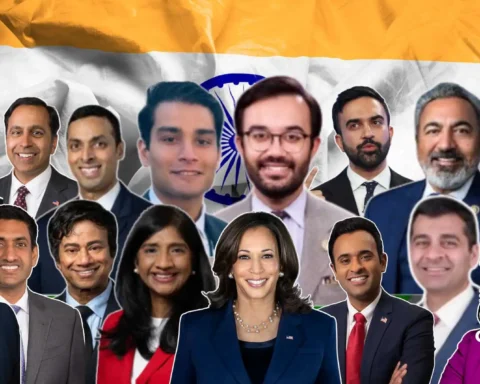
The India-US import commitment is underpinned by a deep well of trust that spans decades, with Indian-origin professionals contributing to US technology, health, research, and entrepreneurship. These human bridges simplify the expansion of cooperation in advanced spheres.
Joint innovation, skill development, and investment allow the partnership to evolve beyond a buyer-seller relationship when the import push aligns with it. It is here that engineers, scientists, and business leaders of Indian origin in the US can covertly impact capital flows, technology preferences, and joint ventures.
Balancing Imports With Domestic Priorities
The India-US import commitment of America will be evaluated not only on the quantity of imports made, but also on the wisdom with which India makes its import purchases. Each massive transaction will be examined for domestic value addition, home employment, and the adoption of technology.
In this regard, policymakers will have a fine balancing act to ensure they open their doors wide enough to attract cutting-edge products and investment without hollowing out domestic industries. It will also be necessary to have transparent procurement frameworks, a specific industrial policy, and support for vulnerable sectors.
Geopolitical Signalling And Leverage
Beyond the economic aspect, the India-US import commitment sends another signal to the other major powers. It indicates that India will enhance its relations with other democracies that share its views, while remaining strategically autonomous.
Meanwhile, relying excessively on a single supplier or a single bloc is dangerous. India will aim to leverage the commitment to secure better terms and maintain its sources of energy, defence, and technology.
India-US Import Commitment: What Could Derail The Plan
The India-US import commitment may not see the desired size because of several reasons that may interfere with it before it attains it:
- A global or national recession is squeezing demand.
- Currency volatility is rising and adding to import prices.
- Domestic politics of perceived over-opening.
- US post-election export policy swings or control.
- Sluggishness in major defence or aviation tenders.
In case such risks materialize, both parties can silently recalibrate time or what constitutes the target. Managing expectations and contracts will also be significant issues.
What Success Would Actually Look Like
The India-US import commitment will not succeed just because it reaches a symbolic dollar figure. It would imply a finer grid of trade, investment, and technological collaboration, increasing the productivity and durability of the two economies.
The political bet would seem well-grounded if India had access to the most important technologies, generated quality jobs, and enhanced the reliability of the supply chain. For the US, a strong, consistent, and expanding market in Asia would offset risks in other regions and strengthen its position as a global economic power.
Long-Term Stakes For Both Nations
Finally, the India-US import commitment is an experiment in whether two big, messy democracies can marry ambition and implementation. It represents hope of more accelerated growth, improved technology, and enhanced security; there is also fear of excessive exposure and homegrown criticism.
When handled in an open, flexible, and mutually beneficial way, it has the potential to remake the direction of one of the most significant bilateral relationships of the 21st century. Otherwise, it will be just another oversold under-delivered headline in the long history of world trade diplomacy.