



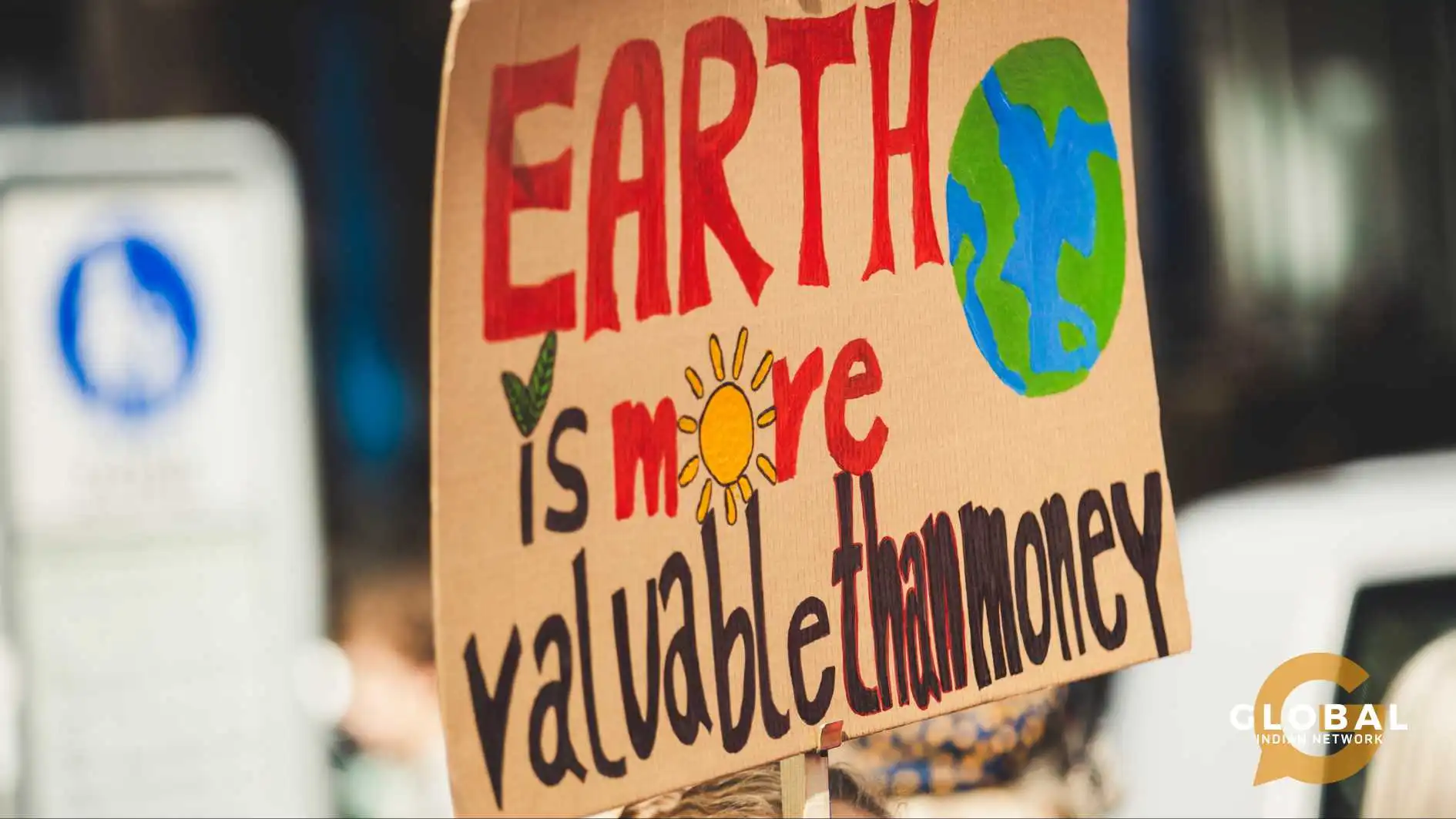

Does your heart skip a beat when you see such signs?

Previous and current generations have been oblivious to the Earth’s lament. As a finite planet, future generations will bear the brunt, as evidenced in the above image.
A driver in Nairobi swapping a SUN Mobility battery, powered by Indian-origin innovation, is a symbol of diaspora-led climate action. Faradion, a sodium-ion battery innovator and part of the Indian diaspora, has been acquired by Reliance Industries. The company focuses on low-cost, abundant-material batteries for e-bikes and grid storage, with plans to export to Africa.
Global Indians significantly contribute to climate action and sustainable development by driving renewable energy projects and clean tech initiatives, while also influencing climate diplomacy and grassroots activism. Their collective efforts amplify India’s climate goals globally and demonstrate how migrant-driven initiatives can foster a resilient, low-carbon future. As India advances in renewable energy and emissions reduction, the overseas community’s expertise and advocacy play a crucial role in supporting these objectives.
This article details how the global Indian community acts as a pivotal transnational force, leveraging expertise and capital to drive innovation, shape policy, and champion climate justice worldwide.
Here, we look into their contributions. The aim is also to bridge the gaps in understanding that often hinder meaningful progress, ensuring all stakeholders move forward with clarity and shared purpose.
Table of Contents
Bridging Innovation and Climate Tech Leadership
Historically, India has been a nation that thrived on living with nature. In recent years, India has made great strides in environmental preservation, especially since the Paris Agreement in 2016.
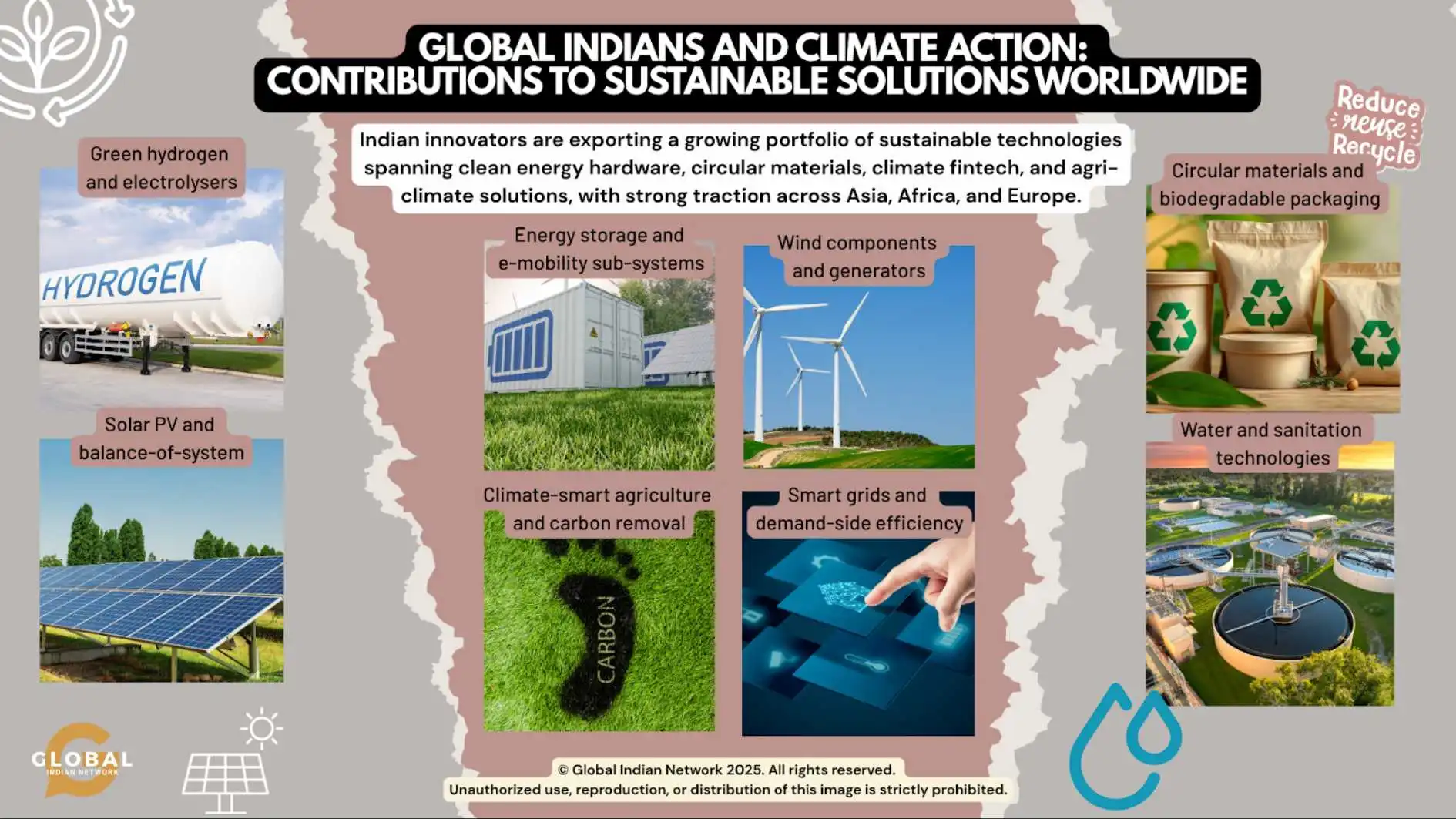
Global Indians are at the forefront of climate technology innovation across continents. Transnational scientists, engineers, and entrepreneurs help drive advances in renewable energy, energy efficiency, and sustainable agriculture. Many are founding or steering startups in clean tech sectors such as solar energy, battery storage, carbon capture, and sustainable materials. These efforts foster technology transfer and knowledge exchange between countries, accelerating India’s green transition.
Innovation hubs in Silicon Valley, Europe, and Singapore are increasingly led by Indian-origin founders and researchers working alongside Indian institutions. Efforts are being made to establish cross-border incubators and venture capital networks that leverage the Indian capital and mentorship for Indian climate startups. This brain circulation is pivotal for developing sustainable solutions. Additionally, Indian innovators are successfully exporting a diverse range of sustainable technologies, including clean energy hardware and climate fintech, with significant impact in Asia, Africa, and Europe.
Major Sustainable Technologies India Exports
India is rapidly emerging as a global hub for sustainable technologies, leveraging its strengths in renewable energy, green manufacturing, and eco-innovation. With ambitious targets like achieving 500 GW of renewable energy capacity by 2030, the country is increasingly exporting solar modules, wind energy solutions, and other low-carbon technologies to meet rising global demand.
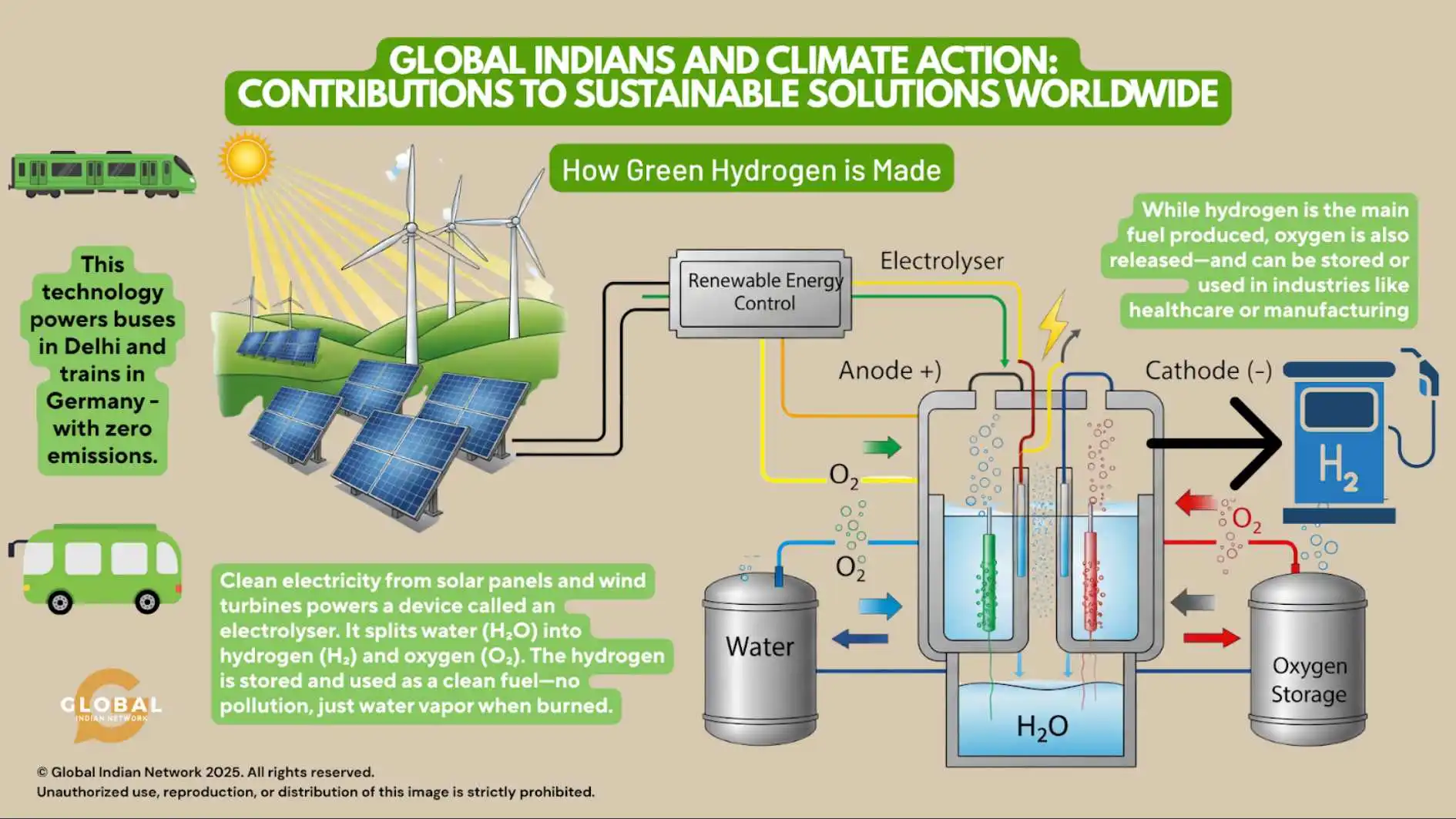
Green Hydrogen and Electrolysers
India is enhancing its domestic electrolyser manufacturing capabilities, with significant indigenisation potential in PEM, alkaline, and solid oxide designs, to meet the increasing global demand expected to reach hundreds of gigawatts by 2030 and beyond. The National Green Hydrogen Mission and granted manufacturing capacities are driving the development of export-ready supply chains for electrolysers and balance-of-plant components.
Solar PV and Balance-of-system
Indian firms are increasing exports of solar modules and cells, aided by production-linked incentives and capacity expansions that lower costs for international buyers focused on net-zero objectives. Export activities are associated with greener factory practices and the rapid implementation of advanced, energy-efficient technologies, thereby enhancing the competitiveness of photovoltaic (PV) and balance-of-system (BOS) products in global markets.
Wind Components and Generators
India has achieved a net export position in wind generators by enhancing its manufacturing capabilities to provide nacelles, towers, and components for international wind projects. This domestic capacity has also lowered costs for hybrid projects that integrate wind energy with storage, which are increasingly in demand in export markets.
Energy Storage and e-mobility Sub-systems
Startups and tier 1 companies are exporting battery storage subsystems, BMS software, and power electronics for grid-scale storage and EV ecosystems globally. Export advisory sources identify solar and EV components as leading sustainable products from India, driven by favorable policies and cost innovations, thereby establishing these markets as scalable export lines.
Climate-smart Agriculture and Carbon Removal
India-based ventures are exporting MRV (measurement, reporting, verification) methodologies, carbon project development services, and bio-based removal solutions linked to international offtake agreements. Climate-tech platforms developed in India’s “live lab” conditions are being tailored for smallholder contexts in other emerging markets, facilitating the export of software, advisory, and low-cost hardware bundles to enhance resilience and soil health.
Circular Materials and Biodegradable Packaging
Indian innovators are shipping biodegradable packaging and alternative materials (hemp, bamboo, agri-waste-based) that cut plastic use in global retail supply chains. This materials export push rides on India’s growing Extended Producer Responsibility (EPR) compliance and artisanal manufacturing base, which meets ethical procurement standards valued by overseas buyers.
Smart Grids and Demand-side Efficiency
Software-led solutions for smart metering, grid analytics, and demand-side management developed in India are being exported to utilities. This export-learning effect enhances energy efficiency in Indian factories and strengthens energy management system capabilities for international sales.
Water and Sanitation Technologies
Affordable water purification, decentralized wastewater treatment, and leak-detection analytics – pioneered for Indian conditions – are being adapted for municipalities and estates in Africa and Southeast Asia. These offerings align with buyers’ need for cost-effective, rapidly deployable infrastructure upgrades that meet sustainability reporting requirements.
Influencing Policy and Governance
The Indian community plays a vital role in climate policy, influencing international negotiations at UNFCCC COP summits through lobbying and public diplomacy. They advocate for climate justice for developing nations, aligning with India’s call for equitable support for low-carbon development. In host countries, Indian-origin policymakers promote ambitious climate legislation and green infrastructure investment, leveraging their understanding of both Indian and global contexts to enhance climate diplomacy and bilateral cooperation, thereby fostering resilience and sustainability across borders.
Global Indian Experts in Climate Policy
- Leadership roles held by Indian-origin leaders, such as Alok Sharma (former UK COP26 President), showcase the collective’s significant impact on shaping climate agendas at national and international levels.
- Transnational climate activists, including Varshini Prakash in the US, are driving public support and advocating for climate legislation and judicial rulings focused on climate action.
We’ve grown up seeing our political system failing us. For twice as long as I’ve been alive, we have known about the crisis. And for just as long, the wealthy and powerful have profited off pollution.”
– Varshini Prakash (US, Sunrise Movement)
- Migrant scientists and climate experts contribute to policy-making by participating in task forces, advisory boards, and NGOs that focus on evidence-based recommendations and collaboration to reduce emissions and transition energy systems in host countries.
- Overseas Indian networks facilitate transnational collaboration among Indian group organizations, uniting various ethnic and faith groups to promote cross-community education, pursue climate justice initiatives, and mobilize resources for local and global climate objectives.
- Migrant communities facilitate bilateral cooperation in clean technology, research partnerships, and climate finance, serving as cultural and economic bridges that enhance policy adoption and execution in both host countries and India.
- By participating in elections, migrant Indians can elect representatives who prioritize climate issues and promote green policies in their host countries.
- Many overseas entrepreneurs create and implement climate tech solutions that impact sustainable development policies and market mechanisms, highlighting the economic potential of green policies.
- Cultural diplomacy and community programs led by the overseas changemakers enhance environmental awareness and sustainability among youth, thereby shaping long-term policy environments.
Collectively, these pathways enable global Indians to be a potent force in advancing climate policy and action in host countries, leveraging leadership, advocacy, expertise, networks, and cultural capital to align with the global climate agenda while reflecting Indian perspectives and innovations.
Championing Renewable Energy Expansion
India’s renewable energy capacity has surged, driven by domestic policy and international collaborations supported by global Indian expertise and investment. The country already surpassed its 50% non-fossil capacity target ahead of schedule, mainly through solar and wind projects. However, coal remains a significant energy source, challenging an expedited transition. (Source: Down to Earth, ET Energyworld)
The overseas Indian community is instrumental in mobilizing finance and technical expertise for renewable energy, particularly in underserved areas. Professionals of Indian origin are involved in global clean energy finance, creating investment vehicles that direct capital towards India’s green infrastructure and innovation. Additionally, entrepreneurs and investors from this community have launched solar and wind energy startups and community projects in the US, Canada, and the UK, aiming to provide clean power to underprivileged communities and promote the adoption of green technology.
Here are some examples of successful India-origin renewable energy projects overseas led or influenced by Indian-origin companies and entrepreneurs:
ReNew Power, a major renewable energy company based in India, has made significant investments in solar and wind projects internationally, including utility-scale solar farms in the US and offshore wind projects in the UK, highlighting India’s expanding presence in global clean energy markets.
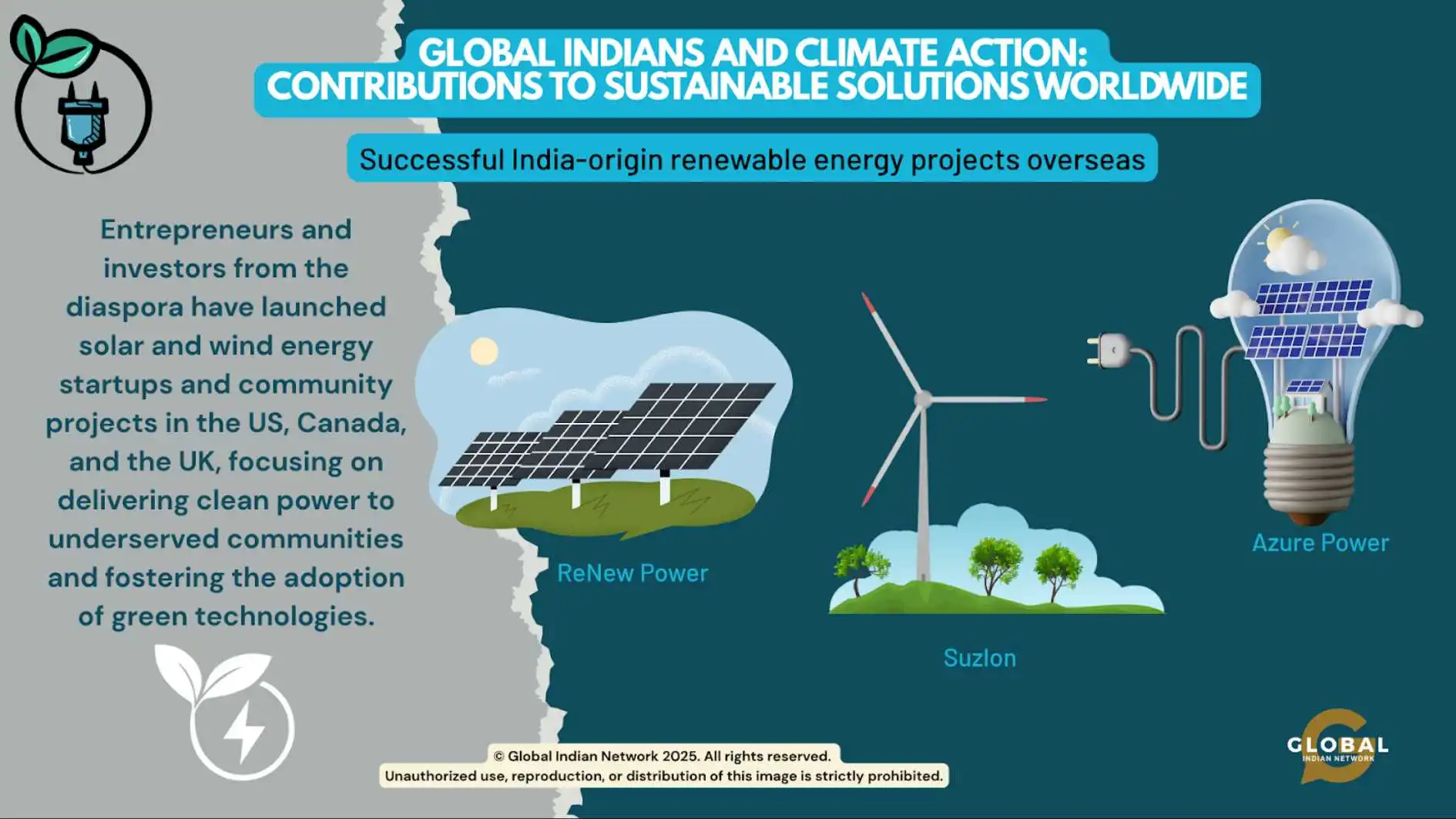
Suzlon, an Indian wind turbine manufacturer, has installed wind farms internationally, including in the US, Australia, and Europe, significantly contributing to global wind energy capacity.
Azure Power, an India-based company, is actively developing and managing solar projects internationally, leading cross-border solar energy investments linking India with global renewable markets.
Indian-origin startups are expanding off-grid solar solutions in Africa and Southeast Asia, offering decentralized clean energy to rural areas and showcasing India’s leadership in affordable solar technology exports.
Tech Mahindra provides energy management solutions, including smart grid, energy efficiency, and analytics services, to global utilities, helping integrate renewable energy into the power supply.
While many of these projects span energy generation, grid integration, and energy access solutions, they demonstrate how Indian-origin companies leverage domestic expertise to lead successful renewable initiatives overseas, accelerating the global clean energy transition.

Advocating Climate Justice and Social Impact
Beyond technology and policy, global Indians highlight the human dimensions of climate change – resilience for vulnerable communities, sustainable livelihoods, and environmental justice. Overseas NGOs and social entrepreneurs support grassroots adaptation projects in India, focusing on water conservation, reforestation, and climate-smart agriculture.
- Cultural diplomacy platforms run by migrant organizations spread awareness of sustainable practices rooted in Indian tradition, such as water harvesting and biodiversity conservation. This cultural bridge strengthens community buy-in for climate action, integrating modern science with indigenous wisdom.
- Indian-origin policymakers and climate activists lobby for stronger climate policies in host countries, engaging in international forums such as UN climate summits to advocate for equity and ambitious climate action aligned with India’s climate priorities.
- Global Indian youth are actively advocating for climate urgency and sustainable development through international networks, climate strikes, and innovation challenges. They play a crucial role in shaping India’s sustainability pathways and lead education campaigns that emphasize environmental stewardship and hybrid global identities linked by climate responsibility.
- Grassroots environmentalism, led by Indian NGOs, focuses on tree planting, urban gardening, water conservation, and waste reduction. These initiatives reflect Indian cultural practices of environmental stewardship, merging tradition with modern sustainability.
- Indian scientists, academics, and youth groups conduct workshops, webinars, and school programs to enhance climate awareness, promoting cross-cultural exchanges that encourage joint innovations in climate adaptation and resilience.
Philanthropic Funding for Climate Resilience
Indian expatriate philanthropic foundations significantly support climate vulnerability projects in India and worldwide. They finance initiatives for clean water access, disaster preparedness, and sustainable agriculture, helping vulnerable communities adapt to climate change. By utilizing innovative financing, fostering community engagement, and promoting eco-friendly practices, these foundations enhance local ecosystems and contribute to climate resilience efforts. Their targeted investments help fill funding gaps and expand the adoption of effective climate adaptation and mitigation solutions.
Voices of the Youth
Several Indian-origin youth climate leaders are making a global impact, and their words capture both urgency and hope. Here are some standout voices.
Young people are not just the future—they are the present, and we demand climate action now.”
– Indian Youth Climate Network (IYCN, India)
We’re trading outrage for action—organising clean-ups, planting mangroves, and challenging power with poetry.”
– Youth-led Movements in India.
We are the generation that will inherit this planet. Our solutions must be heard.”
– UN India’s “We The Change” Campaign.
Challenges Faced by Global Indian NGOs
Global Indian NGOs face several challenges in their efforts to combat climate change:
Resource Limitations: Many NGOs operate with limited financial support, which restricts their capacity to implement large-scale projects or sustain long-term initiatives.
Policy and Regulatory Barriers: Navigating complex regulatory environments and aligning local policies with international climate goals can be difficult, hampering effective action and cross-border collaboration.
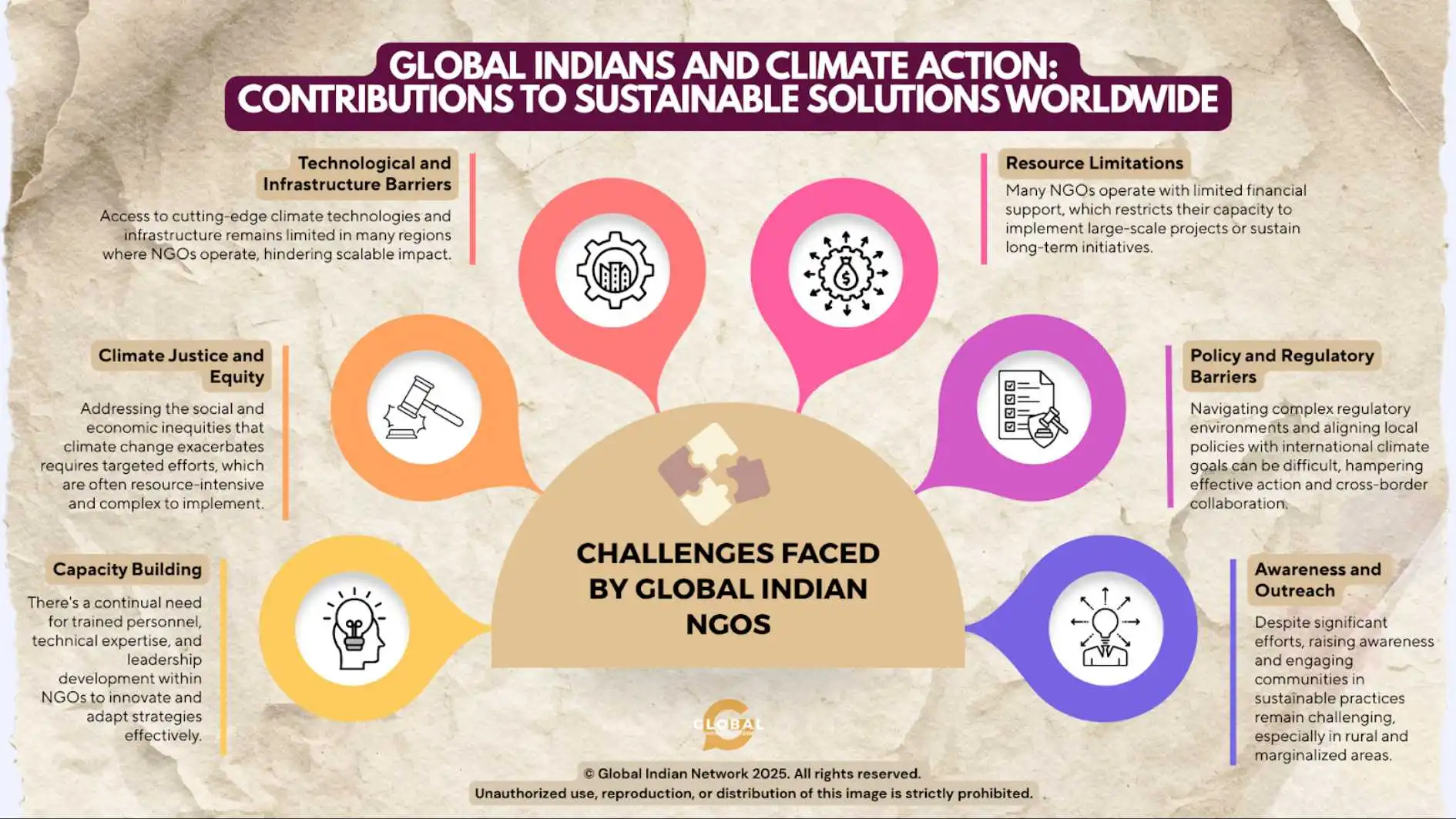
Awareness and Outreach: Despite significant efforts, raising awareness and engaging communities in sustainable practices remain challenging, especially in rural and marginalized areas.
Capacity Building: There’s a continual need for trained personnel, technical expertise, and leadership development within NGOs to innovate and adapt strategies effectively.
Climate Justice and Equity: Addressing the social and economic inequities exacerbated by climate change requires targeted efforts that are often resource-intensive and complex to implement.
Technological and Infrastructure Barriers: Access to cutting-edge climate technologies and infrastructure remains limited in many regions where NGOs operate, hindering scalable impact.
Their ability to overcome these challenges depends on enhanced funding, effective policy advocacy, international cooperation, and strengthened community engagement.
Indian NGOs Partner Internationally on Climate Projects
Several Indian NGOs are actively partnering internationally on climate projects, leveraging expertise and networks for greater impact:
India Climate Collaborative (ICC) – A platform catalyzing climate action by unlocking philanthropic capital and aligning climate mitigation with India’s development pathways. ICC builds connective infrastructure for impactful funding and partners with global donors and climate initiatives.
The Energy and Resources Institute (TERI) – TERI is a leading Indian research organization focused on climate change, engaging in studies on impacts, vulnerability, adaptation, and mitigation. It collaborates with international entities, including CICERO (Norway), UN agencies, and bilateral donors, to support policy and community-level initiatives.
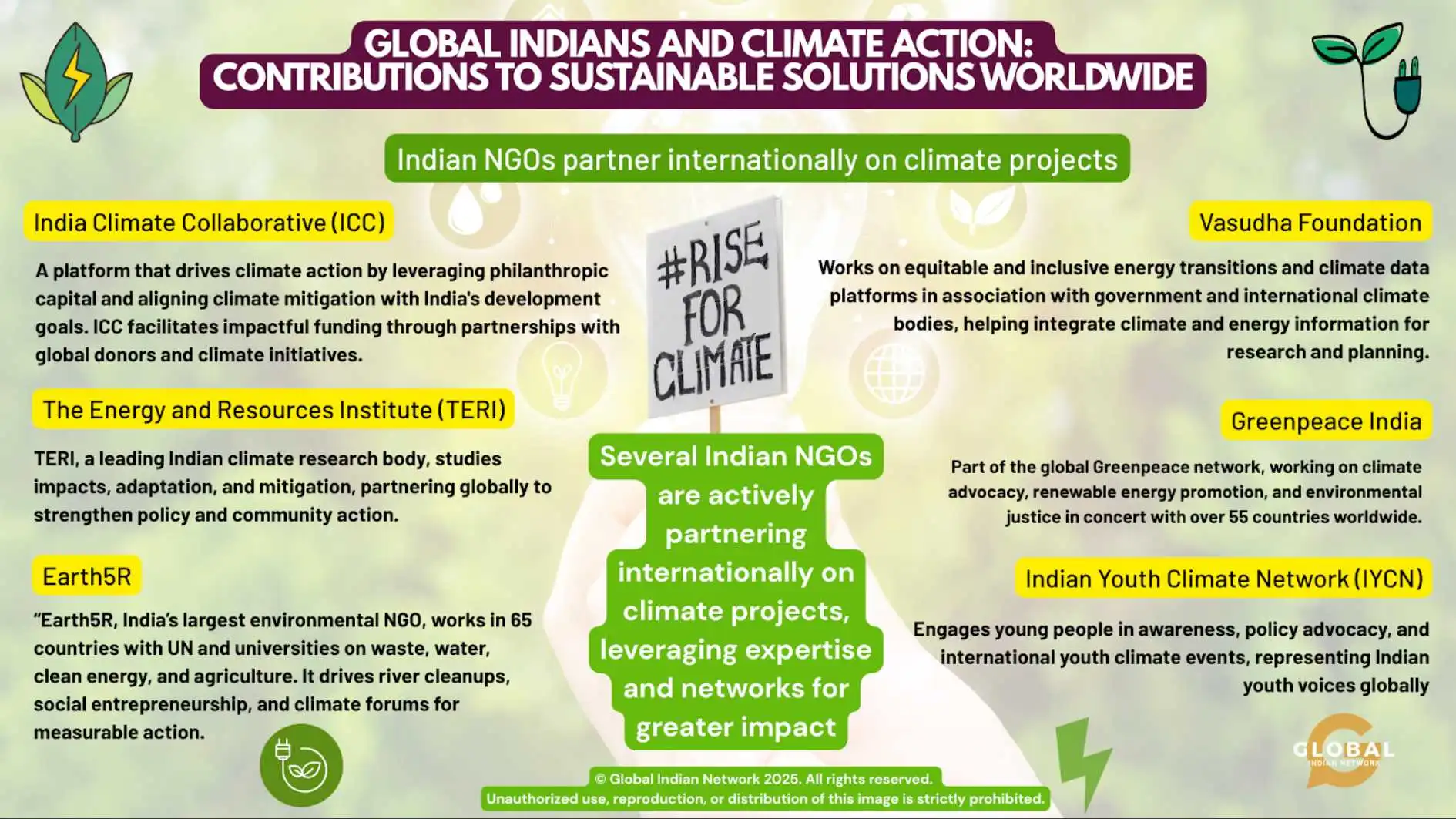
Earth5R – India’s largest environmental organization operates in 65 countries, collaborating with entities like the UN and universities to implement data-driven sustainability initiatives in waste, water, clean energy, and agriculture. Earth5R participates in projects such as river cleanups, social entrepreneurship programs, and international climate forums to promote measurable climate action.
Vasudha Foundation – Works on equitable and inclusive energy transitions and climate data platforms in association with government and international climate bodies, helping integrate climate and energy information for research and planning.
Greenpeace India – Part of the global Greenpeace network, working on climate advocacy, renewable energy promotion, and environmental justice in concert with over 55 countries worldwide.
Indian Youth Climate Network (IYCN) – Engages young people in awareness, policy advocacy, and international youth climate events, representing Indian youth voices globally.
NGOs in India collaborate with global stakeholders to enhance climate action by bridging local initiatives with international objectives and funding. Indian-origin communities act as intermediaries in climate diplomacy, supporting lobbying and investments that aid the transfer of green technologies worldwide. This connection of policy, innovation, and community action allows the collective to play a crucial role in promoting equitable climate solutions and integrating India’s voice into global sustainability efforts.
Opportunities for Global Indian Investors
Overseas networks of global Indians play a crucial role in supporting climate tech startups through funding, mentorship, and partnerships. Increased collaboration among investors, startups, and policymakers has accelerated the development of export-ready products in mobility, renewables, and resilient agriculture. India’s testbed advantage allows for scalable solutions tailored to challenging conditions, creating opportunities for adaptation in other emerging markets.
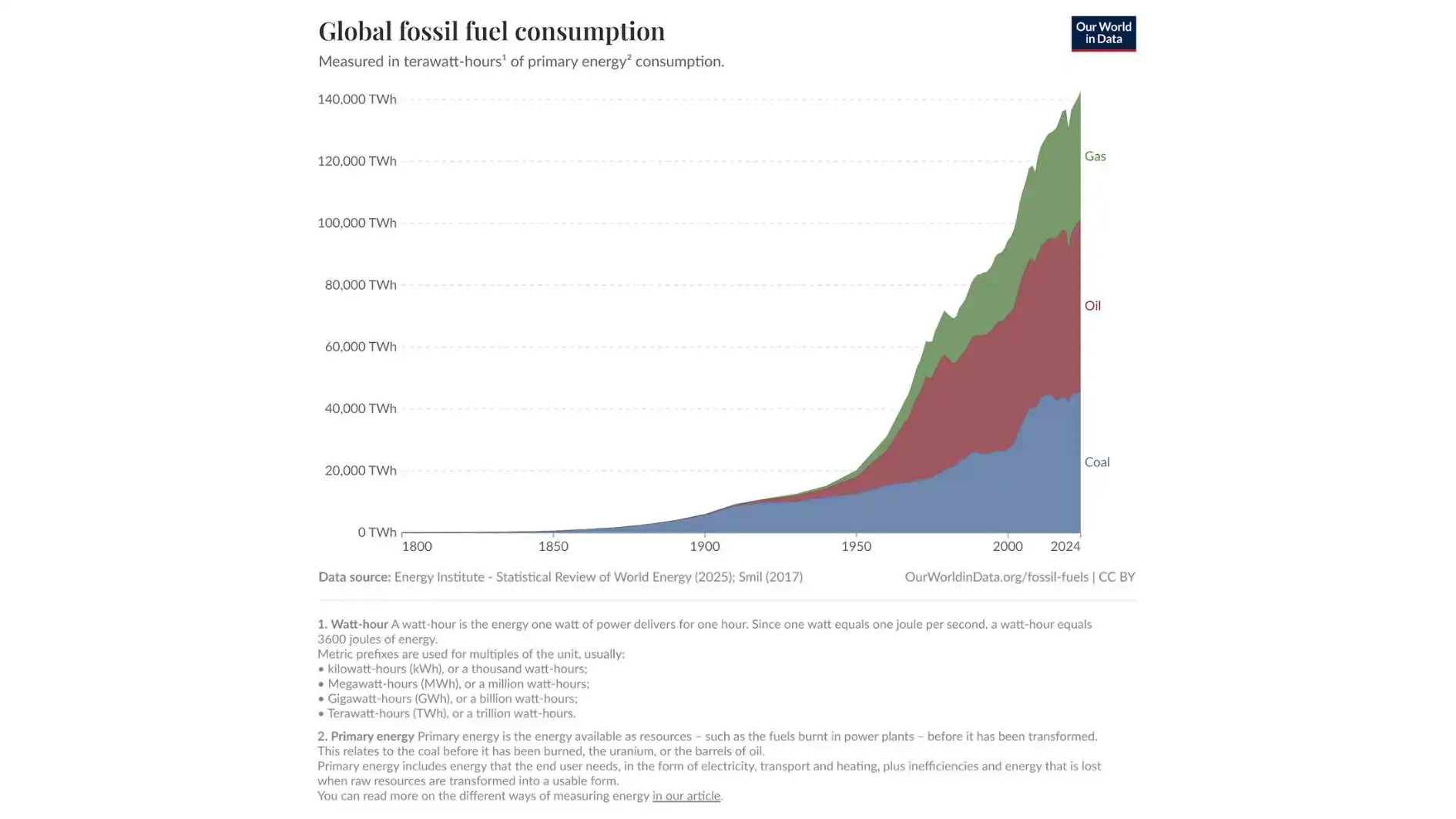
- Coal reliance and rising energy demand mean emissions are not aligned with a 1.5°C pathway.
- Rising use of gas in industry and urban areas undermines long‑term decarbonization.
- Current policies are not fully integrated or ambitious enough to steer India toward a fossil‑free energy system.

Recommendations for Global Indians
India’s climate commitments are growing, but experts consider current policies inadequate for achieving the 1.5°C Paris Agreement goals without international aid and a faster phase-out of coal. Global Indians are tasked with balancing optimism in India’s green advancements with advocacy for more ambitious global commitments.
Additionally, transnational engagement is vital for connecting science, finance, governance, and culture to develop effective climate solutions through collaborations among professionals, institutions, governments, and civil society, thereby driving climate innovation and leadership.
Strengthen Cross-Border Collaboration & Platforms
Establish a Global Indian Climate Council (GICC) to bring together overseas experts, investors, NGOs, and policymakers. Create platforms for sharing knowledge on climate-tech research and policy. Encourage joint MoUs between Indian institutions and global universities or innovation hubs, and build cross-border climate-tech start-up incubators with migrant-led mentoring.
Expand Access to Climate Finance
Launch an Overseas Green Fund to channel contributions into verified climate projects in India and emerging markets. Facilitate migrant investments in India’s renewable energy parks through retail-level climate bonds, and simplify CSR pathways for overseas Indians to support climate action NGOs. Additionally, develop transnational-led impact investment networks for funding startups in green mobility, energy storage, and the circular economy.
Unlock philanthropic capital and impact investment via migrant-led foundations and networks, advocating for inclusive international climate finance to enable Indian and overseas NGOs to expand projects and address infrastructure gaps.
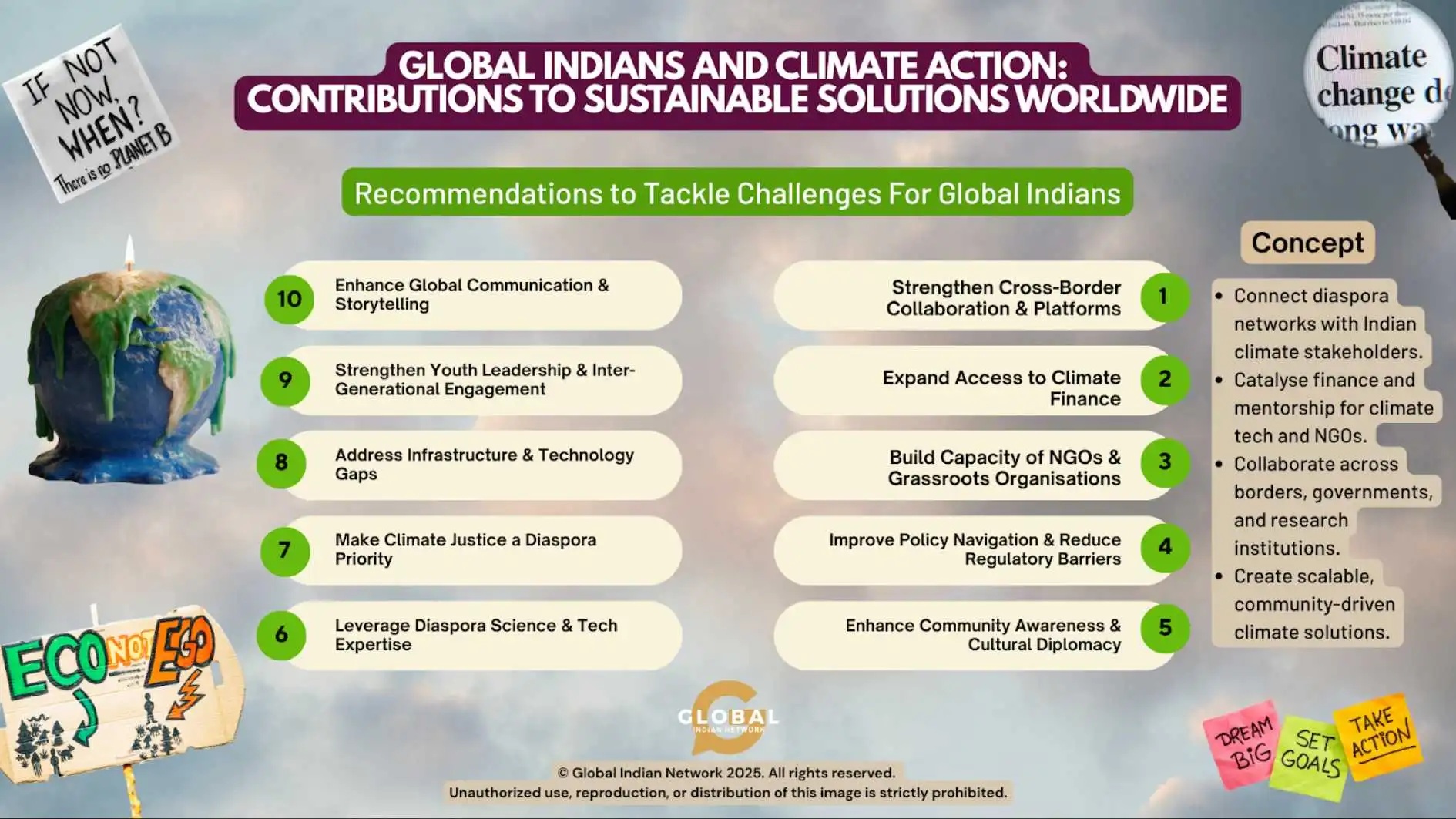
Build Capacity of NGOs & Grassroots Organisations
One recommendation is to establish an Overseas Climate Fellows Program that places young professionals and experts with Indian NGOs for 6 to 12 months. The program can focus on accredited online training in measurement, reporting, and verification (MRV), carbon finance, and renewable energy project management, while also supporting NGOs’ use of digital tools.
It should aim to enhance access to Indian embassies to foster partnerships and secure grants. Moreover, it emphasizes leadership development and climate literacy for global Indians and local communities and promotes connection among migrant scientists, academics, and youth leaders through workshops and educational programs globally.
Improve Policy Navigation & Reduce Regulatory Barriers
To enhance engagement in climate projects, establish policy help desks at embassies for guidance on Foreign Contribution Regulation Act (FCRA) compliance, promote temporary expert visas for migrants, and create a One-Stop Approval Portal for climate-related CSR and NGO collaborations. Support involvement in climate policy-making via advisory boards and participation in international forums like UNFCCC and COP Summits, while encouraging civic engagement and voting to elect representatives prioritizing climate action.
Enhance Community Awareness & Cultural Diplomacy
To enhance engagement in climate projects, establish policy help desks at embassies for FCRA compliance guidance, promote temporary expert visas to build a talent pool, and create a One-Stop Approval Portal for climate-related CSR and NGO collaborations. Support transnational involvement in climate policy-making via advisory boards and participation in international forums like UNFCCC and COP Summits, while encouraging civic engagement and voting to elect representatives prioritizing climate action.
Leverage Overseas Science & Tech Expertise
Promote collaboration among the expatriates in areas such as AI-driven climate forecasting, carbon capture, circular materials, and battery technologies. Establish Global Indian Innovation Labs to connect key cities and encourage intellectual property sharing via public-private research and development alliances.
Create cross-border innovation hubs, venture accelerators, and mentorship platforms to facilitate the exchange of climate solutions and resources between India and its transnationals, while fostering partnerships between Indian institutions and global organizations to enhance technology transfer and knowledge exchange.
Make Climate Justice a Global Indian Priority
Promote collaboration among the migrants in areas such as AI-driven climate forecasting, carbon capture, circular materials, and battery technologies. Establish Global Indian Innovation Labs to connect key cities and encourage intellectual property sharing via public-private research and development alliances.
Create cross-border innovation hubs, venture accelerators, and mentorship platforms to facilitate the exchange of climate solutions and resources between India and its expatriates, while fostering partnerships between Indian institutions and global organizations to enhance technology transfer and knowledge exchange.
Address Infrastructure & Technology Gaps
Facilitate affordable donations of climate tech, including solar dryers, water-quality sensors, and soil-health monitors. Establish shared climate data platforms that connect India with host countries and enable remote monitoring through IoT dashboards for agriculture, water management, and clean energy. Support global Indian entrepreneurs in scaling climate tech startups that focus on clean energy, sustainable agriculture, water management, and circular economy solutions, while promoting the export of climate technologies and best practices to aid underserved regions in adaptation and growth.
Strengthen Youth Leadership & Inter-Generational Engagement
Initiate Global Indian Youth Climate Chapters in key migrant locations, establish international youth climate forums connecting students globally, and offer micro-scholarships for innovative climate solutions proposed by young members of the expatriate groups.
Enhance Global Communication & Storytelling
Launch a Global Indian Climate Media Collective comprising documentaries, podcasts, opinion pieces, and social media campaigns. Promote India’s green technologies and policies through public diplomacy events, and build partnerships with global newsrooms to amplify climate advocacy led by Indian-origin leaders.

Conclusion
The global Indian migrant community acts as a vital engine driving sustainable solutions worldwide, amplifying India’s growing climate ambitions through technology, policy, advocacy, culture, and education. By harnessing this global expertise and capital, India can accelerate its energy transition, strengthen climate justice, and build resilient communities poised for a low-carbon future. As global Indians continue to expand their climate action footprint, they embody the promise of a sustainable and inclusive India rising on the world stage.
This comprehensive expatriate community involvement illustrates the powerful impact of global citizenship in tackling one of humanity’s most significant challenges – climate change – while contributing to India’s emergence as a worldwide leader in green economies.
Overall, Indian global communities act as crucial connectors, driving climate action in their host countries while linking global innovations and capital flows back to India’s sustainable development goals. This dual impact magnifies their leadership in climate initiatives worldwide.
Join us at the Global Indian Network in our crusade to save Earth. Share this piece to support humanity.