


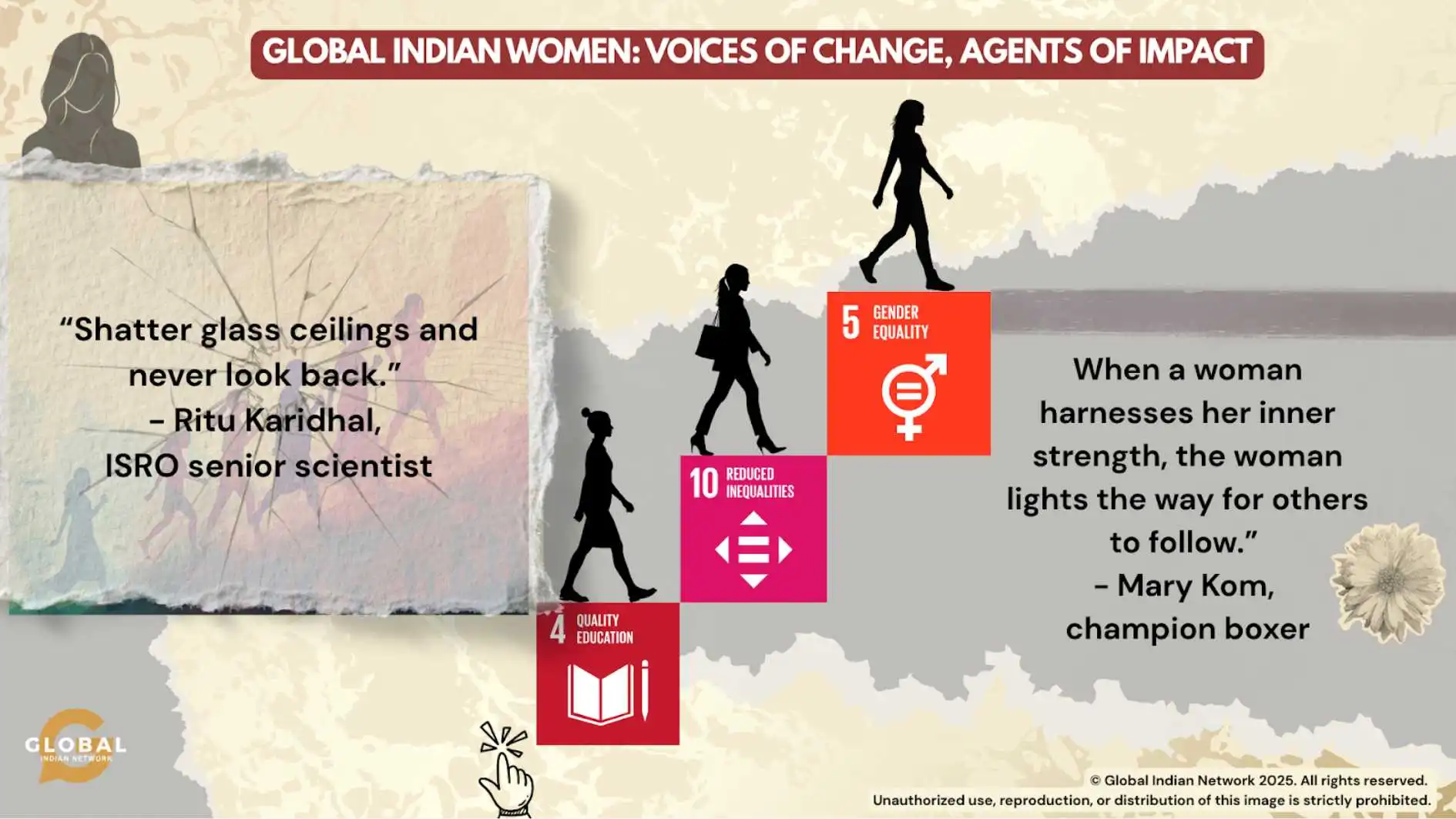
Shatter glass ceilings and never look back.”
~ Ritu Karidhal, ISRO senior scientist.
When a woman harnesses her inner strength, the woman lights the way for others to follow.”
~ Mary Kom, champion boxer.
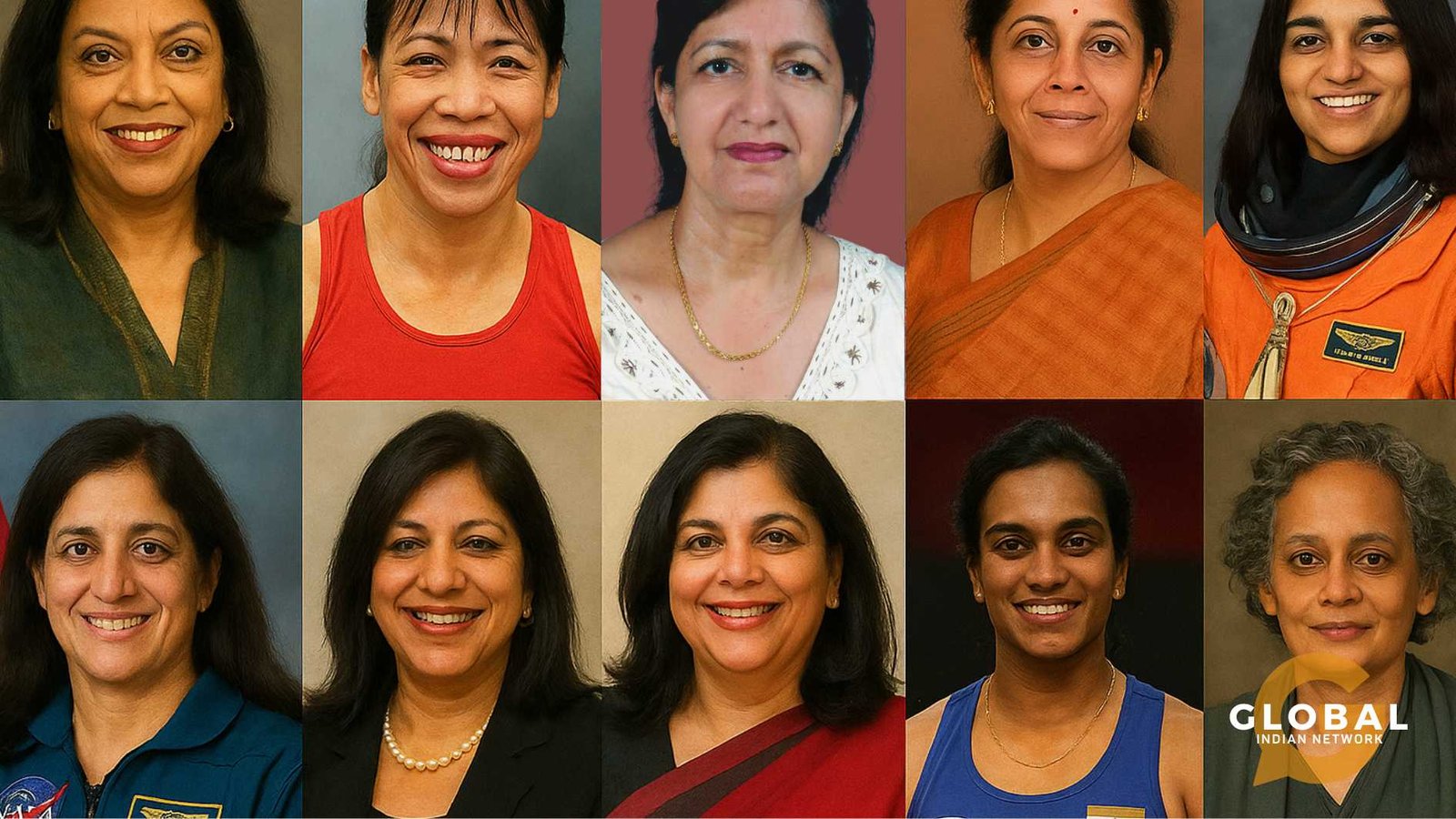
These words capture the spirit of global Indian women whose stories transcend borders and inspire nations.
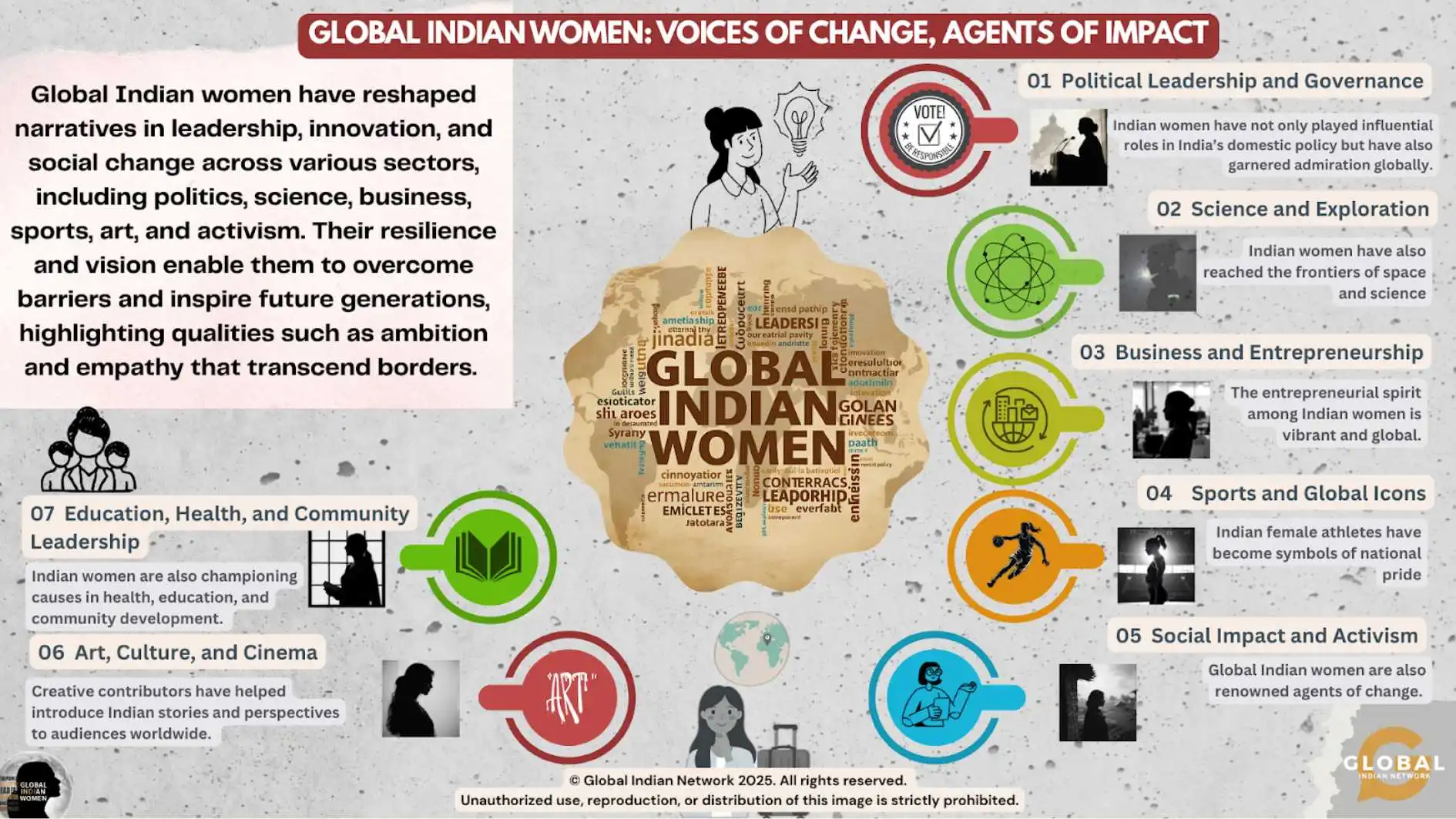
Global Indian women have rewritten the narratives of leadership, innovation, and social change, both within India and on international platforms. They have excelled in fields such as politics, science, business, sports, art, and activism, drawing upon resilience and vision to shatter barriers and inspire generations. Their journeys spotlight ambition, empathy, and a determination that transcends borders.
This article celebrates such trailblazers who have shaped India’s narrative and influenced global arenas. Their achievements light a path for future generations, proving that with unwavering resolve, Indian women can, and do, conquer every frontier they set their sights on.
Table of Contents
Political Leadership and Governance
Indian women have not only played influential roles in India’s domestic policy but have also garnered admiration globally. Indira Gandhi, India’s first and only female prime minister, steered the country through challenging times and left an indelible legacy on world affairs.
Finance Minister Nirmala Sitharaman is another contemporary example, regularly featured on Forbes’ list of the world’s 100 most powerful women. Her work in steering India’s economic policy during tumultuous global conditions has earned her worldwide respect and recognition.
Science and Exploration
Indian women have also reached the frontiers of space and science. Kalpana Chawla, the first Indian-born woman astronaut, inspired millions with her journey from Karnal to NASA and beyond. Her life illustrated how Indian women could scale cosmic heights with dedication and courage. Sunita Williams, another Indian-American astronaut, further cemented this legacy by spending more than 300 days in space and setting a world record for the longest spacewalk by a woman.
Back home, scientists like Tessy Thomas, the “Missile Woman of India,” and Gagandeep Kang, a leading virologist, embody the power of scientific vision combined with national pride.
Business and Entrepreneurship
The entrepreneurial spirit among Indian women is vibrant and global. Kiran Mazumdar-Shaw, founder of Biocon, is an icon in the biotechnology industry. Her vision turned Biocon into an international biopharmaceutical powerhouse, making significant contributions to affordable healthcare. Ritu Kumar, the pioneering fashion designer, made Indian textiles synonymous with global couture, and her work continues to influence not only South Asian fashion but also the broader design world.
Other notable leaders include Alka Banerjee, a major player in global equity indices, who manages major ventures for S&P Dow Jones Indices worldwide, illustrating Indian women’s influence in international finance. Roshni Nadar Malhotra, Chairperson of HCL Technologies, leads a $13 billion enterprise and is the first woman to head a listed IT company in India.
Falguni Nayar, founder of Nykaa, became India’s richest self-made woman, showing that digital empowerment can redefine gender norms.
Sports and Global Icons
Indian female athletes have become symbols of perseverance and national pride. Mary Kom, Olympic medalist and six-time world boxing champion, overcame societal and logistical hurdles to put Indian women’s boxing on the global map. Sakshi Malik and Geeta Phogat became trailblazers in wrestling, bringing home India’s first Olympic and Commonwealth medals for women in the sport while shattering stereotypes about women’s strength. PV Sindhu, India’s first woman to win two Olympic medals in badminton, exemplifies focus and consistency, inspiring a generation to believe that discipline can turn dreams into history.
Social Impact and Activism
Global Indian women are also renowned agents of change. Aruna Roy is recognized for her tireless work in social activism and was recently lauded among the BBC’s 100 most inspiring women in the world. Vinesh Phogat, also on the BBC list, has transformed the landscape of wrestling and is an advocate for athletes’ rights. Pooja Sharma has made waves as a pioneer for inclusive funerary rites and social justice.
Art, Culture, and Cinema
Mira Nair and Arundhati Roy have redefined Indian narratives in cinema and literature, winning global awards and using their platforms to advocate for social issues. These creative contributors have helped introduce Indian stories and perspectives to audiences worldwide.
Education, Health, and Community Leadership
Indian women are also championing causes in health, education, and community development. Names like Savitribai Phule, who opened India’s first school for girls, continue to inspire generations of educators and reformers. Countless NGO leaders, entrepreneurs, and grassroots workers are advancing rural development and women’s empowerment, from economic models like Amul to innovative health and microfinance initiatives.
Go, get education. Break the shackles of the past. Do not live as slaves, be self-reliant, be self-dependent.”
– Savitribai Phule (translated from Marathi)
Rising Voices: The Next Generation
The future belongs to young innovators who blend global ambition with Indian identity.
Rashmi Sinha, CEO of SlideShare, built a global tech brand from Silicon Valley. Neha Narkhede, co-founder of Confluent and a leading AI investor, represents India’s rising influence in deep tech. Sneha Revanur, a 20-year-old AI expert and founder of Encode Justice, is among those recognized globally for her technological innovation, showing how the coming generation of Indian women will shape the world’s future.
More women are engaging in startups, domestic and global.
Current Programs
These are current and active programs in India as of 2024–2025.
India is expanding childcare and elderly care infrastructure to reduce the caregiving burden on women and boost workforce participation. Key childcare initiatives include upgrading 13 lakh Anganwadi centers under ICDS, integrating ECCE via NEP 2020, and launching the Palna Scheme to build 17,000 crèches. Elderly care efforts include 696 Senior Citizen Homes under AVYAY, expanded health coverage via Ayushman Bharat-PMJAY, and legal protections under the amended Maintenance and Welfare Act. Despite progress, challenges remain in funding, regulation, and service quality. Scaling caregiver training and public-private partnerships is vital to ensure accessible, high-quality care and gender-inclusive economic growth.
The Global Economic Imperative: Bridging the Gap
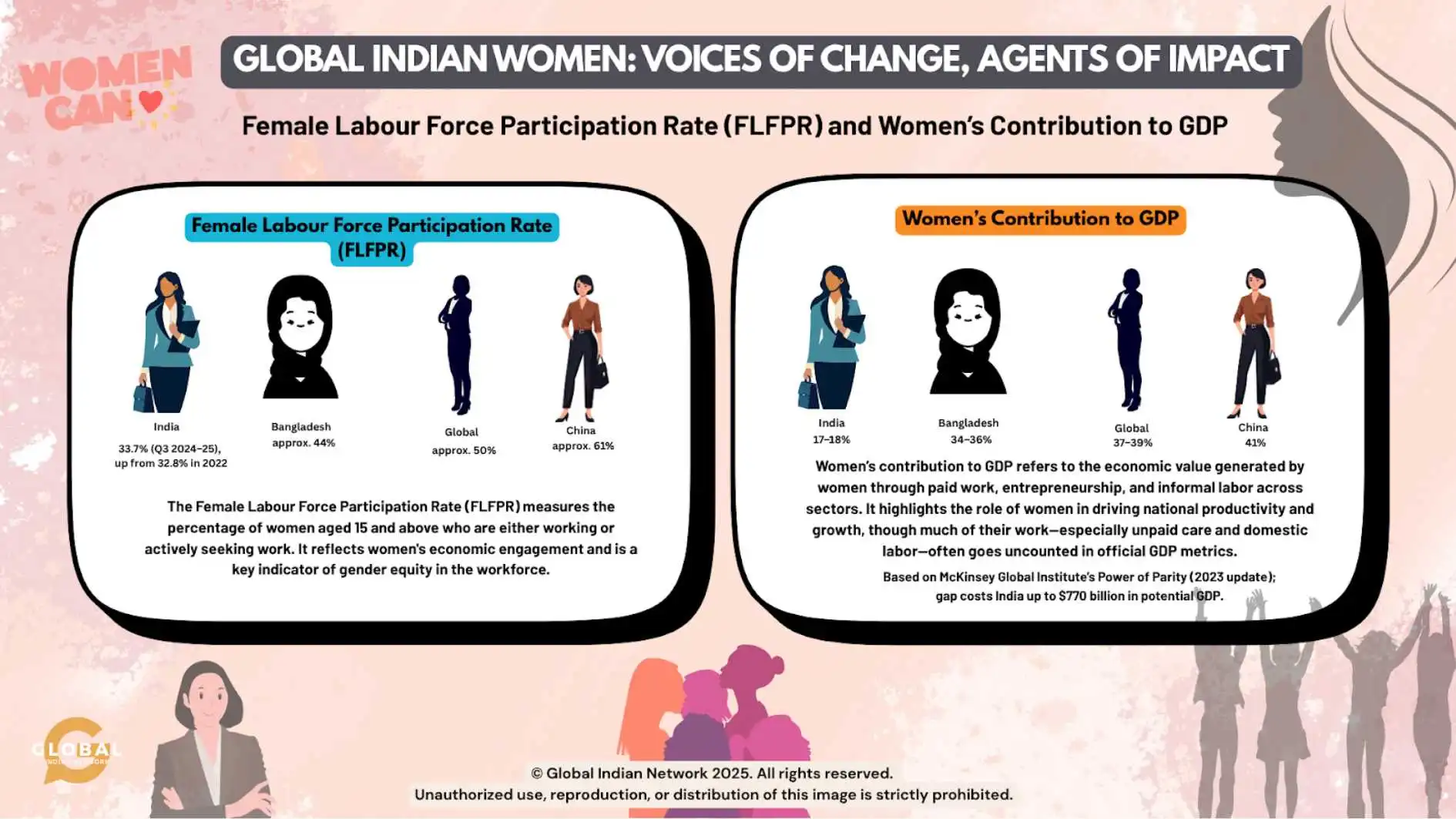
To provide a comprehensive global perspective, we should shift from individual achievements to macroeconomic realities, focusing primarily on India’s standing relative to global averages and other developing nations.
Indian women’s labour participation decades away from matching G20 peers, economists say.”
(Published July 22 2025) – Indian women’s labour participation decades away from matching G20 peers, economists say: Reuters poll By Reuters
Footnotes/Sources
Periodic Labour Force Survey (PLFS), Q3 2024–25; Press Information Bureau, Government of India — PRID 2188343.
Reuters, Indian women’s labour participation decades away from matching G20 peers, July 2025.
McKinsey Global Institute (2023), The Power of Parity Update – India Impact Scenario.
ILO Time Use Survey (2023); SBI Research Report on Unpaid Care Work (2024).
PIB (2024), Time Use in India Report – March 2024 release.
ILO & World Bank (2023–2024), Gender Wage Gap Estimates for Asia; ForumIAS Blog (2024) summary.
The Challenges: Barriers Rooted in Society
While India celebrates its women achievers, millions still face social, cultural, and structural hurdles that restrict progress. These challenges are not only economic but also deeply intertwined with tradition, perception, and policy gaps.
Entrenched Gender Norms and Cultural Conditioning
Despite progress in education and awareness, patriarchal mindsets remain strong. Women continue to shoulder the “double burden”- professional responsibilities alongside disproportionate domestic duties.
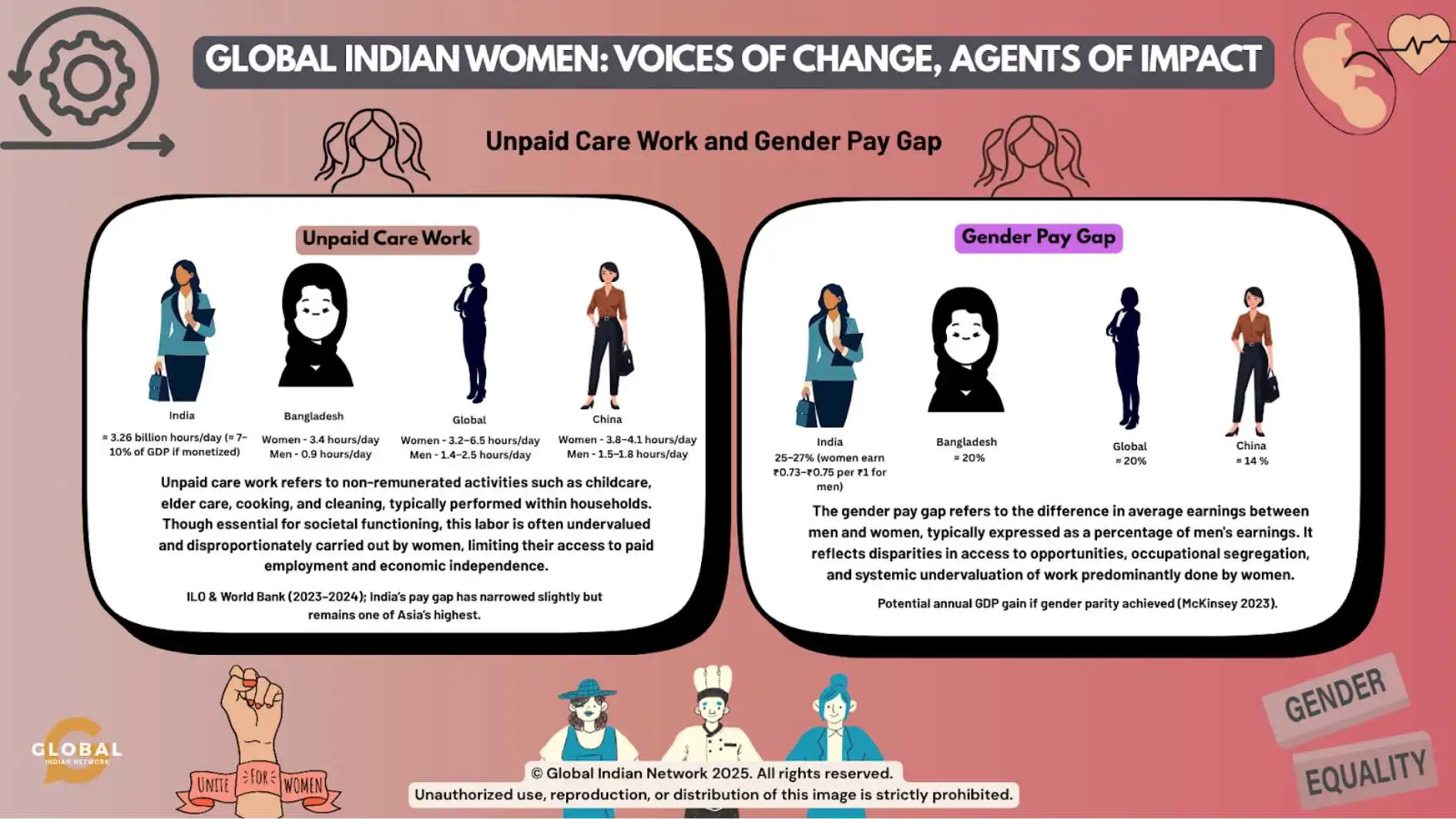
Surveys show that Indian women perform over three times as much unpaid care work as men, averaging 7.2 hours a day (IIMA, 2024). This expectation limits their ability to seek full-time or formal employment, particularly in urban and semi-urban settings.
Limited Mobility and Safety Concerns
Women’s participation in the workforce is also constrained by inadequate transport and safety infrastructure.
A 2023 Ministry of Women and Child Development report found that 40% of women cite safety concerns during commutes as a significant reason for dropping out of the workforce. In smaller towns, a lack of last-mile connectivity and safe public spaces discourages women from pursuing jobs or education far from home.
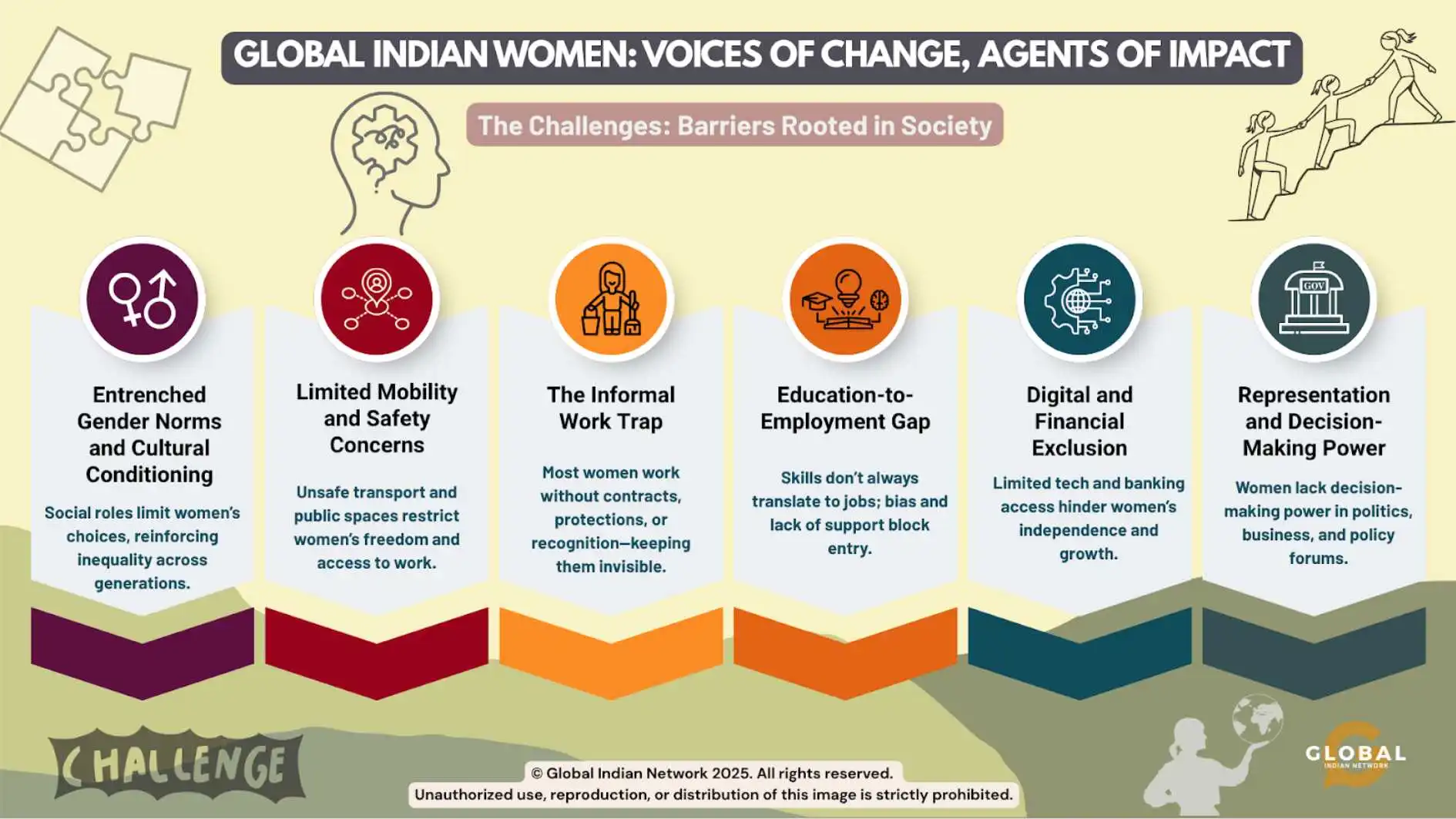
The Informal Work Trap
Nearly 80% of working women in India are engaged in informal, low-paying, or vulnerable employment, often without social protection or job security (ILO, 2024). Domestic work, home-based manufacturing, and agriculture continue to dominate women’s employment, leaving them invisible in official data.
Even among educated women, re-entry after maternity remains difficult due to inadequate childcare support and limited part-time or flexible work options.
Education-to-Employment Gap
While female literacy has improved to 77%, and girls now outnumber boys in several higher-education streams, this has not translated into equal labor participation. Structural barriers, family expectations, and the lack of career guidance mean that many educated women remain economically inactive. Moreover, gender bias in STEM education and workplace hiring perpetuates occupational segregation, with women underrepresented in high-paying technical roles.
Digital and Financial Exclusion
The digital revolution has not been gender-neutral. According to the World Economic Forum’s 2024 Gender Gap Report, only 33% of Indian women have regular access to digital financial tools compared to 59% of men. This digital divide restricts access to e-learning, remote work, and entrepreneurial opportunities, especially in rural areas.
Similarly, while government schemes like Jan Dhan Yojana have improved financial inclusion, women still struggle to access credit due to collateral requirements and limited awareness.
Representation and Decision-Making Power
Women remain underrepresented in politics and corporate leadership. As of 2025, women hold 15% of parliamentary seats and less than 10% of board-level positions in listed companies (World Bank, 2024). While symbolic leadership is celebrated, systemic mentorship is less accessible.
The Path Forward: Unlocking India’s Womanpower
The path forward must focus on economic empowerment, infrastructure support, and shifting social norms in India.
Monetizing the Unpaid Care Economy
The most immediate solution to boosting women’s measured labor force participation (FLFPR) is to acknowledge and address the burden of unpaid work. In a day, women spend about three times more than men on unpaid domestic work.
In neighboring Bangladesh, women spend approximately 3.4 hours/day on unpaid domestic and care work. Men spend approximately 0.9 hours/day, indicating a gender gap of nearly 2.5 hours.
Women in China dedicate approximately 3.8–4.1 hours daily to unpaid care work, while men spend around 1.5–1.8 hours, highlighting a significant gender gap. If monetized, this unpaid care work represents about 12–14% of the GDP, as estimated by the ILO.
Until recently, the value of unpaid domestic and care work (UDCW) and its economic and social impact was often excluded from budget planning and national policy agendas. Today, this is finally changing. In fact, the measurement of UDCW is now considered an essential component of official statistics on work, employment, and labour under-utilisation as well as a critical indicator of gender-based inequalities.”
– Measuring unpaid domestic and care work – ILOSTAT
Public Investment in Care Infrastructure
Governments must significantly invest in affordable, high-quality public and private childcare facilities (crèches, daycare centers) and elderly care services. This reduces the time burden on women, freeing them to take on paid work.
Formalize the Care Sector
Recognize and invest in the care economy to create millions of formal jobs, predominantly for women, while simultaneously providing essential services.
Shared Responsibility
Promote paternity leave and shared parental leave policies to normalize men’s participation in caregiving, challenging the social norm that limits women’s mobility and career progression.
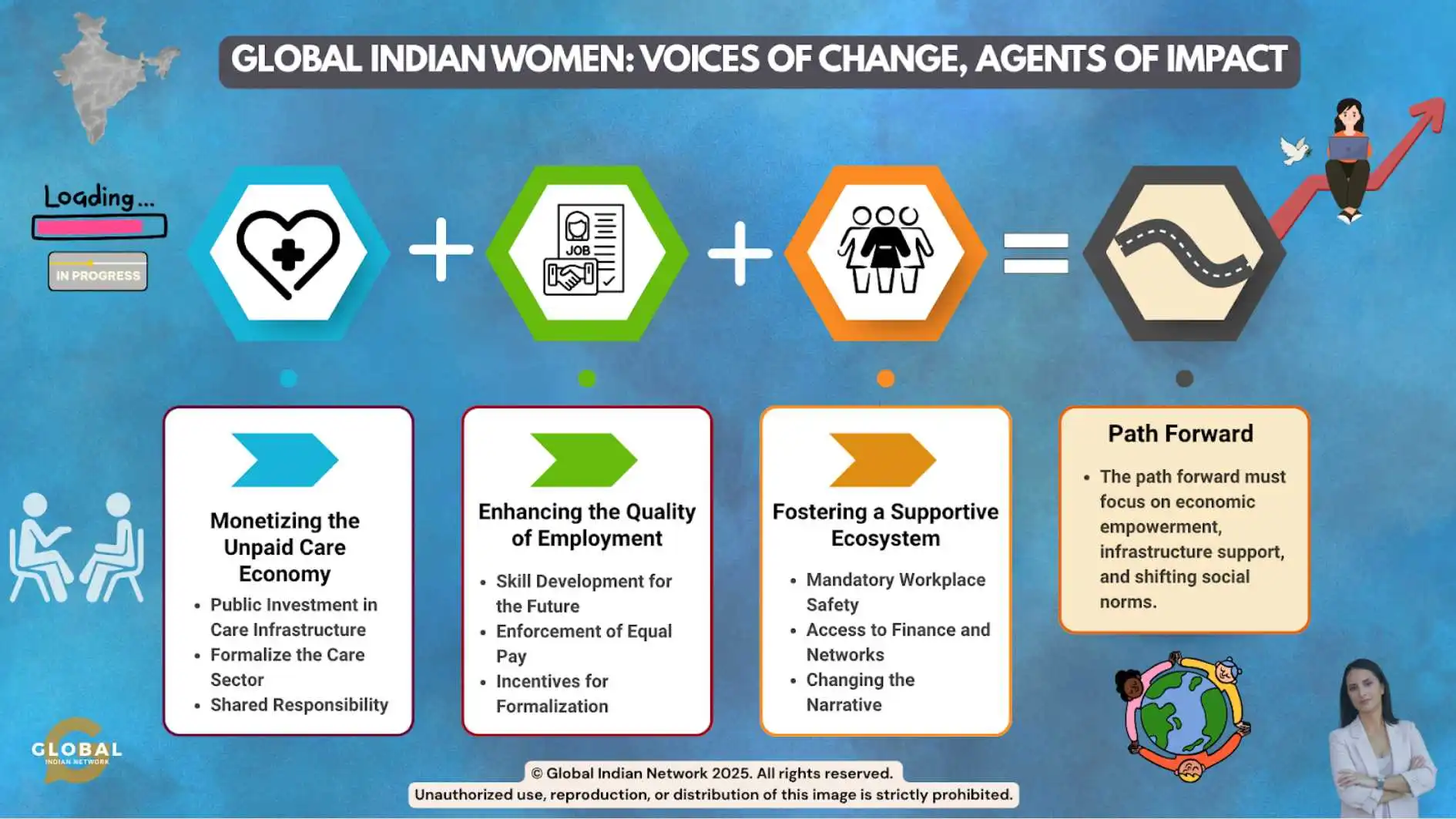
Enhancing the Quality of Employment
Policies must focus on moving women from low-productivity, informal work into stable, formal, and high-growth sectors.
Skill Development for the Future
Prioritize vocational and technical training for women in non-agricultural, high-demand sectors like IT, manufacturing, healthcare, and green energy. Programs should provide stipends and be linked directly to industry placements.
Enforcement of Equal Pay
Strictly enforce the Equal Remuneration Act and implement wage transparency measures to close the gender pay gap, ensuring that equivalent work receives equal pay, regardless of gender.
Incentives for Formalization
India’s gender-inclusive SME tax incentives face key anomalies: low awareness, fragmented policies, and a lack of a unified subsidy scheme. Many SMEs struggle with compliance, and enforcement is weak. Without centralized support or childcare-linked credits, uptake remains limited, hindering women’s formal employment and the broader goal of inclusive economic growth.
The solution is to offer and strictly implement tax incentives or subsidies to small and medium enterprises (SMEs) that commit to formal hiring of women, provide safe working environments, and adhere to gender-inclusive workplace policies.
Fostering a Supportive Ecosystem
Creating a legal and cultural framework that supports women’s careers is essential for retention and advancement. Leverage platforms like LinkedIn, SHEROES, or Women Who Code India for visibility and support. Engage with professional forums, alumni groups, and digital communities to access opportunities and guidance.
Mandatory Workplace Safety
Strengthen and rigorously enforce laws like the Sexual Harassment of Women at Workplace (Prevention, Prohibition and Redressal) Act. Ensure precise reporting mechanisms and speedy justice to improve women’s sense of security.
Know your rights under laws like the POSH Act and the Maternity Benefit Act.
Access to Finance and Networks
Implement targeted schemes to improve women entrepreneurs’ access to credit and capital (e.g., lower interest rates, collateral-free loans). Establish mentorship programs and professional networks to counter the “glass ceiling effect.” The trend of ‘glass cliff’ also needs addressing; even though it entrusts women with responsible positions, it is based on the tendency to appoint women to leadership roles during times of crisis or instability, when the likelihood of failure is highest.
Changing the Narrative
Use educational campaigns and public platforms to celebrate women as economic agents and normalize their role as paid workers and leaders, challenging deeply ingrained social biases that prioritize domestic roles for women. The visibility of trailblazers serves as a powerful starting point for this cultural shift.
Women should join SHGs (Self-Help Groups) or women-led cooperatives to engage in collective bargaining and generate income.
If women’s unpaid and informal labor were counted, India’s GDP would tell a very different story?”
– Global Indian Network
Conclusion
Women have been integral to India’s story from ancient times to the present, and since independence, formal education for girls has steadily opened doors. Yet, despite comprising about 48% of the population, Indian women currently contribute just around 18% of the nation’s GDP. Their participation in the formal workforce remains low. Recent estimates place female labor force participation at around 24-30%, well below global averages. These figures reflect not a lack of talent but systemic suppression: entrenched gender norms, unpaid care work, and limited access to opportunities continue to constrain equality.
As India aims for a $5 trillion economy, ensuring that women are equal architects of that journey is no longer optional; it is essential.
Across every sphere, Indian women are role models, building businesses, launching satellites, scaling heights, leading governments, and fighting for justice. Their stories show that success can be achieved beyond traditional frameworks, breaking boundaries.
As more Indian women reach global heights, they illuminate the path for future generations, for, as African-American educator Dr James Emmanuel Kwegyir Aggrey said,
If you educate a man, you educate an individual; but if you educate a woman, you educate a nation.”
I measure the progress of a community by the degree of progress which women have achieved.”
– Dr B.R. Ambedkar, visionary jurist, economist, and social reformer of India.