



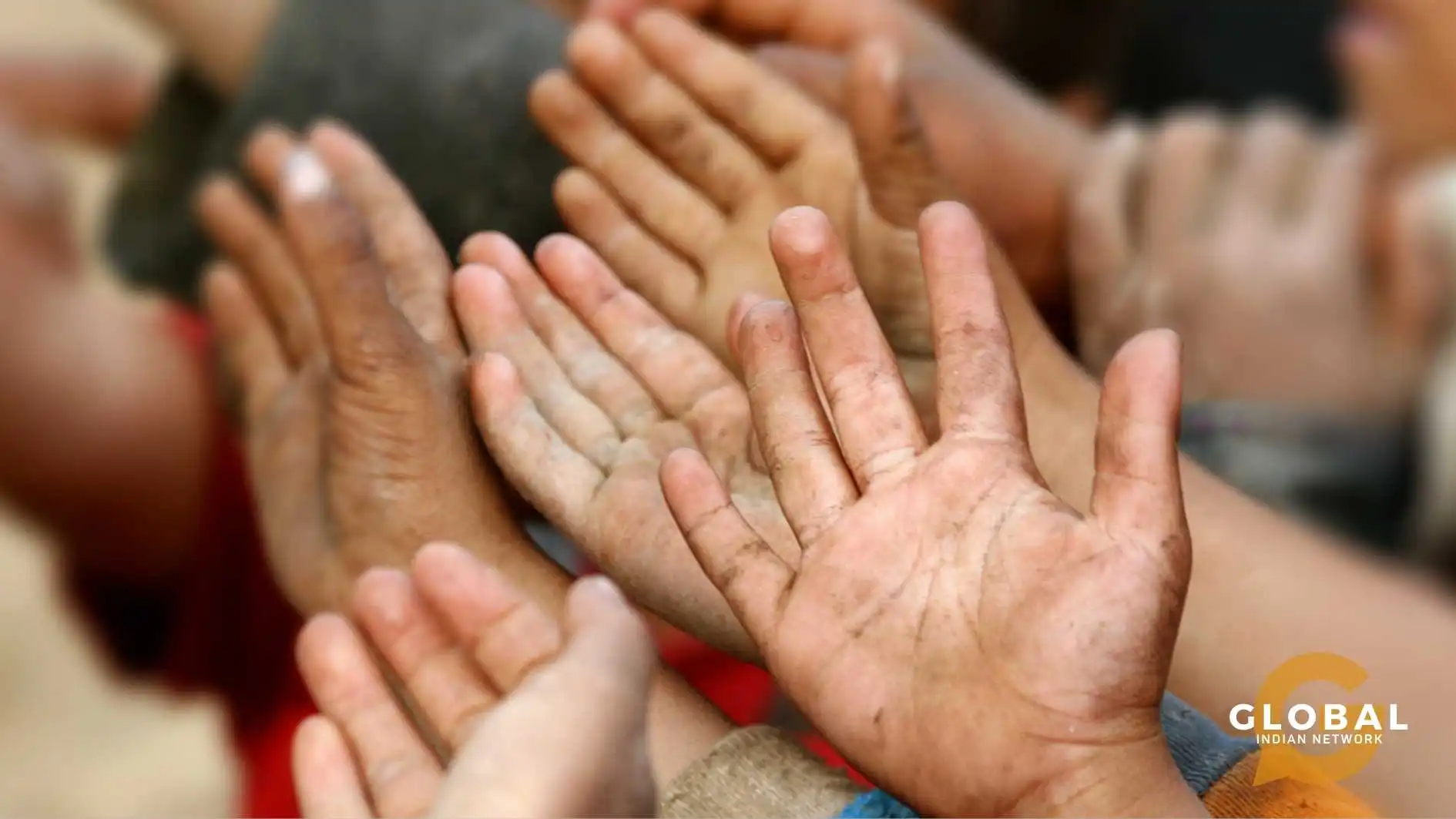

Forced begging syndicates in urban India take advantage of the weak and turn the city pavements into profitable, unlawful businesses. This kind of organized crime primarily selects victims from among children, the disabled, and migrants, and earns huge amounts of money through the suffering of the ones they use. The Indian diaspora worldwide sees this issue as a reason to suppress the reputation of the whole community and, at the same time, as an opportunity to take collective action for the protection of the weak ones, wherever they may be.
Table of Contents
Operations of Forced Begging Syndicates in Urban India
Forced begging syndicates in urban India function with military precision, dividing cities into begging territories at traffic signals, temples, and markets. In Hyderabad, the mafia bosses hire the workers from other states, paying them Rs 200 (~$2.12 USD) per day and earning thousands of rupees per junction.
These syndicates ship victims across state lines, with the most vicious punishment for daily quotas and almost round-the-clock surveillance. One Hyderabad kingpin earned Rs 3 lakh (~$3,176 USD) on a monthly basis by sending minors to bus stops, even drugging infants with alcohol to get the maximum sympathy donations. Forced begging syndicates in urban India convert public compassion into a sophisticated shadow economy, generating crores annually.
Victims and Profits of Forced Begging Syndicates
Children are forced into begging syndicates in urban India, with 300,000 kids nationwide coerced through abduction, family pressure, or trafficking.
In Mumbai and Navi Mumbai, children are beaten by handlers who fail to stuff collection purses and are rented out like merchandise on a daily basis. Disabled people are subjected to on-purpose mutilation in order to increase profits, as able-bodied beggars are less profitable.
These syndicates earn gargantuan revenues above minimum wages. Hyderabad operations blackmail ~$63.52 USD a day from only 23 beggars, Lucknow’s 14,000-strong feeds multi-crore rackets. Women parade rented, drugged babies at signals, while the leaders cash in by laundering profits through fake charities such as the busted “Amma Cheyutha” scam. Forced begging syndicates in urban India thrive by weaponizing vulnerability for profit.

Criminal Networks Behind Forced Begging Syndicates in Urban India
Forced begging syndicates in urban India are organized by rigid hierarchies: recruiters traffic victims, enforcers collect cuts, and kingpins take out prime spots. Delhi and Mumbai gangs use drugs, beating, and sexual violence as a means of control, and get children from Bihar and UP to be deployed to Bangalore.
Inter-state networks reach their peak during festivals at places of pilgrimage, whereby modern tech is being used to streamline collections. Corruption protects these operations as the police are taking bribes, and the interference is kept to a minimum.
Punjab’s urban syndicates enforce military-style discipline in their beggar rotations to ensure that they’re never caught, but that there are consistent flows. These invisible networks support forced begging syndicates in Indian cities in spite of periodic crackdowns.
Crackdowns and Challenges Facing Forced Begging Syndicates
Police raids hit forced begging syndicates in urban India, but rarely dismantle core networks. Hyderabad task force’s arrests of 10 operatives in one sweep had children rescued to see replacements quickly emerge. Indore’s 2025 ban on alms under BNSS is a direct way of fining alms donors with the aim of choking the syndicates in urban India financially.
Anti-trafficking units rescued Odisha abductees forced into Hyderabad beggars, but due to legal loopholes, kingpins get away with scot-free justice. Underfunded rehab and colonial laws sustain the cycle since new leaders assume the voids quickly. Forced begging syndicates in urban India persist through adaptive criminal sophistication.
Global Indian Community Impact
Forced begging syndicates in urban India shame the global Indian diaspora, with exploited faces greeting NRIs at airports and streets worldwide. Remittances from abroad have at times unwittingly fuelled these chains when alms have reached mafia hands.
Brown communities around the world see this as a stain on our development narrative, for which we need to advocate diaspora-led funding for better rehabilitation.
Migrant workers’ stories in the foreign world resonate with these struggles, building international anti-trafficking solidarity. Eradicating forced begging syndicates in urban India upholds our global Indian commitment to dignity and upliftment for all.
Conclusion
Forced begging syndicates in urban India need a range of solutions such as strong anti-trafficking laws, increased SMILE scheme rehabilitation, and campaigns against giving money to street beggars. Only a thorough disruption of the system can put an end to this profit-making from misery business.
Victory over these syndicates by the global Indian community confirms our resilience and common humanity. Every voice that is raised breaks down networks, and this, in turn, gives hope to the neglected lives everywhere.
FAQs
What are forced begging syndicates in urban India?
Forced begging is a problem in cities in India. There are groups of people who make money by forcing others to beg on the streets. They mostly target children, people who are disabled, and people who have moved to the city from other places. These groups are like gangs. They make people beg for money. They work in cities like Hyderabad, Mumbai, and Delhi. They control areas, like the streets where the traffic lights are and the temples. The people who run these groups take most of the money that the beggars collect. Forced begging syndicates are making a lot of money by exploiting people.
How do forced begging syndicates in urban India operate?
These groups decide who begs where. They make sure people beg every day. They do this by being mean or by giving them bad things to make them do what they want. They even use codes to collect money. In Hyderabad, the people in charge make a lot of money every month by making kids beg. They even give things to little babies so that people feel sorry for them and give them money. The people in charge of these groups, the kingpins, use these methods to get what they want from the kids and the people walking by. They make the kids beg. They make a lot of money from it, lakhs every month.
Who are the main victims of forced begging syndicates in urban India?
Children (estimated 3 lakh nationwide) face abduction, beatings, and forced labor, while disabled people suffer mutilation for higher yields. Women rent babies, and migrants endure exploitation, all trapped in cycles without education or escape.