




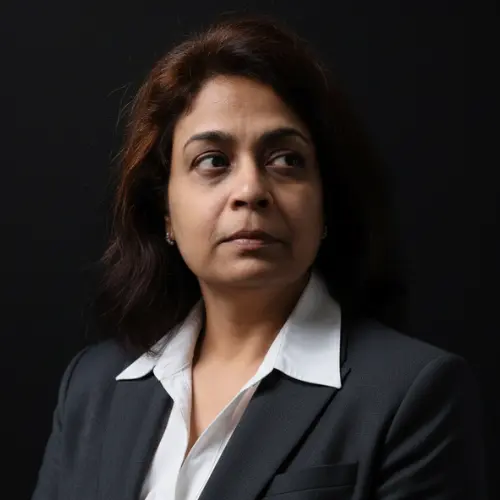
The passing of Chandrikapersad ‘Chan’ Santokhi on March 30, 2026, is not only the loss of a former President of Suriname; it is the farewell to a man whose life was defined by relationships as much as by public office.
Chan Santokhi: A Tribute
The former President of Suriname is remembered not only as a statesman of integrity but as a friend of the global Indian diaspora, a man whose leadership was rooted in humility, courage, and human connection.
To many across the world, including Rajan Nazran, founder of the Global Indian Network, Santokhi was more than a statesman. He was a trusted friend whose warmth and sincerity transcended politics.
In an era when leadership often feels distant and transactional, Santokhi stood apart. He believed that governance began with understanding people, their histories, their struggles, and their aspirations. Those who met him rarely spoke first about his titles; they remembered instead his attentiveness, his calm presence, and his ability to make conversations feel personal, never procedural.
Leadership means serving people with integrity, even when the choices are difficult.”
– Chan Santokhi
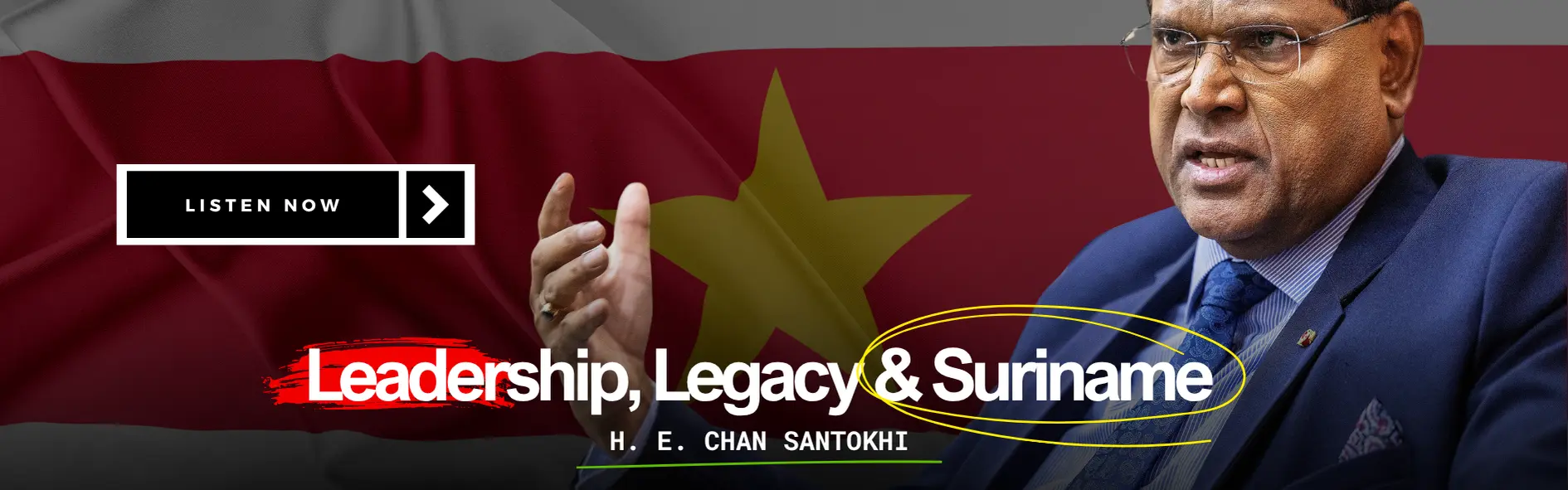
Born in 1959 into an Indo-Surinamese family in Lelydorp, Santokhi’s life story reflected the broader journey of the Indian diaspora. Descended from indentured laborers who crossed oceans generations earlier, he embodied the resilience and ambition that shaped Suriname’s multicultural society. Rising from modest beginnings, he built a career grounded in discipline and service, first as a police officer and later as a respected police commissioner known for integrity and courage.
His transition into politics was driven not by ambition alone but by a sense of duty. As Minister of Justice and Police, and later as President beginning in 2020, Santokhi confronted difficult national realities, economic instability, political polarization, and institutional distrust. Yet even during challenging reforms, he remained guided by principle rather than popularity.
For Rajan Nazran, their friendship grew through shared conversations about diaspora identity and global collaboration. Santokhi saw the Indian diaspora not merely as a cultural inheritance but as a living network capable of fostering cooperation across continents. Through engagements with global organizations and diaspora leaders, he consistently emphasized dialogue, mutual respect, and collective progress.
He carried the story of the Indian diaspora not as identity politics, but as shared heritage and possibility.”
– Rajan Nazran
Nazran often recalled how Santokhi approached discussions not as a head of state delivering positions but as a thoughtful participant seeking understanding. Whether speaking about economic development, cultural continuity, or leadership challenges, Santokhi listened as much as he spoke, a quality increasingly rare in modern public life.
During his presidency, Santokhi worked to stabilize Suriname’s economy and strengthen democratic institutions, choosing long-term reforms despite their political cost. He also elevated Suriname’s international engagement by serving as Chairman of the Caribbean Community (CARICOM), thereby reinforcing regional cooperation. Yet even amid global responsibilities, he maintained personal connections that reflected his belief that diplomacy ultimately rests on human trust.
What distinguished Santokhi was his authenticity. Friends describe a man comfortable in quiet conversations, someone who valued sincerity over ceremony. He carried himself with humility, often deflecting praise and redirecting attention toward collective effort rather than individual achievement.
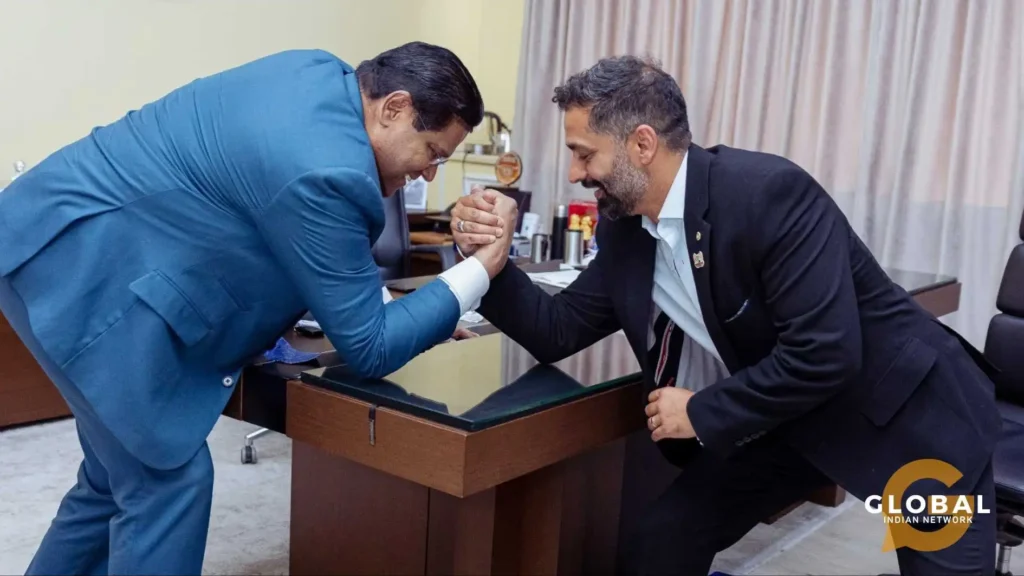
For members of the Global Indian Network, Santokhi symbolized the global reach of Indian heritage, not confined by geography but enriched through diversity. He demonstrated how identity could unite rather than divide, serving as a bridge between cultures, nations, and communities.
We govern not only for today, but for the generations that will come after us.”
– Chan Santokhi
His passing has prompted tributes from across political and cultural spheres, yet the most meaningful memories remain deeply personal: conversations shared, ideas exchanged, and friendships formed across borders.
In remembering Chan Santokhi, one remembers a leader who never allowed office to overshadow humanity. He showed that strength and kindness are not opposites, that conviction can coexist with humility, and that leadership is ultimately measured by the relationships one nurtures.
For Rajan Nazran and many others who had the privilege of knowing him personally, the loss is profound. But so too is the gratitude – for a friendship that reflected Santokhi’s enduring belief that the world becomes smaller, kinder, and more hopeful when people choose connection over distance.
Chan Santokhi’s legacy, therefore, is not only written in Suriname’s political history. It lives on in the lives he touched, the bridges he built, and the quiet example he set: that true leadership begins and ends with humanity.