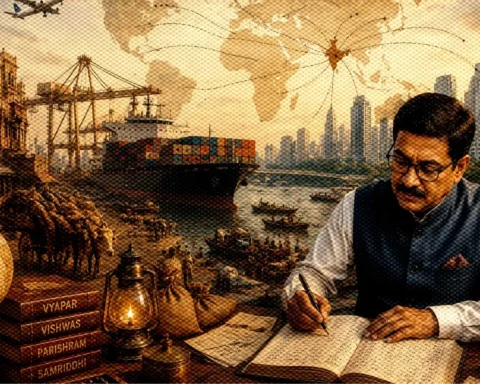





International family businesses offer much more than financial value. They represent identity, sacrifice, and sometimes a vision that crosses borders and generations. Fostering that continuity demands conscious leadership succession that embraces tradition and modern realities. Read on to learn about succession planning for NRI family businesses.
Table of Contents
Changing Family Dynamics
Today’s diaspora family exists in a multifaceted landscape with multiple jurisdictions, diverse cultural influences, and evolving aspirations among younger generations. These facts have made succession a more complex process of baton transfer, requiring foresight and partnership.
Successful succession planning for NRI family businesses recognises that family members can reside, study, and work in multiple nations while remaining emotionally and financially connected to a shared business venture. The challenge is to design systems to ensure continuity while simultaneously supporting innovation.
Sustainable leadership transitions in family businesses are significantly reinforced by the contributions of many Indian business families that are globally connected in entrepreneurship, investment, and knowledge exchange across industries.
Governance Before Emotion
Questions of inheritance and leadership have emotional undertones that families can’t help but have. However, if long-term success is desired, the institutional architecture must limit ambiguity and foster transparency.
Effective succession planning for NRI family businesses starts with the governance frameworks that clearly identify responsibilities, ownership rights, and decision-making authority. Regular communication, family constitutions, and advisory boards reduce misunderstandings during transition times.
The key priorities for governance are:
- Defining leadership eligibility criteria
- Establishing transparent ownership frameworks
- Creating conflict-resolution mechanisms
- Documenting long-term family values
- Separating management roles from emotional expectations
These measures help ensure that business continuity does not rely solely on personal connections.
Preparing Future Leaders
Leadership development needs to start several years before the transition. Future replacements need experience working in an operational environment, managing finances, in a global marketplace, and in the organisation’s culture.
Well-designed succession planning for NRI family businesses enables young family members to gain experience before assuming more senior roles. Portfolio careers enhance credibility, broaden worldview, and develop leadership skills.
Preparation should include:
- Rotational assignments across business functions
- Mentorship from senior leaders
- International market exposure
- Formal education in governance and management
- Participation in strategic decision-making forums
This allows the leadership transition to be based on competency and readiness, rather than chronological order.

Succession Planning for NRI Family Businesses
For cross-border enterprises, legal and financial issues may arise that are not seen in conventional family businesses. Ownership structures, inheritance, and tax laws vary widely, so careful planning is necessary.
Effective succession planning for NRI family businesses involves legal, financial, and operational considerations. Families who take action to solve these problems proactively minimise uncertainty and preserve assets and relationships.
Important considerations include:
- Estate and inheritance regulations
- International tax implications
- Corporate ownership arrangements
- Trust structures and family offices
- Business continuity mechanisms during emergencies
By aligning these elements, families create resilience that extends beyond individual leaders.
Balancing Legacy And Innovation
Wealth is passed down through the generations, along with responsibility. The challenge here is to maintain core values and adjust to evolving economic factors.
When planning for succession in NRI family businesses, it is important to recognise that younger leaders may bring fresh ideas and perspectives on technology, sustainability, governance, and market expansion. The differences need not be interpreted as a challenge to tradition, but rather as an opportunity.
Building intergenerational partnerships yields better results because institutions bring knowledge and experience, while young people bring new ideas and solutions. Such a balance enables family enterprises to continue playing a role in fast-changing global markets.
Its future success will depend on how well family businesses can uphold tradition while promoting change.
Real-World Examples of Succession in Family Businesses
Some Indian-owned family enterprises have managed to navigate leadership changes without losing momentum in their international expansion. These case studies offer useful insights into succession issues in NRI family businesses.
Hinduja Group: Preserving Unity Across Generations
The Hinduja family, with enterprises across various continents, has always demonstrated the importance of joint decision-making and has set well-articulated family values. The group’s succession strategy includes engaging with more than one generation and maintaining continuity of vision across sectors such as banking, automotive, energy, and healthcare.
Their experience underscores the importance of robust governance systems and common rules for maintaining business continuity amid geographical dispersion.
Motherson Group: Transition Through Professionalisation
Samvardhana Motherson Group was established by Vivek Chaand Sehgal, who has grown the company into a global leader in automotive components with operations in many countries. The company has seen a growing trend toward professional management practices alongside family leadership, with succession planning based on competence, institutional strength, sustainability, and long-termism.
This model underscores the need for a blend of family values and contemporary corporate governance.
The Mittal Family And Global Steel Leadership
Another example of structured succession planning is the Mittal family, which founded ArcelorMittal, one of the world’s largest steel companies. Aditya Mittal, after a few years of a smooth transition and the gradual assumption of greater responsibility, took over as the Chief Executive Officer (CEO) of the Company.
Their actions show the importance of leadership development and global exposure for future leaders.
Lessons For NRI Family Enterprises
These examples illustrate some of the key factors that help with the effective succession planning of NRI family businesses:
- Good governance and ownership arrangements
- Keeping future leaders prepared from an early age.
- Professional management systems
- Good communication between the family members
- A balance between keeping the old and the new.
The success of established global business families can be used to create stronger institutions that can ensure multigenerational success in emerging NRI businesses.
Building Enduring Institutions
Long-lasting family businesses rely on systems rather than on people alone. Regular check-ins, clear communication, and expert advice enable businesses to adjust to evolving family and market dynamics.
For succession planning for NRI family businesses, baton to the next generation, leadership needs, economic climate, and family dynamics are constantly changing. Taking a proactive approach enhances resilience and sustains long-term stability.
Conclusion
The success of family businesses isn’t just about money. It depends on trust, preparation, and a collective, intergenerational commitment to safeguarding values and opportunities.
Effective succession planning for NRI family businesses allows for the coexistence of legacy and innovation. Families can develop competitive institutions that preserve their cultural and business traditions through open communication, leadership development, and good governance.
The nature of succession planning for NRIs is likely to remain a crucial aspect of multi-generational succession planning for NRI family businesses as mobility, technology, and economic conditions evolve. Families that recognise and implement considered transition strategies are more likely to safeguard their legacy and establish long-lasting value for future generations.