



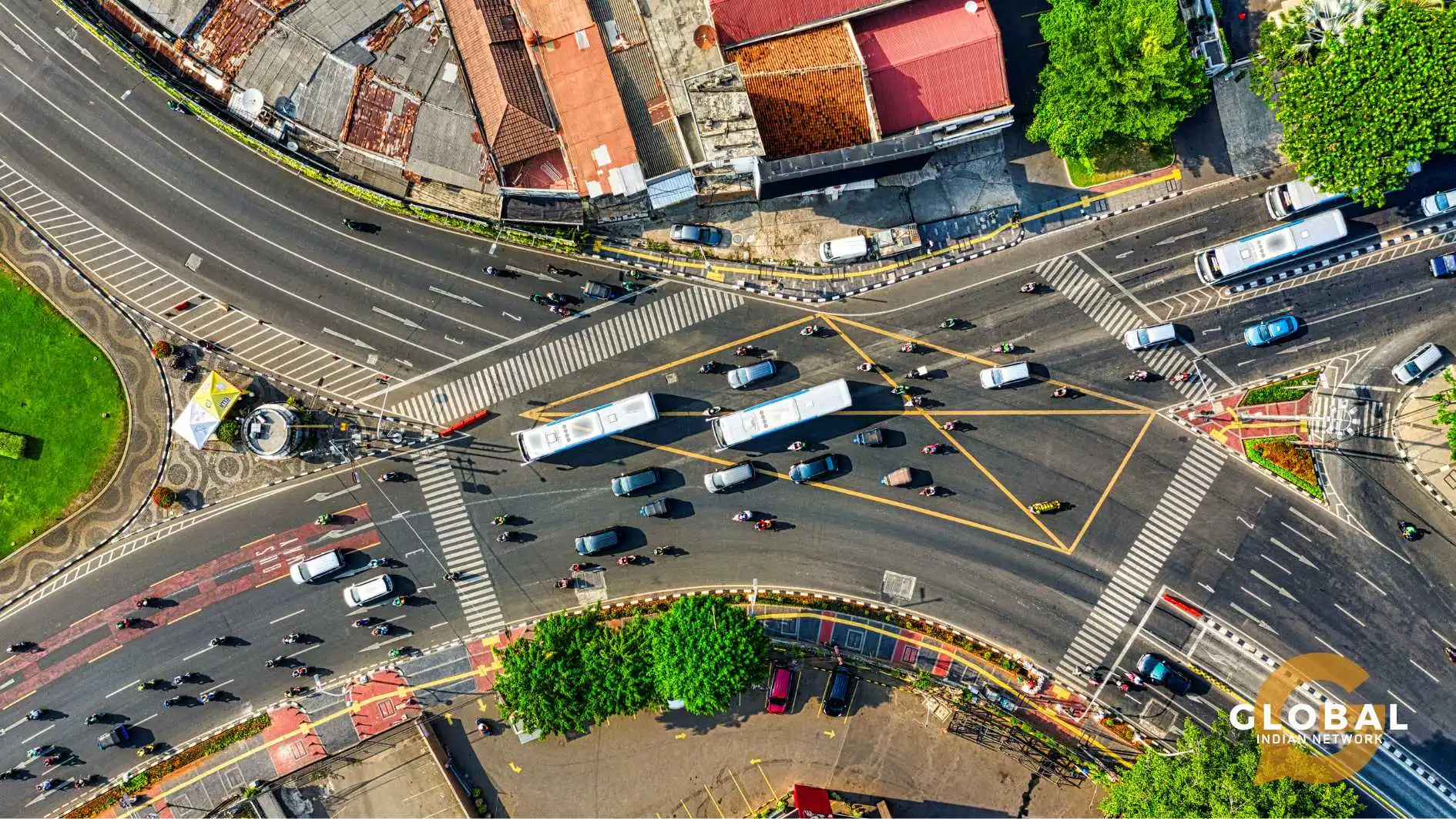

As cities around the world become denser and roads more congested, mobility is no longer just about speed or comfort. It is about safety, trust, and shared responsibility. One technology transforming this sector is vehicle-to-vehicle (V2V) communication, which enables cars to communicate with one another in real time. This technology has profound implications for mobility, economic development, and safety.
From the congested roads to the long intercity roads, vehicle-to-vehicle communication has the potential to improve safety, reduce congestion, and create a smarter mobility ecosystem.
Table of Contents
What Is Vehicle-to-Vehicle (V2V) Communication?
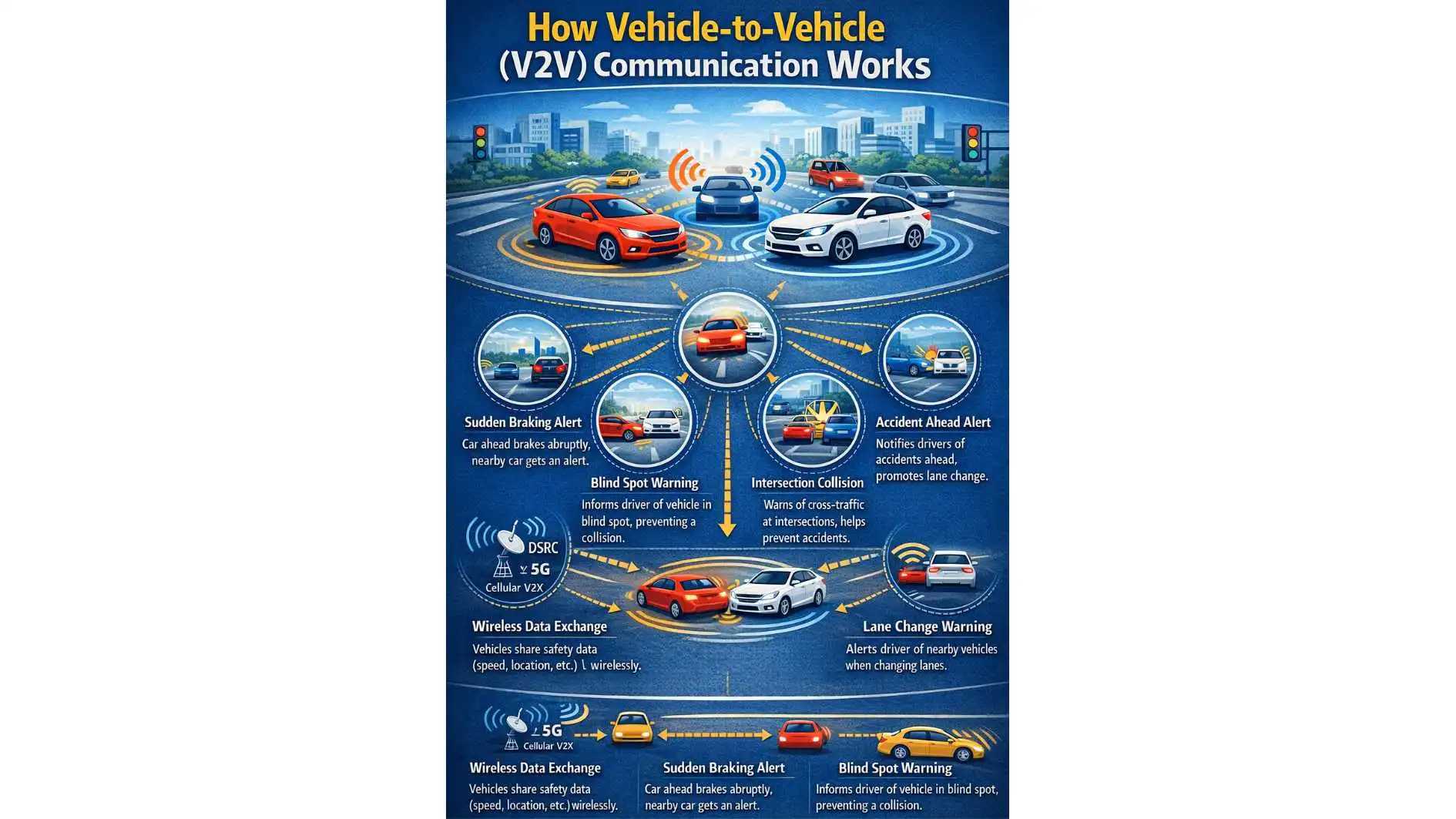
At its core, vehicle-to-vehicle (V2V) communication enables cars, buses, and trucks to exchange information such as speed, location, direction, and braking status. This information is relayed wirelessly several times per second.
Unlike traditional safety systems that rely only on onboard sensors, vehicle-to-vehicle communication creates a shared awareness among vehicles. All vehicles are both sources and receivers of safety-critical information.
This system uses technologies such as Dedicated Short-Range Communications (DSRC) and cellular-based systems based on 5G networks. They combine to form the foundation for next-generation intelligent transport.
How Vehicle-to-Vehicle Communication Works
In practical terms, vehicle-to-vehicle (V2V) communication allows one car to warn another about dangers the driver may not yet see. As an example, when an oncoming vehicle brakes abruptly, other vehicles on the road are notified immediately.
Rear-end hits, crossing accidents, and chain accidents can be avoided with these alerts. This collective intelligence is particularly useful in areas with uncertain driving conditions, as is the case in most developing countries.
Why Vehicle-to-Vehicle Communication Matters Globally
The problem of road safety is international. The World Health Organization writes that more than 1.19 million fatalities are caused by road accidents every year. A major part of these deaths is observed in the low- and middle-income nations.
V2V communication directly addresses this gap by offering preventive safety rather than a reactive response. In Indian cities where there is a mixture of traffic cars, bikes, pedestrians, and rickshaws, this technology has the potential of saving thousands of lives every year.
Globally, vehicle-to-vehicle communication also supports sustainability. Improved flow reduces fuel use and emissions, aligning with climate objectives that disproportionately affect vulnerable communities.

Economic Impact of V2V Communication
The adoption of vehicle-to-vehicle (V2V) communication is not just a safety story; it is an economic one. Indian engineers, software developers, and data scientists are already contributing significantly to automotive innovation worldwide.
With connected vehicle technology, software, cybersecurity, and AI projects receiving extensive investment by automakers, who spend billions, most of them over $1-2 billion USD each year, to develop, the creation of jobs increases.
For startups, vehicle-to-vehicle communication enables innovation in analytics, edge computing, and smart infrastructure, often supported by global platforms such as IEEE Intelligent Transportation Systems.
Building Trust Through Technology
Trust is central to mobility. However, trust in roads is low in many regions worldwide, including India, due to uneven enforcement and inadequate infrastructure. Vehicle-to-Vehicle (V2V) communication introduces a neutral, technology-driven layer of trust.
In automated vehicle sharing, drivers rely less on assumptions and more on real-time data. This is especially relevant to diaspora communities that must navigate unfamiliar traffic regulations in a foreign land.
By standardizing safety communication, Vehicle-to-Vehicle communication reduces cultural friction on the road and creates a shared language of safety.
Challenges and Ethical Considerations
Vehicle-to-Vehicle (V2V) communication is not without challenges, despite its promise. Data privacy is a significant concern. Cars that continuously transmit information raise concerns about privacy and potential abuse.
Agencies such as the European Union Agency for Cybersecurity underscore the importance of encrypted communication and strict data control. Such protections are important to minority communities who might already feel they are being surveilled.
Cost is another barrier. The cost of Vehicles can increase by several hundred dollars when adding vehicle-to-vehicle communication hardware. Inclusive policy support is critical to families that can afford it, particularly in emerging economies.
The Road Ahead for Vehicle-to-Vehicle Communication
Regulations are slowly being harmonized around the world by governments and car manufacturers to support vehicle-to-vehicle (V2V) communication. It is being implemented as part of larger smart city strategies in countries such as the US, Japan, and South Korea.
With its extensive road network and digital infrastructure, India can take a leap forward, provided it has a sound policy and a strong government-infrastructure partnership. To the international Indian population, it would translate to safer commuting in either their home countries or overseas.
As autonomous vehicles advance, their nervous systems will rely on vehicle-to-vehicle (V2V) communication, enabling collective intelligence rather than automation.
Conclusion
Vehicle-to-Vehicle (V2V) communication is not merely a technological enhancement; it also changes how societies perceive mobility, responsibility, and trust. It helps provide a safer road and more inclusive transport, as vehicles can only cooperate, not compete.
V2V communication signifies possibility, security, and symbolism in the future of mobility. The effects of this technology will not be limited to highways; they will also be felt in our daily lives across different continents as it grows.

FAQs
What is Vehicle-to-Vehicle (V2V) communication in simple terms?
Vehicle-to-Vehicle communication is a technology that enables vehicles to share information, such as speed, location, and braking status, with nearby vehicles. This enables drivers and vehicle systems to predict potential hazards before they become visible, helping prevent accidents and ensure road safety.
How does Vehicle-to-Vehicle (V2V) communication improve road safety?
V2V communication enhances safety by transmitting real-time notifications about sudden braking, impending collisions, or vehicles going through red lights. This is particularly important for countries with high traffic density and shared road use, as is the case for many Indian and Brown communities.
Is Vehicle-to-Vehicle (V2V) communication useful in countries like India?
Yes, vehicle-to-vehicle communication can be highly effective in India and similar regions. With roads congested, traffic unpredictable, and accident rates high, this technology can be highly effective in reducing deaths and injuries.