


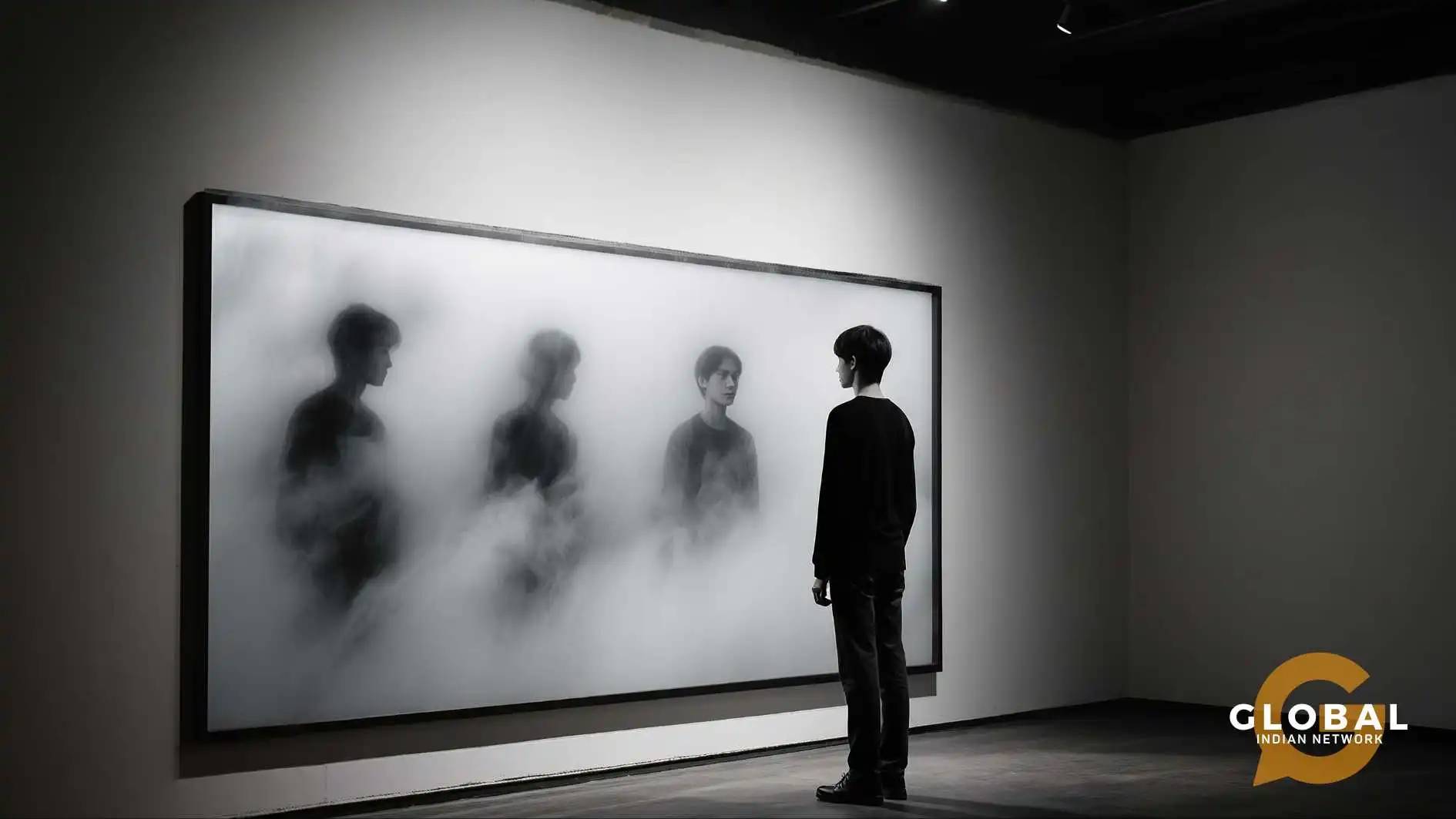

Understanding the concept of self and self-identity has been something philosophers and the common man have attempted to articulate since the beginning of time. The psychology of self and identity deems that the deepest parts of one’s consciousness inform how they interact with their social environment and, more importantly, how they form their social identity. An identity that at times borders or crosses into social performances as individuals navigate their immediate environment and social relations. In this article, we will delve into the relationship one has with oneself, their environment, and how they shape their own perception of the self.
Table of Contents
The Concept of Self and Self-Identity
In the social sciences, the self and self-identity are concepts used in specific and oftentimes contested ways. In general, identity refers to one’s understanding of society’s perception of oneself; in contrast, the self is one’s own bestowed definition of oneself. Though seemingly polar opposites, the two are mostly informed by social interactions, albeit to varying degrees. The identity is dictated by social norms and is prone to social comparison as one seeks to find their place in society.
Whereas the self asks, “Who am I?” The basis and answer to that question vary with cultures; in Eurocentric and individualistic cultures, it is much less about social roles and more about self-determination within one’s environment. In other cultures where community takes precedent, the self is not as adequately defined. However, words that approximate proximity to this version of self rarely stray from the context of their community, forming a society-based social cognition. In essence, though one’s uniqueness is appreciated, it is only appreciated within the context of social identity.
Self-Identity in the Digital Age
Since the dawn of the digital age, our interactions with each other and ourselves have been under constant mutation. There exists a field, digital anthropology, that studies this interaction and adjacent to it is cyborg anthropology. The latter deals with our conceptualisation of technology, something that has been greatly affected by smartphones and social media. Smartphones, for most people, are an extension of their being; they live their lives through their screens and thus are metaphorical cyborgs.
The interaction of the world through technology has warped our idea of self and identity. Where once one’s social class was determined by one’s immediate environment and one’s ability (or, in the case of social constructs such as race and caste, perceived ability and status) to signal prominence through material means, it has been replaced by the ability to signal relevance.
One’s social representations, whether rooted in material reality, take priority; as such, one’s concept of self and self-identity becomes intrinsically linked to media representation. In social psychology, this is a field linked to social comparison theory. With an unlimited source of groups for comparison, especially to young impressionable minds, there comes a distortion of self-concept clarity, in that there is no clarity.
Exploration of One’s Personhood
The relationship between the identity and the self is in a constant morph between a tug of war and a delicate dance. However, somewhere within these lines exists the oftentimes unexplored question of what a person is to themselves in the absence of an audience.. When stripped of social performance roles and responsibilities, how is one best defined? There exists no definitive answer to this question as it is layered upon the depths of differing contexts. However, asking the question “Who are you when nobody is watching?” leads down a path of a multitude of answers whose questions are difficult to articulate, and that is the exploration of who we truly are.
The Perception of Self and Self-Identity Among Global Indians
For the global Indian community, self and self-identity are complex constructs shaped by both cultural inheritance and diasporic experience. Living across continents, many global Indians embody a dual consciousness, rooted in Indian traditions yet influenced by the social norms of their adopted homelands. This intersection often results in what sociologists term hyphenated identities (e.g., Indian-American, British-Indian), where belonging is both plural and fluid. The perception of self thus oscillates between collective cultural memory and individual self-expression.
For some, it manifests as a negotiation, retaining values like family, respect, and community while embracing modern ideals of autonomy and innovation. For others, it becomes a journey of reconciliation, finding balance between “home” and “host” cultures. Ultimately, the global Indian identity reflects adaptability, a conscious redefinition of self that celebrates diversity while preserving connection to one’s origins.
Conclusion
The concept of self and self-identity is a dynamic interplay between internal perceptions and external influences. As we navigate an increasingly digital world, our understanding of self continues to evolve, challenging traditional notions of identity. This journey of self-discovery and reflection is crucial in forming a coherent sense of who we are. By embracing this process, individuals can cultivate a deeper self-awareness that enhances personal growth and social interactions. Ultimately, understanding and redefining our self-identity enables us to live more authentically and foster a more meaningful connection with the world around us.
FAQs
What is Self and Self-Identity?
In general, ‘identity’ is used to refer to one’s social ‘face’, how one perceives how one is perceived by others. ‘Self’ is generally used to refer to one’s sense of ‘who I am and what I am’ and is the way the term is employed in this book. However, these are not dualistic constructs.
What are some examples of Identity?
There are many types of identities that humans can adopt or be assigned to. Identities can be organised around gender, sexuality, age, race, ethnicity, physical ability, mental ability, religion, class, nationality, regional, and so on. Culture includes many types of large-group influences on identities.
What is Erikson’s Theory of Self-Identity?
Erik Erikson’s identity theory proposes that the main challenge of adolescence is to resolve the conflict between identity versus role confusion to develop a stable sense of self. During this period, teens explore different roles, values, and beliefs in a “psychological moratorium” to answer the question “Who am I?”.