


Indian Americans in US politics have become a strong and changing force. They show great resilience and determination in seeking fair representation at all levels of government. Their rapid rise reflects this vibrant community’s dedication to influencing both domestic and international policies. It also highlights the important human issues at stake, such as economic growth, technological progress, global security, and cultural integration. These issues have consequences that reach around the world.
Table of Contents
Indian Americans in US Politics: Historical Roots
The Indian Americans in US politics since the time of the initial Indian American, Indian American like gurus such as Dalip Singh Saund, the first Asian American and Indian American elected to Congress in the year 1957, who served the 29th District in a steadfast manner with firm commitment to civil rights and agriculture despite the post-war fear of ostracism. Bobby Jindal was the first Indian American governor of Louisiana from 2008 to 2016, leading the state’s economy back on track after Hurricane Katrina and facing budget issues that tested the community.
These pioneers created a deep sense of hope and proved that South Asian talent, rooted in global innovation, could find its way into the very upper crust of America, even though it was initially isolated and met with prejudice, thereby establishing the generational ambition of future generations. Their legacies highlight a story of persistence, with personal victories leading to collective goals in Indian American politics in the US.
Congressional Presence
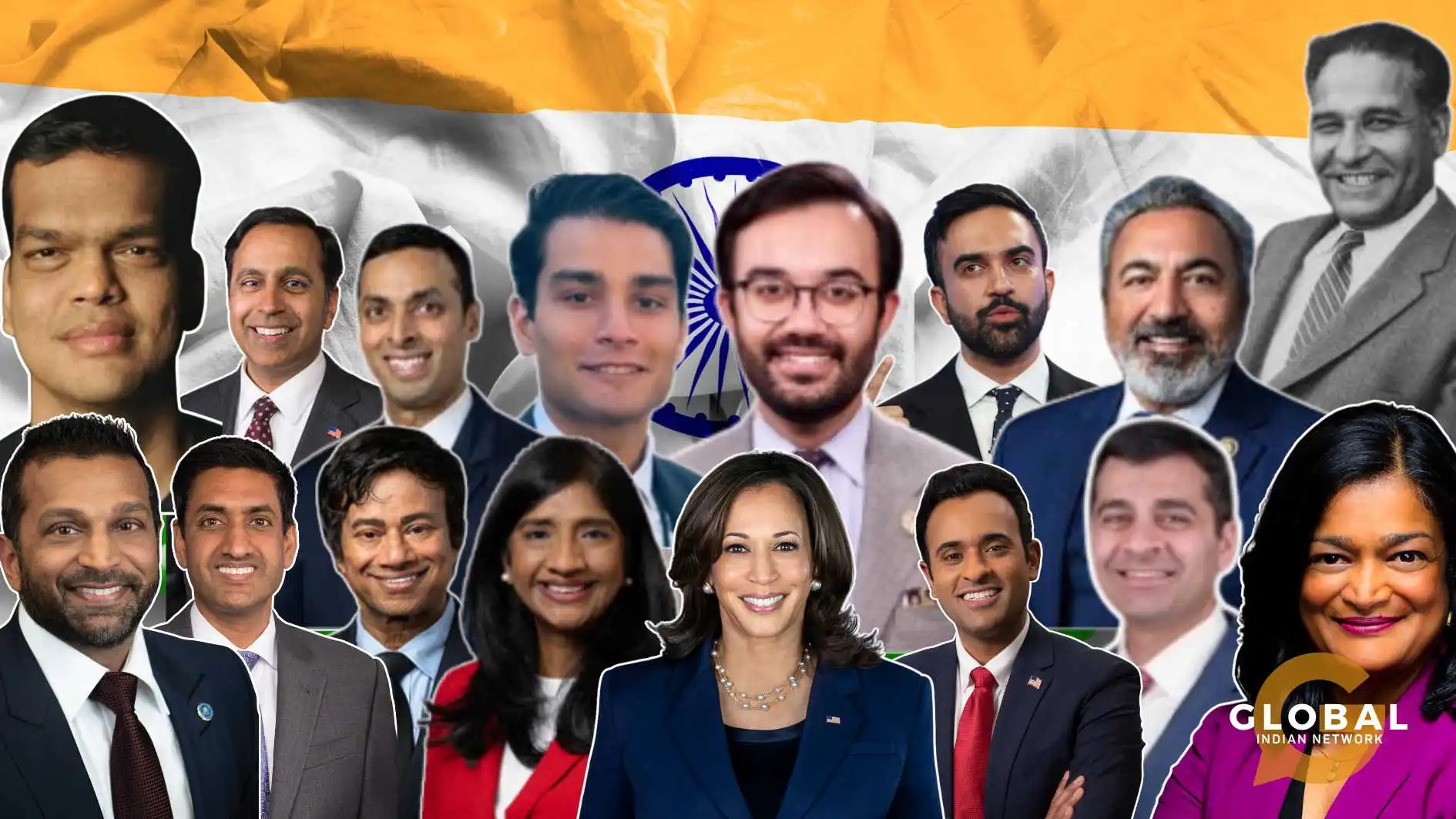
The Samosa Caucus now commands a record six members in the 119th Congress, a dramatic surge from just one a decade ago, amplifying voices for Indian Americans in US politics during critical debates on trade, tech, and security. Key figures include Ami Bera (CA-6, seventh term), a healthcare advocate pushing bipartisan reforms; Ro Khanna (CA-17), a progressive leader on Silicon Valley ethics; Raja Krishnamoorthi (IL-8), co-founder of the Caucus advancing U.S.-India ties; Pramila Jayapal (WA-7), the first South Asian woman in the House championing labor rights; Shri Thanedar (MI-13), a scientist-turned-lawmaker focusing on innovation; and Suhas Subramanyam (VA-10), the first East Coast victor bridging defense and immigration.
| Member | District | Party | Notable Milestone & Focus |
| Ami Bera | CA-6 | Democrat | Longest-serving; healthcare, foreign affairs |
| Ro Khanna | CA-17 | Democrat | Tech policy, economic equity leader |
| Raja Krishnamoorthi | IL-8 | Democrat | Samosa Caucus co-founder, supply chains |
| Pramila Jayapal | WA-7 | Democrat | First Indian American woman; immigration |
| Shri Thanedar | MI-13 | Democrat | STEM advocate, joined 2023 |
| Suhas Subramanyam | VA-10 | Democrat | Historic VA win, national security |
This coalition embodies resilience, collaborating on bills that safeguard innovation while addressing fears of global economic shifts. Their growing numbers signal ambition to influence legislative priorities with a uniquely diasporic perspective.
Indian Americans in US Politics: Executive Influence
Under President Trump, Indian Americans in US politics occupy pivotal roles, including Ricky Gill as Senior Director for South and Central Asia at the NSC, navigating geopolitical tensions with strategic foresight; Saurabh Sharma in the Presidential Personnel Office, ensuring merit-based appointments amid talent wars; and Kush Desai as Deputy Press Secretary, shaping narratives on economic resilience. High-profile nominees like Kash Patel for intelligence leadership, Vivek Ramaswamy for policy innovation, Harmeet Dhillon for civil rights enforcement, and Sriram Krishnan for tech visas highlight their deepening policy imprint.
The prior Biden-Harris administration set a benchmark with 130 Indian Americans in senior posts from cabinet advisors to agency heads, demonstrating bipartisan trust in their expertise on trade, health, and defense. This executive footprint reflects calculated ambition, turning communal fears of marginalization into positions of tangible power.
State Victories
Aruna Miller became the first Indian American Lt. Governor in Maryland in 2023, advancing education reforms and physical resilience amid financial uncertainty that dominated the post-pandemic recovery. In cities, urban renewal is led by mayors such as Aftab Pureval (re-elected in landslide results in Cincinnati), but in other states, like Virginia, New Jersey, and elsewhere, newcomers like Zohran Mamdani are gaining recognition as leaders addressing housing and climate anxiety at the local level. In state legislatures, nearly 40 Indian Americans serve, representing the largest Asian representation in the country and protecting the interests of bilingual education, small-business relief, and disaster preparedness.
- Pureval Cincinnati: reducing crime and supporting the economy.
- Miller Maryland: Tech workforce development in the face of budget constraints.
- Sub-state legislators: Fomenting H-1B local effects and cultural acculturation.
These state and municipal level wins give rise to grassroots ambitions, demonstrating to Indian Americans in US politics that they can govern where their interests meet those of the whole community, such as safety.
Indian Americans in US Politics: Driving Factors
Explosive demographic growth from 1.9 million in 2000 to over 5 million today propels the surge of Indian Americans in US politics, amplified by median incomes twice the national average and 75% holding college degrees. Visibility cascades: Kamala Harris’s 2016 Senate breakthrough inspired a wave, as communities witnessed heritage yielding power, igniting candidacies despite partisan fears. Global talent inflows from India, with student visas soaring from 54,664 to 331,600, embed innovation in U.S. governance, subtly enriching sectors from AI to biotech without displacing locals.
Political mobilization through groups such as the AAPI Victory Fund harnesses this, channeling resilience into voter turnout that sways swing districts. Economic ambition, paired with fears of visa restrictions, motivates sustained engagement.
Policy Impacts
Indian Americans in US politics lead on H-1B reforms, exemplified by Ro Khanna’s HIRE Act to double the caps, secure STEM pipelines, and counter talent shortages that fuel fears of innovation. Pramila Jayapal advances progressive equity through immigration overhauls and climate justice, while Raja Krishnamoorthi fortifies supply chains against geopolitical risks. Ami Bera bridges healthcare access with Indo-U.S. pharma ties, and Shri Thanedar promotes R&D tax credits for startups.
Collectively, they mitigate anxieties about economic isolation, strengthening bilateral trade pacts vital for global stability and mutual prosperity. Their influence fosters hope, balancing ambition with pragmatic resilience in a polarized landscape.
Conclusion
Surveys reveal that 67% of Indian Americans demand greater representation and bolder leadership amid the 2026 midterms. Partisan tensions 72% leaning Democrat, yet 30% Republican challenge unity, testing resilience against policy divergences on trade and immigration. As South Asian maps expand across government with increased representation of Indian Americans in US politics, from city halls to Capitol Hill, it heralds hope for an inclusive democracy where diverse talents unite universal stakes like security and growth. Emerging youth leaders and tech-savvy voters signal sustained ambition, potentially doubling the number of congressional seats by 2030.
FAQs
Who are some prominent Indian Americans in US politics?
Prominent figures include the six Samosa Caucus members in Congress: Ami Bera, Ro Khanna, Raja Krishnamoorthi, Pramila Jayapal, Shri Thanedar, and Suhas Subramanyam.
Why is there a surge of Indian Americans in US politics?
The increase comes from population growth to over 5 million, higher education levels, and the visibility of leaders like Kamala Harris, which encourages more people to run for office.
How many Indian Americans are in Congress?
As of the 119th Congress, there are six Indian Americans in the US House of Representatives, making this the largest Samosa Caucus to date.