



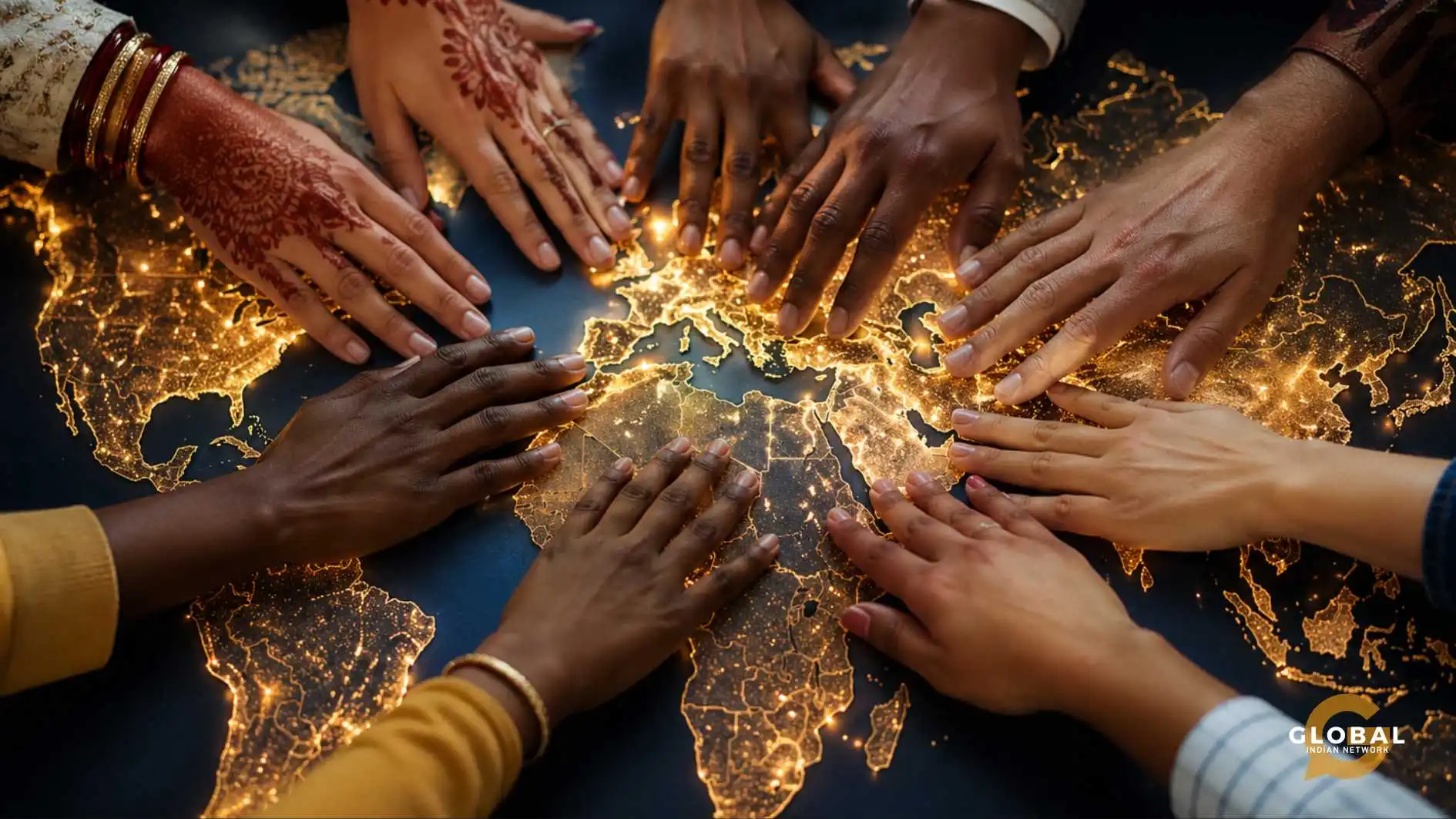

For a long time, the global Indian community has been treated like a unified block, something that can be mapped. That assumption is convenient, but it no longer holds. The lived reality of an Indian-origin professional in the United States is fundamentally different from that of a migrant worker in the United Arab Emirates, and both are far removed from that of a third-generation individual in the United Kingdom who may never have lived in India at all.
What connects them is not a stable identity but a loose, shifting relationship with the idea of India, one that changes depending on context, exposure, and personal history. This is where the question of how to connect with the Indian diaspora worldwide becomes more complex, because treating this diversity as a single market does not simplify engagement; it weakens it.
Table of Contents
Identity Is No Longer Inherited but Assembled
The more important shift is not geographic but psychological. Identity within the diaspora is no longer passively inherited but actively constructed. Cultural markers like Diwali or Holi still exist, but they function differently outside India. A festival abroad is often cleaner, more curated, sometimes even commercialised, but also more intentional. This changes the nature of the connection. People are not looking to replicate India as it is. They are selecting and redefining which parts matter to them. Any engagement that assumes a fixed version of identity risks feeling out of place.
From Static Communities to Fluid Networks
Another shift that often goes unnoticed is structural. Engagement strategies still rely heavily on the idea of communities, associations, cultural groups, and annual events. But the actual movement has already happened elsewhere. Connections are increasingly formed through informal, digital, and continuous networks. Platforms like LinkedIn and YouTube have enabled interactions that are not bound by geography or occasion.
These are not communities in the traditional sense but rather fluid systems in which relevance determines participation. And networks respond very differently. They are less interested in symbolic outreach and more in meaningful exchange, whether that is collaboration, visibility, or opportunity. In this context, connecting with the Indian diaspora worldwide is less about presence and more about value, as networks respond to meaningful exchange rather than symbolic outreach.
Soft Power Works Best When It’s Not Trying To
India’s global presence is often discussed in strategic terms, but its most effective influence operates quietly. It shows up in culture before it shows up in policy. A film like RRR reaching global audiences or practices like yoga being formalised through initiatives such as the International Day of Yoga are examples of familiarity. For the diaspora, these are not abstract symbols of India but everyday points of connection. That is what makes soft power effective, it normalises engagement. And because of that, it travels further than any formal outreach effort.
Pravasi Bharatiya Divas is an official platform created by the Government of India to connect with the Indian diaspora worldwide and recognise their contributions to the country’s development. It is observed on 9 January, marking Mahatma Gandhi’s return from South Africa, and has evolved into a structured forum where overseas Indians, policymakers, and industry leaders come together to engage in dialogue, networking, and collaboration. The core idea behind it is not just celebration but engagement, creating a space where the diaspora can interact directly with India’s institutions, share perspectives, and participate in discussions around investment, culture, and national development.
Beyond Numbers: Influence Over Metrics
Remittances, investments, and economic contributions remain significant, but they are no longer sufficient to explain the diaspora’s importance. The more consequential shift is in the influence it has on how the diaspora shapes perceptions, participates in global industries, and contributes to cross-border ecosystems. This kind of impact is harder to quantify but more important to understand. It signals a move from transactional engagement to strategic relevance.
The diaspora is not just contributing to India’s economy; it is also shaping India’s global positioning. This kind of impact is harder to quantify but more important to understand. It signals a move from transactional engagement to strategic relevance, which, in turn, reshapes how to connect with the Indian diaspora worldwide, placing less emphasis on extraction and more on alignment.
Rethinking the Approach
If the objective is to connect with the Indian diaspora worldwide, the approach needs to shift from visibility-driven engagement towards continuity. One-off events and symbolic gestures create presence, but they do not build relationships. Even platforms like Pravasi Bharatiya Divas serve a purpose only when they are part of a larger, ongoing system of interaction. What becomes more important is sustained engagement, creating spaces where collaboration, exchange, and participation happen naturally over time. Just as importantly, the direction of engagement needs to shift. The diaspora cannot be treated as an audience to be addressed; it must be seen as a participant who actively shapes the relationship.
How to Connect with the Indian Diaspora Worldwide
To understand how to connect with the Indian diaspora worldwide, it is necessary to stop viewing it as a distant extension of India and instead recognise it as a parallel ecosystem that operates with its own rhythms, incentives, and expectations. Sentiment may initiate connection, but sustained engagement now depends on opportunity, visibility, and active involvement.
An entrepreneur of Indian origin in Canada, for instance, is less influenced by cultural messaging and more by market access, partnerships, and credibility within India’s business landscape, whereas a student in Australia may be more influenced by academic mobility and career pathways. This shifts the connection away from merely reaffirming identity and toward making it relevant by creating spaces where the diaspora sees real value in engagement, whether through innovation networks, knowledge sharing, or cultural influence that circulates naturally across platforms like Instagram. In this framework, connection is not sustained by outreach alone, but by active participation in an evolving ecosystem in which India is not only a place of origin, but also a living node of opportunity.
FAQs
What role can businesses play in connecting with the Indian diaspora worldwide?
Businesses can act as entry points rather than just observers by creating platforms for collaboration, investment, and innovation that include the diaspora as active participants. Instead of targeting them as consumers, the focus shifts to integrating them into decision-making, partnerships, and cross-border ventures.
How do generational differences affect how to connect with the Indian diaspora worldwide?
Generational distance changes expectations. Older generations may seek continuity, while younger ones are more selective and fluid in their engagement. This makes it necessary to design approaches that do not assume shared motivations across age groups but instead respond to how each group interacts with identity and opportunity.
Why is long-term engagement important when thinking about how to connect with the Indian diaspora worldwide?
Short-term visibility creates awareness, but it rarely builds trust or relevance. Long-term engagement allows relationships to develop gradually, making connections feel less like outreach and more like an ongoing exchange that evolves over time.
What challenges do institutions face in connecting with the Indian diaspora worldwide?
One of the biggest challenges is shifting from control to adaptability. Institutions often rely on fixed frameworks, while the diaspora operates in a constantly changing environment. Bridging that gap requires flexibility, responsiveness, and a willingness to engage without defining the terms too rigidly.