



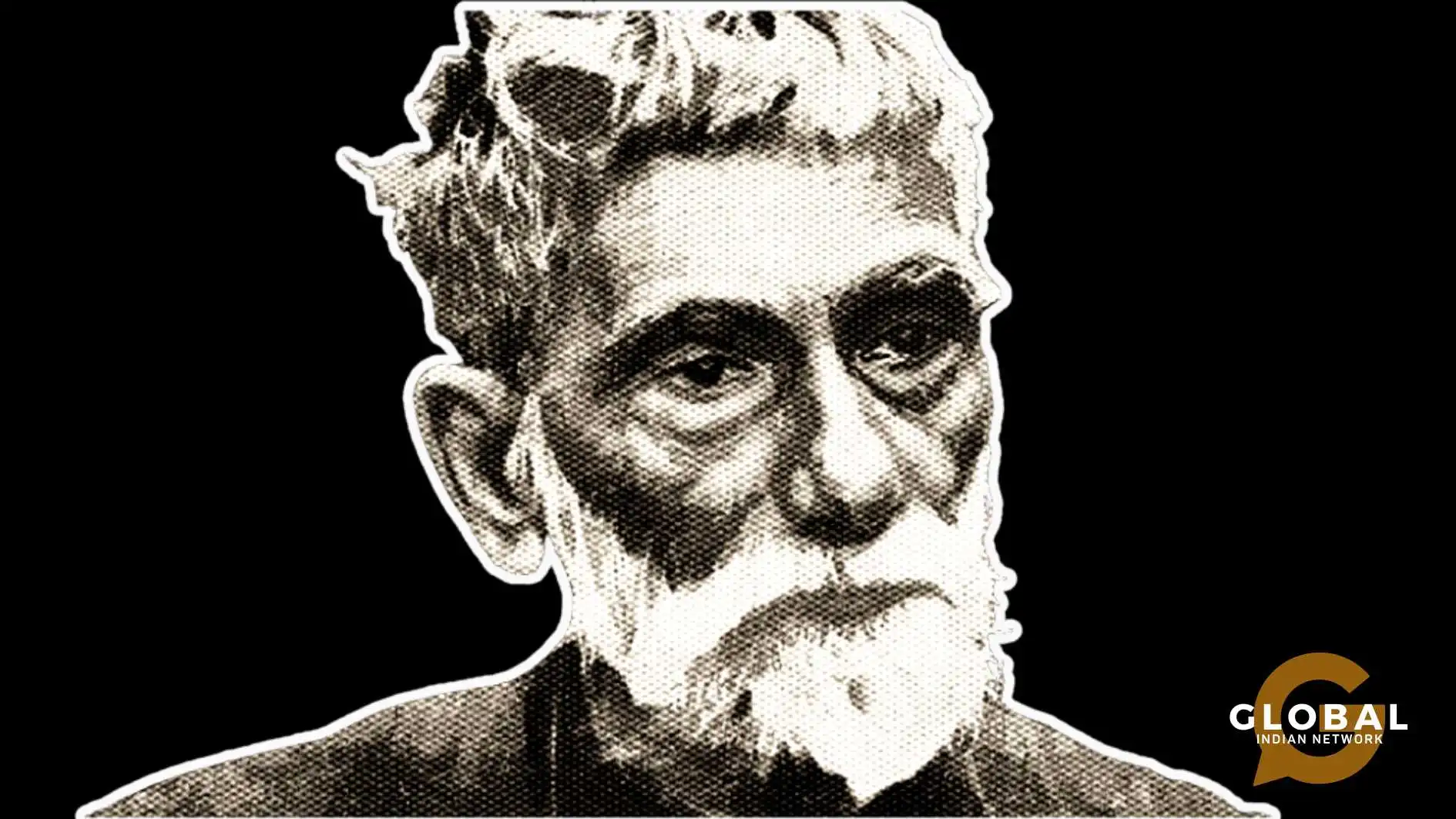

Prafulla Chandra Ray, also known as the father of Indian chemistry, was an early scientist, teacher, industrialist, and social reformer whose life and work changed the Indian scientific and industrial environment. Ray was born in 1861 in the district of Khulna (which is now in Bangladesh) to a middle-class family. He grew to become one of the most respected chemists worldwide. His pioneering work, institution-building, and service to the cause of the nation have made him a historical figure of modern chemical science in India.
Table of Contents
Early Life and Educational Journey
The story of the father of Indian chemistry is also a story of determination against the odds. Ray was born in a middle-class Bengali family that had very few resources and yet had firm faith in education. He had the curiosity that made him go to the University of Calcutta and then to the University of Edinburgh in Scotland, as described in the historical archives of Edinburgh.
He received his B.Sc. and D.Sc. in chemistry at Edinburgh, and this formed the background to his research throughout his life. His work on nitrites in his thesis laid the foundation for one of his major discoveries. Ray was inspired by other scientists such as Joseph Lister, and he was well aware of the non-existence of scientific infrastructures in his homeland, India, and therefore, he came back with a mission of establishing not only knowledge but industry as well.
The Father of Indian Chemistry: His Defining Achievements
Discovering Mercurous Nitrite
Ray discovered mercurous nitrite in 1896 when he was a professor at Presidency College, Calcutta. It was a stable chemical compound that had never been known to science before. This was an accomplishment documented in journals all over the world, and one which ACS publications will never forget. Because of his achievement, he became known as the Master of Nitrites and placed Indian chemical research on the world map.
Founding Bengal Chemicals
Ray founded the Bengal Chemical Pharmaceutical Works in 1901, the first pharmaceutical company in India. It was a landmark achievement of the father of Indian chemistry, who introduced medicines, chemicals, and laboratory products into domestic production, as at that time India had to depend on British imports. According to Better India, this company used to be symbolic of Swadeshi and influenced other Indian businessmen to invest in the local industry.

Contributions as a Teacher and Mentor
The father of Indian chemistry was also a popular teacher whose classes at Presidency College and later at Calcutta University turned out to be a schooling ground for future scientists of India. Some of his pupils were leading figures such as Meghnad Saha and Shanti Swarup Bhatnagar. Ray instilled the first generation of modern Indian chemists through his inspirational teaching and hard research training, which Drishti IAS attributes to having framed the scientific future of India.
Publications and Thought Leadership
Not only was Ray a laboratory scientist, but also an intellectual giant and historian of science. His magnum opus, A History of Hindu Chemistry, represented the chemical traditions in India for ages. According to Famous Scientists, this work helped connect the ancient traditions of India with contemporary chemistry, opposing the colonial discourse that excluded the existence of native scientific knowledge.
He authored a lot of articles on the place of science in the development of a country, and he connected chemistry to self-sufficiency and the national good. The father of Indian chemistry was also an ally of social reform movements. He was against caste discrimination and promoted education to everyone.
Social Reform and Public Welfare
Ray thought that science should be beneficial to society. In times of drought and floods, he arranged relief and inspired students to take part in charitable activity. These opinions, posted on such websites as Quora, demonstrate that he is dedicated to the upliftment of the community, and not an individual.
Recognition and Global Influence
The father of Indian chemistry was honoured many times in his life with the awarding of titles such as Companion of the Indian Empire (CIE) and a knighthood in 1919. His influence on the whole world is observed by such institutions as the Linda Hall Library, which recalls him as a scientist but also as a builder of an institution.
His legacy is still honored in academic journals such as the Journal of the Research Society on Ayurveda and Siddha and centenary celebrations, commemorative stamps, and the continued manufacture of pharmaceuticals by his original company.
Legacy Beyond Chemistry
Although his research contributions were immense, the father of Indian chemistry left more than research contributions as his legacy stretched into the fields of social reform, national industry, and national pride. His life demonstrated that Indian scientists can perform at the highest level in the world, establish world-class institutions, and make significant contributions to science and society.
As Success Magazine points out, he was as much of a visionary leader as he was a chemist- an instance of how intelligence coupled with patriotism can spark national development.
The Impact of India’s Scientific Tradition on Global Indians’ Success
The achievements of the global Indian community in science and technology today are also deeply linked to India’s long intellectual tradition, a tradition that Prafulla Chandra Ray worked tirelessly to document and revive. By highlighting India’s ancient chemical knowledge in A History of Hindu Chemistry and challenging the colonial belief that scientific inquiry was absent in India, Ray helped restore a sense of scientific pride and continuity. This revived confidence became an important foundation for later generations.
Indian-origin scientists working in laboratories, universities, and research institutions across the world continue to draw from this legacy of resilience, curiosity, and rigorous scholarship. The intellectual preparedness and cultural emphasis on education that characterize the global Indian community are, in many ways, strengthened by the path Ray helped shape. His work not only empowered India’s scientific awakening at home but also contributed to the global identity of Indian researchers who carry forward this tradition on the world stage.
The Father of Indian Chemistry and His Enduring Vision
Prafulla Chandra Ray, father of Indian chemistry, was not merely a scientist but was an architect of the scientific independence of India. Ray pioneered the establishment of Bengal Chemicals through his discovery of mercurous nitrite, his stirring teaching, and work on social causes, which set the foundation for India becoming a scientific power. His biography is not only that of chemistry but of vision, nation-building, and the idea that science might be considered a means of independence and equality.
His legacy still echoes in all Indian scientific laboratories, pharmaceutical and chemistry classrooms, even today. Celebrating the father of Indian chemistry is not just honouring a man, but also the enduring idea that science, driven by passion, education, and determination, can transform a nation.
FAQs
Who is known as the father of Indian chemistry?
Prafulla Chandra Ray is popularly called the father of Indian chemistry because of his pioneering work in scientific research and institution-building in chemistry in India.
Why is Prafulla Chandra Ray called the father of Indian chemistry?
He is known as the father of Indian chemistry due to the establishment of the first modern chemical research school in India and Bengal Chemicals, which is the first pharmaceutical company in the country.
How did the father of Indian chemistry impact education in India?
Prafulla Chandra Ray, the father of Indian chemistry, taught generations of Indian chemists at Presidency College and at Calcutta University and inspired scientific leadership.