



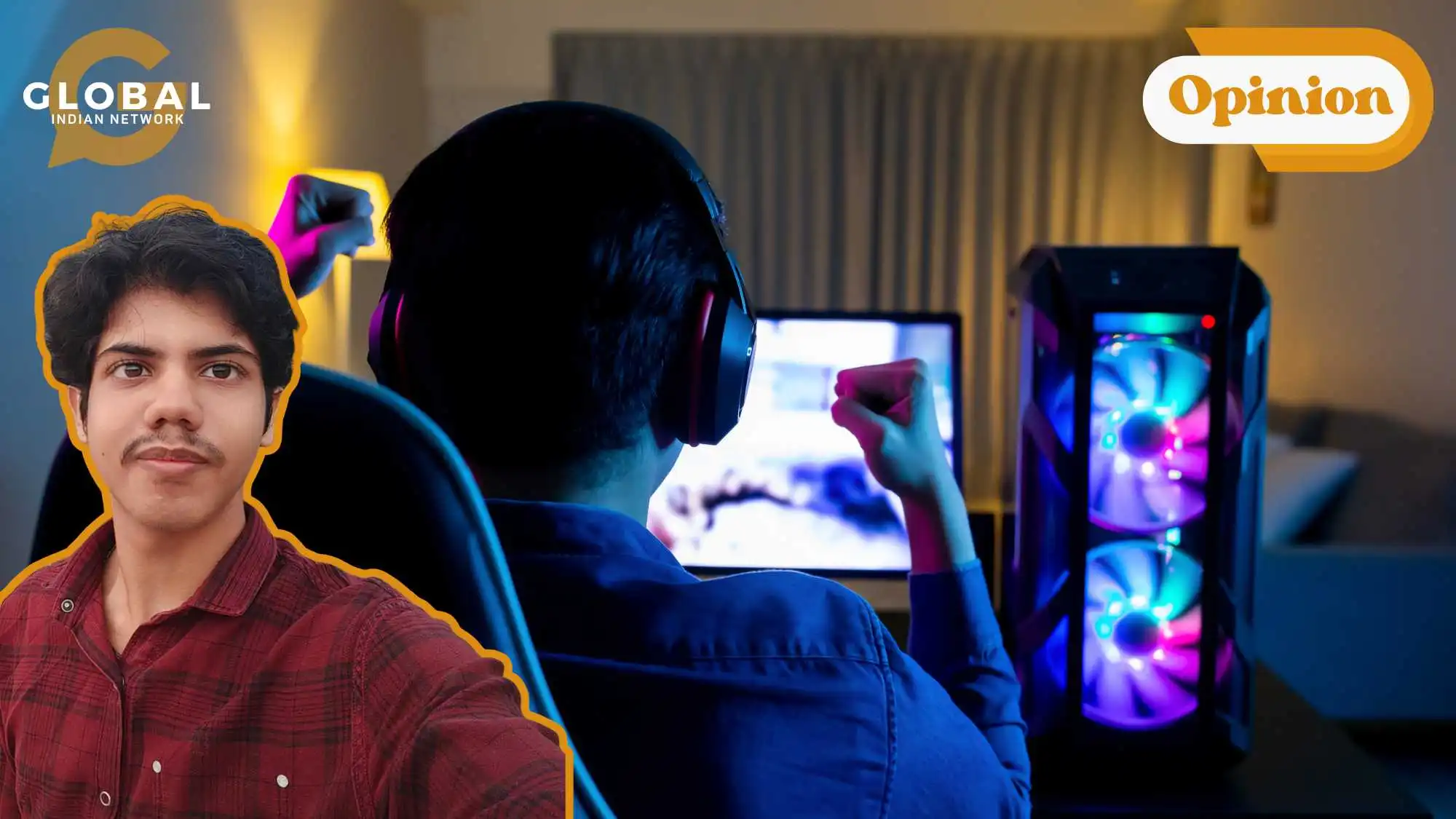

In 2026, the global tech economy finds itself confronting an unexpected crisis: a massive RAM price hike that’s reshaping the landscape for gamers, creators, and consumers alike. What started as an artificial intelligence boom has become a disruption of the memory market on an outright scale. With data centers continuously consuming record levels of high-bandwidth memory (HBM), the prices of conventional DDR5 modules are becoming increasingly scarce, and this has caused an astronomical price rise of 200%. In the meantime, there has been another 20% growth in GPUs.
There is a deeper unfairness behind these figures. The AI craze, with big language models and advanced neural processors, has pushed the production lines out of the consumer memory. The result is an unprecedented RAM price hike, one that’s testing the affordability of computing worldwide and exposing key flaws in chip allocation policies. To the Indian community, which is largely the global population of a few of the millions of avid gamers, technology workers, or founders of startups, this has different implications for access, creation, and opportunity.
AI’s Appetite and the Consumer Cost
The foundation of the RAM price hike rests on the explosive demand for AI infrastructure. With Nvidia and AMD finding it hard to keep up with the increasing demands of cloud providers, other fabs like Samsung and SK Hynix have switched production capacity to HBM instead of DDR5. Such memory chips are mandatory to train large-scale AI models; however, they also occupy foundry space and materials.
This supply skew has resulted in a widespread RAM price hike, particularly across markets dependent on consumer electronics. DDR5, used in gaming PCs, super laptops, and workstations, is being priced at a premium unheard of in the era of the semiconductor crisis. To Indian consumers, it implies that gaming PCs or editing systems previously priced at Rs 1 lakh could soon be priced at over Rs 1.7 lakh, with much of the difference being a rise in memory prices.
Prices remain artificially high in even the used PC component market on websites such as OLX India or Facebook Marketplace because buyers are fighting over the cheap upgrades. A seemingly invisible economic force, AI’s hunger for memory, has created a systemic RAM price hike that trickles down to the smallest buyer.

Gamers and Creators Bearing the Brunt
The community hit hardest by the RAM price hike is gamers and content creators, particularly in India’s fast-growing esports and streaming sectors. The modern games are based on strong GPUs and large amounts of DDR5 memory to address the real-time physics, AI-driven environments, and high-resolution textures. However, it has become a luxury that once was a mid-range whoop.
According to the reports of boutique PC makers and custom rig constructors in Bengaluru, Delhi, and Pune, the number of orders for a new build has decreased drastically. Many gamers are delaying upgrades or shifting to console platforms because the RAM price hike makes even basic PC builds uneconomical. The prices have trickled down into the digital creator economy of India, as well, with streamers and video editors, and graphic designers currently finding it harder to enter the market thanks to skyrocketing hardware prices.
To a generation of young Indians who are learning the trade of game design or animation, or digital marketing, this lack of memory is a kind of symbol of something bigger: the commoditization of access creeping in. The RAM price hike isn’t just financial, it’s cultural, erecting new walls between affordability and aspiration.
Why Policy Reforms Are Urgently Needed
The increase in the price of RAM discloses a sore fact: currently, the world’s chip allocation systems are not designed to promote equitable access but to maximize profits. Governments are in competition to lure the giants in the semiconductor industry; however, there are hardly any policies explicitly balancing the industrial AI requirement against the needs of consumers in terms of hardware. U.S. CHIPS and Science Act, and India Semicon India programme have both led to local production, but neither is concerned with the diversification of memory type.
The only thing lacking is a supply system that will retain a percentage of the DDR5 supply to be used by consumers. The impact of the RAM price increase can be reduced by introducing memory output quotas, strategic reserves, or consumer-oriented subsidies. On the same note, global collaboration through technology trade policies such as Make in India 2.0 would increase the memory production cost, particularly in the Asia-Pacific region.
The commercial growth of AI will continue to eat up consumer affordability without such structural modifications. This increase in the RAM cost may then become an inflationary trend in the long term, and having computing power will become a privilege, as opposed to a developmental process.
The Global Indian Perspective
To the Indian community across the globe, the RAM increase in price does not have localised implications only. Technology has always been a source of mobility and opportunity to the Indian people all over the world, to the young coders of Hyderabad and entrepreneurs of Silicon Valley. That progress has been based on affordable hardware. As the balance is jeopardized by soaring chip prices, those impacts spill over into educational access, innovation, and digital equality.
A lot of Indian students in foreign countries developing AI and VR applications rely on affordable memory cards and graphics cards. Prolonged increase in RAM will result in trade-offs, either delayed purchases, reduced system performance, or use of an expensive cloud infrastructure. In the case of small Indian AI startups, the increase in hardware and server lease prices makes them less competitive, preventing innovation in the area in which they made the world global.
However, this is not the only challenge that opens the prospects of semiconductor dreams in India. When the policymakers are working in unison, India would become a leader in the production of DDR5 and HBM, and the increase in the price of RAM would be a trigger to technological independence. To a historically straddling tech ecosystems diaspora, this shift will be acutely important: it will make it possible to guarantee that future computing revolutions will be accessible to all.
Conclusion: Confronting the Global RAM Price Hike
The continuous RAM price increase is not merely an inconvenience of the economy but a structural message regarding the allocation of innovation and who gets to enjoy it. With AI companies accumulating resources that no other companies can match, the common consumer is forced to make unwanted payments for rapid advancement. Data centers flourish, and students, gamers, and small developers, particularly in the global community of Indian diaspora, are the ones who suffer because of this imbalance.
In order to get it straight, memory provision should be addressed as a market variable that is a public-tech priority rather than a variable in the market. Governments and chipmakers ought to pursue collaborative models that could manage the proliferation of AI and consumer protection. To the international Indian community, this controversy cuts right to the core of digital equality, that technological revolutions must continue to be instruments of empowerment rather than disenfranchisement.
The 2026 price increase of RAM is a wake-up call: it should not be a one-sided upgrade, and policy should not be reactive. In addition to this, the following breakthrough in memory must not leave any community unable to afford it.
Let us know your thoughts. If you have burning thoughts or opinions to express, please feel free to reach out to us at larra@globalindiannetwork.com.