



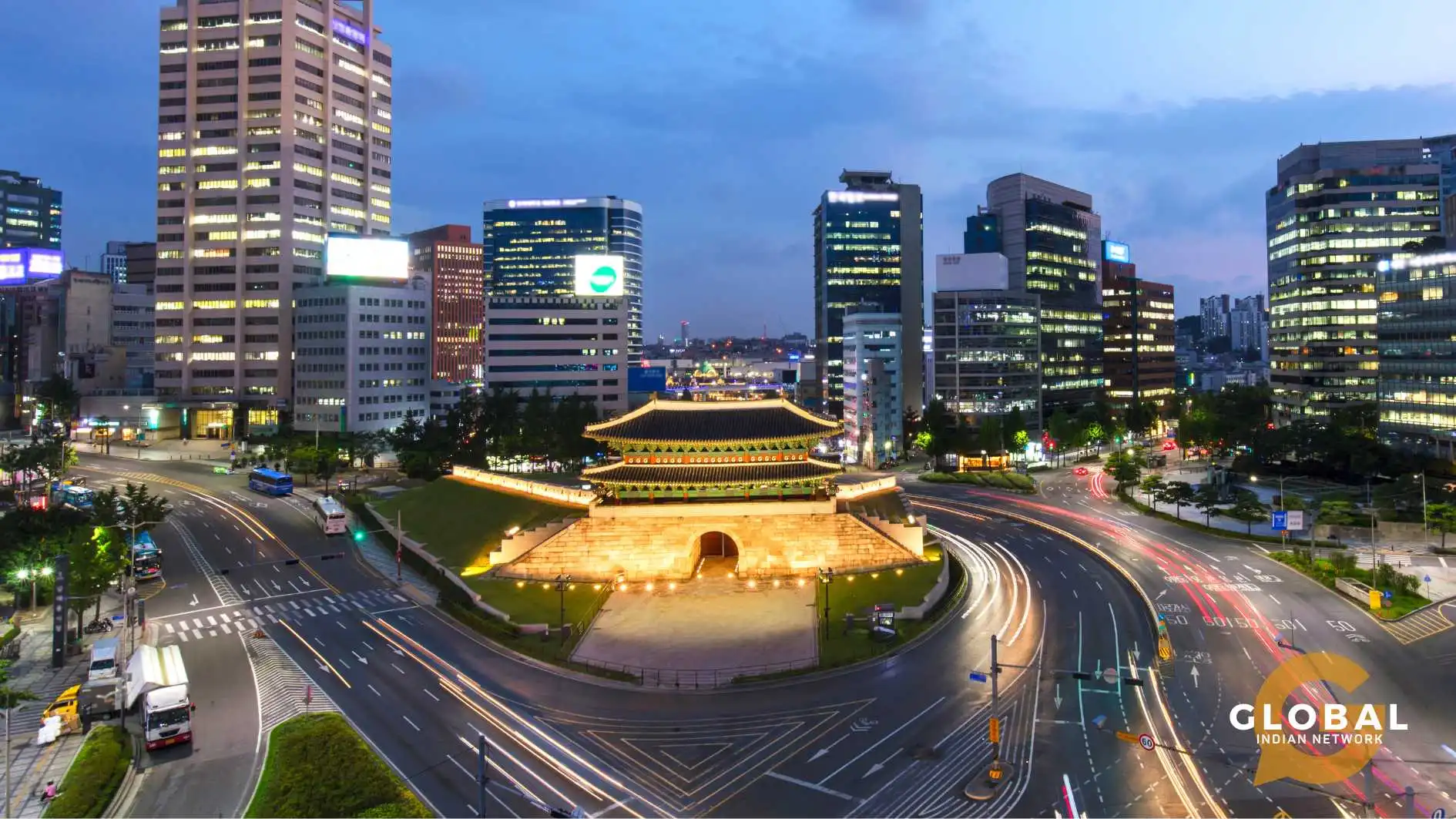

Study-abroad dreams for Indian students have long centered on the US, UK, Australia, and Canada. South Korea, however, is emerging as an unexpected contender. These traditional powerhouses have long monopolized the imagination of Indian students, fueled by prestige, rankings, and familial pressures. Yet South Korea, long overlooked, is gaining traction as a viable option for a study hub for Indians, driven less by cultural fads like K-pop and dramas than by deliberate advantages of affordability.
At first glance, its rise as a study destination for Indians might appear to be driven by pop culture: K-pop, dramas, and the global “K-wave.” Cultural intrigue undoubtedly contributes, yet the transformation of South Korea into a magnet for Indian students stems from remarkably deliberate dynamics. A Times of India report highlights that although only 1,095 Indian students were enrolled in South Korean universities in 2024, this figure has doubled since 2020, and interest is growing precipitously among Indian aspirants looking for alternatives to Western education models. Let me unpack why this matters and why this shift is worth our attention.
Table of Contents
Asia’s New Beacon As A Study Hub For Indians
When we talk about South Korea emerging as a study hub for Indians, the narrative must transcend mere trendiness. It’s not just that students are enamoured with BTS and Squid Game aesthetics, though that certainly helps introduce South Korea to Indian students’ consciousness. Instead, it’s about how South Korea is positioning its higher education ecosystem in response to structural global shifts.
To understand this, we need to examine three interlinked phenomena: geopolitical education strategy, economic development orientation, and the changing calculus of global student mobility.
The Geopolitical Context of South Korea’s Education Strategy
South Korea’s government isn’t passively watching global student flows. It has articulated a concerted plan, referred to in some education policy circles as the Study Korea 300K Project, aiming to attract 300,000 international students (including degree and language learners) by 2027. Interestingly, Korea has already surpassed this target ahead of schedule, with over 300,000 foreign students enrolled.
Nations grappling with ageing populations and fertility declines, such as South Korea, with the world’s lowest birth rate of ~0.72, have compelling motives to globalise universities and integrate skilled youth into their workforces.
For Indian families, this yields a Western alternative that’s more affordable, Asia-centric for regional jobs, and pathway-rich via scholarships, post-study work (up to 2 years), and integration support.

Economic Development and Educational Focus
South Korea’s rise as a technological and industrial powerhouse has long been studied in economics and development studies. Its aggressive industrial policy and investment in heavy and chemical industries in the late 20th century laid the structural foundations for semiconductors, digital manufacturing, and innovation ecosystems.
This industrial backbone now translates into academic strength: Korean universities are deeply oriented toward STEM disciplines: engineering, AI, materials science, data analytics, fields that Indian students increasingly prioritise. A report on Korea’s appeal highlights precisely this: the emphasis on STEM alongside cutting-edge areas such as semiconductors, artificial intelligence, and cybersecurity, all of which face explosive global demand.
The Changing Global Student Mobility Calculus
Traditional study-abroad powerhouses such as the US, UK, Canada, and Australia have steadily erected barriers that were once merely formalities, reshaping the landscape for aspiring Indian students and weakening their long-held dominance as the default study hubs for Indians. Visa policies have tightened dramatically- the US H-1B lottery remains a gauntlet with odds below 30%, while the UK slashed dependent visas for students and capped post-study work to two years (down from flexibility pre-Brexit). Canada, after a boom, introduced caps in 2024-25, slashing study permits by 35% to curb housing strain, and Australia hiked the financial proof requirement to AUD 29,000+.
Tuition costs have also increased substantially: US private universities now average $60,000/year (up 25% since 2020), UK fees have risen to £38,000 for international students amid inflation, and even “affordable” Canada has crossed CAD 40,000 with provincial surcharges. Post-study work routes, long a reliable draw, now feature lotteries (Australia’s subclass 485), inconsistent extensions, and intensifying public scepticism toward international graduates.
Indian students, over 1.3 million strong globally in 2024, faced rejection rates spiking 20-50% across these hubs, fuelling uncertainty and debt aversion among middle-class families. This policy whiplash, from pandemic recovery to populist backlashes, has made Western dreams feel increasingly precarious.
Enter South Korea’s relative policy steadiness. The D-2 student visa framework remains structured and transparent, without the roulette-style allocations that characterise some Western systems. More importantly, the D-10 job-seeker visa, which allows graduates time to secure employment, offers a transition period that appears administratively coherent rather than politically improvised.
What Makes South Korea Attractive to Indian Students
Affordability with Quality
While South Korea is not “cheap,” the cost of education, particularly in STEM fields, can be significantly lower than in Western destinations. Tuition for undergraduate programmes in Korea typically ranges from the mid-hundreds of thousands to the high hundreds of thousands of rupees per year, and living costs vary considerably between metropolitan hubs such as Seoul and regional cities such as Daegu or Daejeon, thereby strengthening its position as a practical study hub for Indians.
For families who feel priced out of the U.S. or the UK but are still committed to rigorous academic exposure, this calculus is compelling, especially when evaluating alternatives to traditional Western study hubs for Indians.
Scholarships and Financial Support
Korean universities and the government are not laissez-faire in their approach to attracting international students. Scholarships such as the Global Korea Scholarship (GKS) remain a flagship program, providing full tuition waivers, stipends, airfare, and living allowances for eligible students. Equally, many universities offer merit-based support, ranging from partial tuition waivers to monthly stipends, making the prospect of study far more financially viable than is often acknowledged.
Research and Career Integration
Because South Korea’s economy is strongly linked to research and industry, think Samsung, LG, and Hyundai, students pursuing graduate and undergraduate research have abundant opportunities to connect with real-world R&D. In certain fields, this creates pathways that are both academically stimulating and professionally tethered.
It’s worth noting, though, that employment prospects post-study are not automatic. They hinge on skills, language proficiency, and professional networks, not just the degree itself.
Cultural Immersion and Language
Students don’t just dabble in Korean culture and language alongside their degrees; some master them as non-negotiable gateways to real opportunity, further reinforcing South Korea’s emergence as a serious study hub for Indians.
Korean language proficiency (often assessed through the TOPIK) is increasingly essential for many programs and an important differentiator in employability post-graduation. This cultural engagement, including the soft power of K-pop, dramas, food, and everyday life, makes the Korean experience holistic rather than transactional, an increasingly attractive dimension of a study hub for Indians seeking depth beyond degrees.
Critical Challenges As The New Study Hub For Indians
Anything worth doing is rarely easy. South Korea’s rise as a study hub for Indians comes with real challenges.
The Language Barrier
English-taught programmes exist, but many degrees require Korean-language proficiency, which entails additional time, effort, and cultural adjustment.
Academic Pressure and Cultural Adjustment
Korean academia, especially at elite institutions, is known for rigor and intensity. Students often grapple with alienation from stress, social isolation, and cultural differences, which undermine their well-being.
Competitive Job Markets
While post-study work visas offer windows to job search, transitioning to full-time employment requires skills, networks, and, often, language fluency (a non-trivial hurdle).
Conclusion
If global education is ultimately about positioning, about where one stands in relation to momentum, then South Korea deserves to be taken seriously. It is shaped by demographic necessity and an education policy that understands the value of international talent.
For Indian students navigating an increasingly uncertain global landscape, the question is no longer simply “Where is everyone going?” but “Where does the future seem structurally aligned?” South Korea may not yet command the emotional prestige of Western destinations, but it offers something equally compelling: coherence. A country investing in technology, stabilising its visa frameworks, and integrating academia with industry, offering more than degrees, direction.
Perhaps the most interesting shift, then, is psychological. As more Indian students begin to look eastward rather than westward, the geography of aspiration itself changes. And that pragmatic change may ultimately redefine what we consider a “natural” destination in the first place.

FAQs
Why is South Korea attracting more Indian students?
It offers strong STEM programs, structured visa pathways, expanding scholarships, and close ties between universities and high-tech industries. At the same time, tightening immigration rules in traditional destinations have encouraged students to look elsewhere.
How many Indian students study in South Korea?
The number remains relatively small compared with the US or Canada, but it has been steadily increasing since 2020, reflecting growing interest.
What visa options are available after graduation?
Students typically hold a D-2 visa during their studies and may transition to a D-10 visa after graduation to seek employment, subject to eligibility requirements.
Are scholarships available?
Yes. Government-funded programs like the Global Korea Scholarship and university-level merit awards help reduce tuition and living costs for eligible students.
Is learning Korean necessary?
Not always for admission, especially in English-taught programs, but language proficiency significantly improves integration and job prospects.