


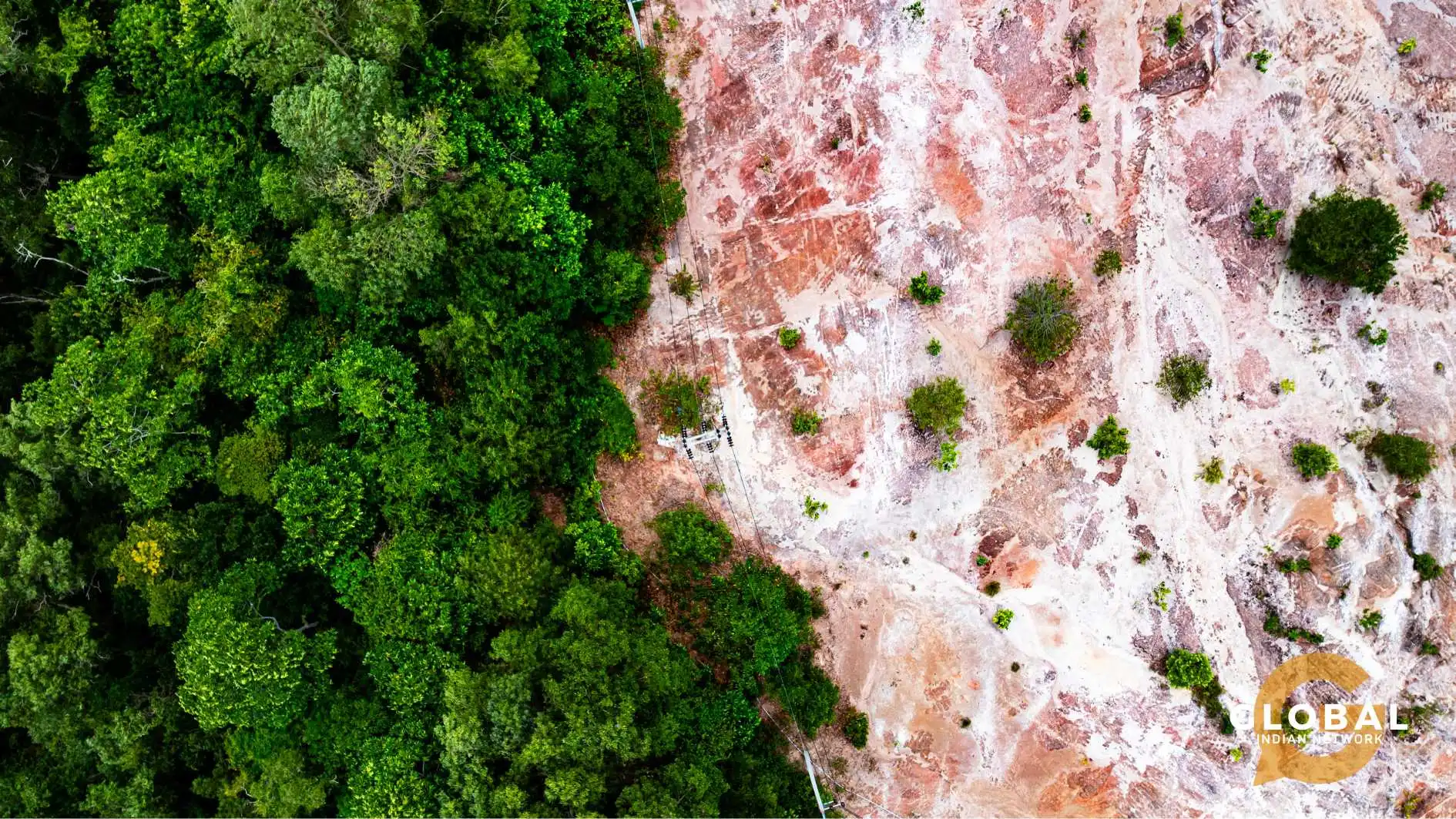

The EU’s Anti-Deforestation Rules, or EUDR, are a significant step to address the tragic loss of forests worldwide, ensuring that no chocolate bar or coffee cup purchased in Europe is linked to the destruction. It’s so disappointing that our guilty pleasures are linked to the loss of rainforests, but this rule is bringing us hope for something much better. By controlling the movement of important goods, it’s forcing everyone, from large companies to remote farmers, to reassess sustainability.
Table of Contents
EU’s Anti-Deforestation Rules Overview
Imagine the following case: enormous Amazon deforestations become soy fields merely to satisfy the hunger of Europe, it is nauseating. The EU’s Anti-Deforestation Rules tackle that head-on by targeting seven core commodities like cattle, cocoa, coffee, palm oil, rubber, soy, and wood, plus everyday items such as leather, chocolate, and furniture. Businesses have to demonstrate that their products are the result of land, which has not been axed since December 31, 2020, and obeys local regulations, and it is geolocation data and traceability that come across like detective work at the global level.
It is encouraging to know that the EU is moving forward, but, frankly speaking, it is not a trifle: businesses are required to provide comprehensive due diligence statements and undergo actual verification when selling or exporting, which is the reason why forests are not being left to fall. It is not paperwork but a life-saving measure to biodiversity, but with concerns raised about who will be paid in the process.
Key Compliance Steps
It is hard to figure out how to navigate the EU’s Anti-Deforestation Rules, as it seems that you are trying to herd cats across continents, but there is a definite three-step process that will keep everyone accountable. It works as follows: assemble plot-level geolocation and supply chain information, evaluate risks by country benchmarking of the EU, and upload statements through a digital portal, with a heavy fine of up to 4 percent of EU turnover in case of failure; it is tough love, in actuality.
There is no exemption as to the giant corporation or small trader, which even the playing field but strikes the smaller players at the knees. I cannot help but be impressed by the ambition and sympathize with those who are struggling to keep up. Such tools as satellite verification are game-changers, but require tech savvy, which not all people are as tech-savvy.

Timeline and Updates
The initial June 2025 implementation seemed hasty, so justifiable anguish was expressed by companies that were clamoring to get more time to understand it. To their credit, the EU did, and bumped it to the last day of December 2026, through a clever amendment. Big operators prepare equipment at the time, micro and small companies, until June 2027, a concession to the truth.
The EU’s Anti-Deforestation Rules, frequently asked questions, and a system of risk rating of the countries, low, standard, or high risk of deforestation, which is comforting in the storm of confusion rolled out by the Commission, are refreshing. It is encouraging to see this develop, but we should hope that nothing can be lost by the delay; forests cannot wait indefinitely.
Global Trade Effects
EU’s Anti-Deforestation Rules extend out to Brazil, the soy heartlands, and on to Indonesia, the palm groves, inflicting change on lives and livelihoods in ways that will pull at the heartstrings. Traceability costs to the exporters strangle smallholders who lack land titles or gadgets, and it is frustrating that EU demand, which is innocent in principle, causes the suffering.
The opponents in other locations, such as Malaysia and Argentina, raise an outcry on green protectionism, a barrier to trade being camouflaged in green heroism, and you can understand why they are fingernails. However, the EU, associated with the colossal disappearance of forests, is a reason to shake a tree and trigger juster global chains before it is too late.
EU’s Anti-deforestation Rules: Challenges for Producers
You feel your heart sink in imagining how small farmers are underground due to the need to have the satellite data and reports that they are unprepared to meet, as they are not equipped to meet the demands-it is like going to Everest with bare feet. Market lockout and the decision to deforest to less restrictive markets is a massive threat, and the risk scores fail to take into account the local administration concerns that make you wonder about the justice.
The offering of support tools provided by the EU, bless them, but there is a call for proper funding to enable these communities, instead of abandoning them. It is a sad lesson: the good intentions should be accompanied by some real help, or the world is simply replacing one tragedy with another.
Conclusion: Path Forward
To make these EU’s Anti-Deforestation Rules really shine, we must have partnerships that amount to a handshake: investing in sustainable transitions, honing standards, and respecting local expertise. Conservation of carbon sinks and wildlife reserves should not create a bigger divide in the world, but uplift all people and conserve the planet that all of us live in.
Stakeholders are now buzzing about additions that involve welcoming changes in the process and possible extension to more commodities, and I hope it is true because when this continues to be reviewed in the process, it could become the light at the end of the ethical trade tunnel. Hopefully, it is a tradeoff between passion and pragmatism.

FAQs
What are the EU’s Anti-Deforestation Rules?
The EU’s anti-deforestation rules require evidence that key products entering the EU market or export markets are free from post-2020 deforestation, supported by robust due diligence and traceability.
Which products fall under the EU’s Anti-Deforestation Rules?
Cattle, cocoa, coffee, palm oil, rubber, soy, wood, and derivatives like beef, chocolate, leather, and even printed books.
How do companies comply with the EU’s Anti-Deforestation Rules?
By filing due diligence statements with geolocation, risk checks, and legality proof through the online system of the EU.