



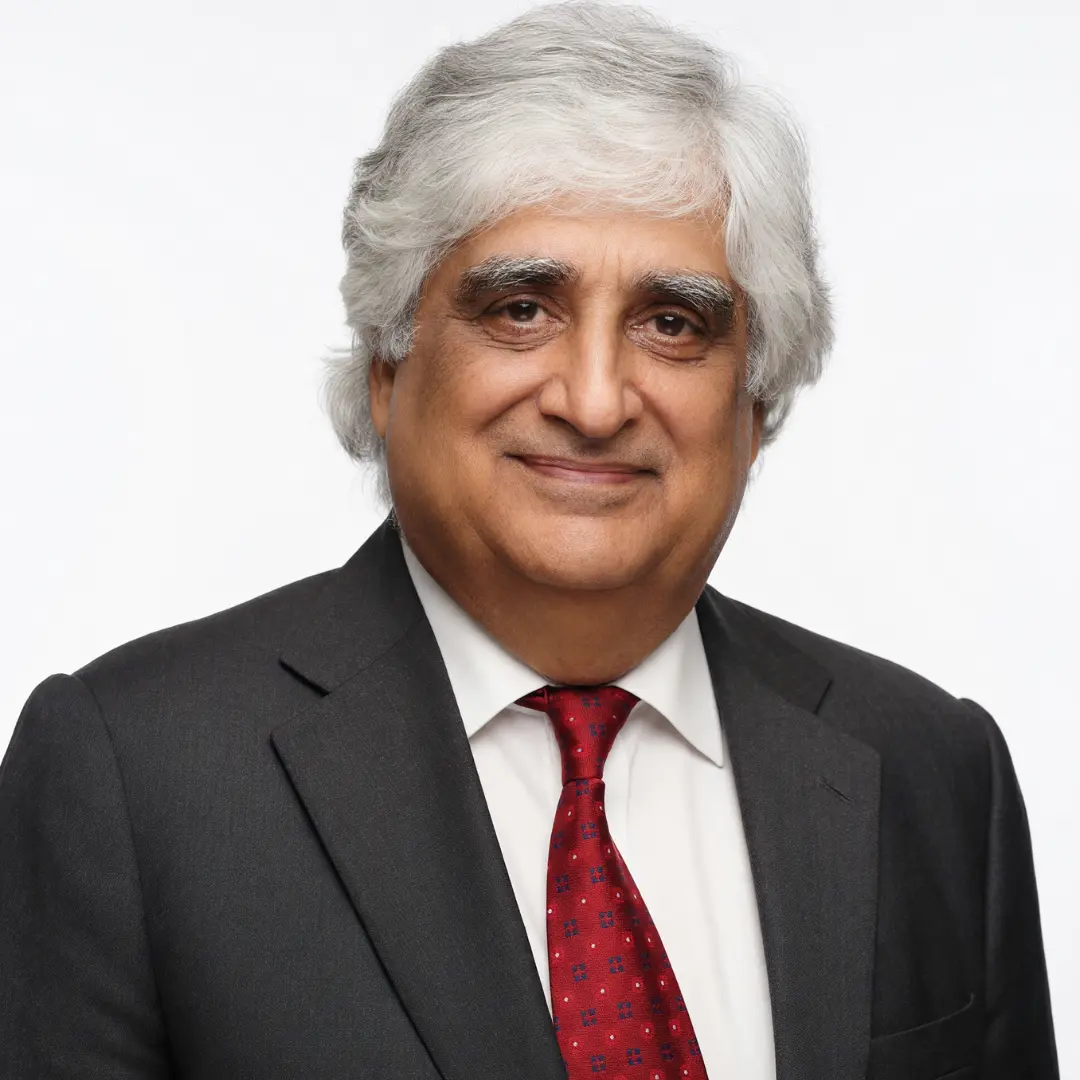
Dr Mohan Kaul
Founding Director General and Chief Executive Officer of the Commonwealth Business Council (CBC), a role he held from its establishment in 1997 until 2012, and since then has chaired a specialist advisory, business development, project management, and investment consultancy.
Biography
The Story
Dr Mohan Kaul is one of the Commonwealth's foremost architects of international trade, investment, and development policy. Over a career spanning more than five decades — from the faculty rooms of the Indian Institute of Management Ahmedabad to the corridors of the UN, the World Bank, and the governments of three continents — he has shaped the frameworks through which developing nations access global markets, attract foreign direct investment, and build institutions fit for the modern world. He is the founding Director General and Chief Executive Officer of the Commonwealth Business Council (CBC), a role he held from its establishment in 1997 until 2012, and since then has chaired a specialist advisory, business development, project management, and investment consultancy.
Education and Academic Credentials
Dr Kaul holds a PhD in Management Science from the University of Paris-Sorbonne, and an undergraduate degree in Engineering from the Madras Institute of Technology — a combination that reflects the breadth of his intellectual formation across technical and social sciences. In November 2007, Cape Breton University in Canada conferred upon him an Honorary Doctorate of Letters in recognition of his outstanding contributions to public life, international development, and the advancement of Commonwealth relations.
He is a Chartered Fellow of the Chartered Institute of Personnel Development (UK), a Fellow of the Computer Society of India, and a Fellow of the Institute of Training and Development (USA) — credentials that span human resource management, technology, and professional education across three continents.
Prof. and Dean, IIM Ahmedabad (1971–83)
Dr Kaul began his academic career at the Indian Institute of Management Ahmedabad (IIMA) — established with Harvard Business School and widely regarded as India's most prestigious business school — where he was part of the initial faculty group. He rose to become Dean from 1981 to 1983, designing and teaching postgraduate and doctoral programmes and leading management seminars for senior leaders in business and government.
During his years at IIMA, he served as an advisor to multiple departments of the Government of India, including the Planning Commission, the Electronics Commission, and the Department of Foreign Trade. He was a member of expert panels formulating liberalised policies on computer hardware and software exports, an Advisor to the Government of Gujarat, and a consultant to major public and private sector firms including the Shipping Corporation of India, Larsen & Toubro, and the Electronic Corporation of India. He also served on the boards of the Dredging Corporation of India and LD Engineering College.
Adviser to the UN & World Bank (1983–85)
Transitioning from academia to multilateral advisory work, Dr Kaul served as an Adviser to the United Nations, working with the Malaysian government of Prime Minister Mahathir Mohamad on information technology, management development, agriculture, and economic policy. He also advised the governments of China and South-East Asian nations during this period.
Among his most historically significant assignments was conducting the first-ever evaluation of the Grameen Bank — the pioneering microfinance institution founded by Nobel Laureate Muhammad Yunus — on behalf of the World Bank and IFAD. That evaluation directly led to large-scale international funding for the bank, helping catalyse a global microfinance movement that would go on to lift millions out of poverty.
Director, Commonwealth Secretariat (1986–98)
As Director of the Management Development Programme and then the Management and Training Services Division of the Commonwealth Secretariat, Dr Kaul led the Commonwealth Fund for Technical Cooperation's programmes across over 40 countries, spanning governance, public sector reform, human resource development, privatisation, and private sector development. Countries where he led programmes include Barbados, Cameroon, Cyprus, Fiji, Ghana, Jamaica, Kenya, Malawi, Mauritius, Mozambique, Namibia, Nigeria, Papua New Guinea, Sierra Leone, Singapore, Sri Lanka, Tanzania, Trinidad and Tobago, Uganda, and Zimbabwe, among others.
At a pivotal moment in South African history, Dr Kaul assisted the government of President Nelson Mandela on public service reforms following the end of apartheid. He led a team of advisors on capacity building — including organising the office of the President, the Deputy President, and the Ministry of Public Administration — and organised the first international conference on Human Resource Development for post-apartheid South Africa in 1994. He also convened the first Commonwealth Southern African Heads of Government Roundtable on Democracy and Good Governance in Botswana in 1997, attended by all regional Heads of Government including President Mandela.
During this period, he was a member of the UN Secretary-General's Management Efficiency Group and Taskforce on Human Resource Management — a role supported by the UK Government through its UN Mission from 1996 to 1997 — and addressed a special session of the UN General Assembly on public management in 1995. He also served as President of the International Association of Schools and Institutions of Administration (IASIA) from 1996 to 2001, leading a delegation to China in 2000 for discussions with then Vice-President Hu Jintao on governance and globalisation.
Founding Director General, CBC (1997–12)
Dr Kaul's most defining institutional achievement is the Commonwealth Business Council (CBC), which he was appointed to lead upon its establishment by Commonwealth Heads of Government in Edinburgh in October 1997 — a summit chaired by Prime Minister Tony Blair. Working initially with the office of Prime Minister John Major, the Foreign and Commonwealth Office, and the Department of Trade and Industry, Dr Kaul developed the Commonwealth Business Forum into the largest international business event in the Commonwealth, held biennially alongside the Commonwealth Heads of Government Meeting and generating billions of dollars in trade and investment commitments.
Under his leadership, Commonwealth trade grew from USD 2 trillion to over USD 4 trillion, and investment flows reached over USD 200 billion. His focus throughout was on mobilising investment, building public-private partnerships, reducing the digital divide, advancing WTO market access and trade facilitation, and integrating developing countries into the global economy. The WTO formally recognised the Commonwealth as an important partner in trade liberalisation — a recognition directly attributable to the frameworks Dr Kaul built.
Among his landmark initiatives: he organised the first UK-India Business Leaders Forum in 2004 (preceding the UK India Business Council, of which he was a founding director); developed the first UK-India Trade & Investment Flows Report in 2008; signed MoUs with key Chinese companies in Beijing in October 2010 in the presence of the British Ambassador, establishing the China-Commonwealth Business Council; led business consultations for Prime Minister Tony Blair's Commission for Africa; led the G8 Business Action for Africa; and worked closely with the President and Government of Rwanda on mobilising investment and supporting Rwanda's entry to the Commonwealth. He led over 50 high-level forums involving Heads of Government, Senior Ministers, and top business leaders — catalysing foreign direct investment into countries including Ghana, Sierra Leone, Mozambique, Namibia, Nigeria, Uganda, Tanzania, and India, including nations that had never previously received FDI.
Advisory, Investment, & Entrepreneurship
Since retiring from the CBC in April 2012, Dr Kaul has chaired a specialist consultancy focused on advisory services, business development, project management, and investment facilitation. He continues to serve on Presidential Advisory Councils of multiple African nations, and has remained active across several prestigious institutional assignments, including:
Vice Chair and Director of the Indo-UK Institute of Health — a joint initiative of the Prime Ministers of the United Kingdom and India, aimed at establishing private hospitals across Indian cities in collaboration with King's College Hospital and other NHS institutions; Chair of the Pontaq UK-India Innovation Fund; Member of the Advisory Council of British Expertise; Member of the Board of the Crown Agents Foundation; Member of the Board of Directors of Ahmedabad University, India (where he facilitated an agreement with Cambridge's Judge Business School); Chairman and Director of Commonwealth Inclusive Growth Services (CIGS), a microfinance company in Chennai; Liveryman of the City of London and Member of the World Traders; and Member of the Board of Directors of the Europe India Chamber of Commerce in Brussels.
Earlier positions include Member of the Board and Chair of the Governance Committee of ICICI Bank (UK); founding director of the UK India Business Council (2006–2009); Member of the World Bank's Africa Virtual University Board; and Emeritus Director of the Commonwealth Association of Public Administration and Management, Canada.
Selected Publications
Dr Kaul is the author of a number of significant works, including: Global Growth and the Commonwealth (2010); 'The Future of the Commonwealth: Good Governance, Economic Empowerment and Respect for Diversity', published in The Round Table (2007); An Outsider's Inside View (2000); and a range of policy papers on Commonwealth trade, investment, and governance across his career.
Connecting you to the influential & the largest network of its kind
Highlights
At a Glance
Join the network that connects leaders across borders, industries, and generations.
Meet All Ambassadors