


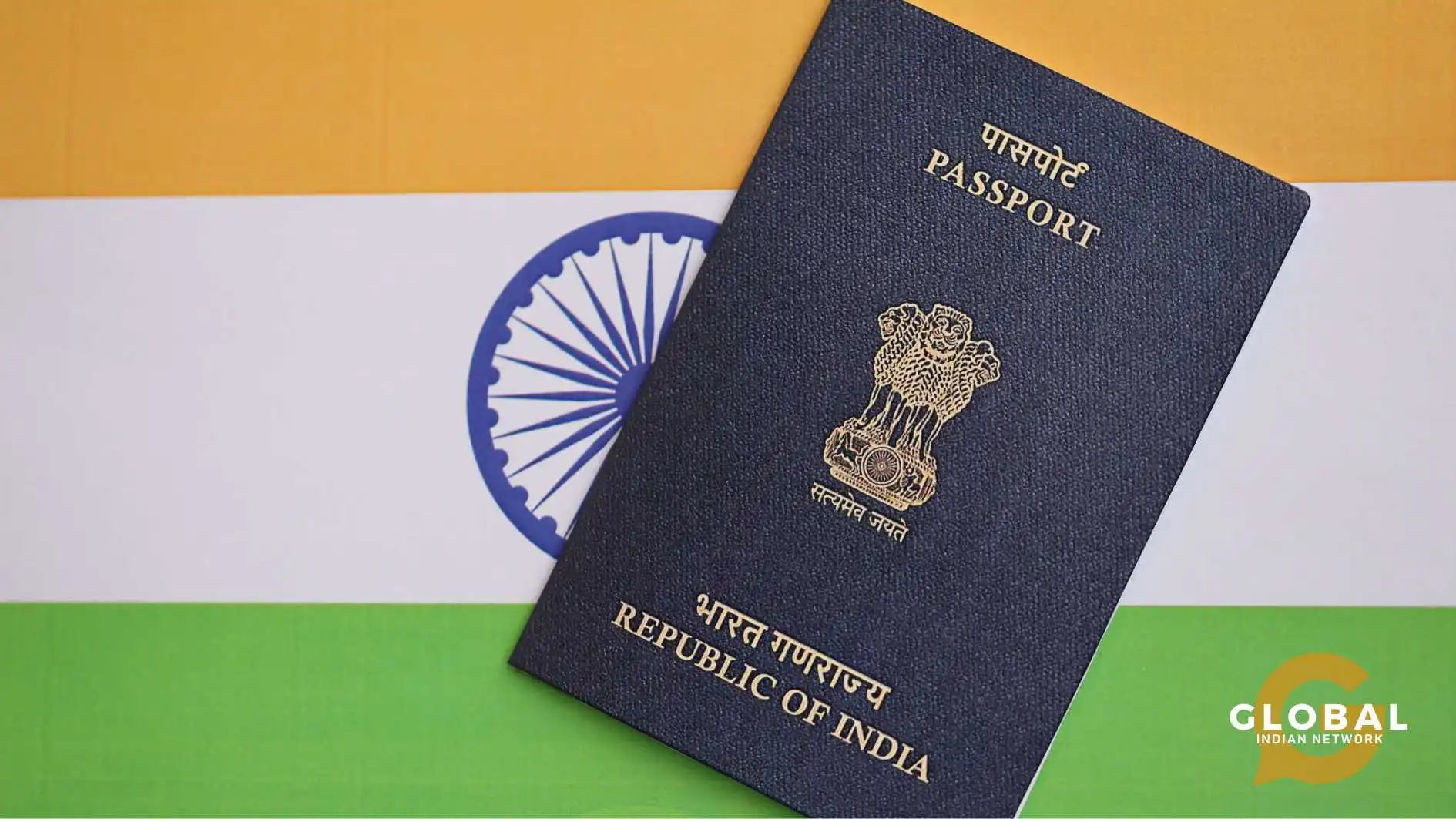

The increase in Indian passport surrender statistics highlights a growing problem in India: as more people leave India in search of opportunity and seek a more stable way of life, more are temporarily or permanently leaving to participate in global citizenship efforts. In the past decade, the total number of Indian citizens who have cancelled their passports has reached more than 200,000 per year since 2022, illustrating the difficulty families face due to separation created by these new global movements.
Additionally, countries have expressed concern about the social impacts/benefits of emigration, as well as the economic advantages of remittances from citizens emigrating to those nations. Overall, the phenomenon of Indian passport surrender statistics reflects common issues around the world today: how can people have a stable home, create wealth, and leave a legacy in our rapidly connected, global world?
Table of Contents
Recent Trends
The Indian passport surrender statistics have increased significantly since the pandemic, with more than 200,000 renunciations in 2022 alone, marking the next step in the transformation of global migration trends that everyone in the profession is aware of. In particular, there were 225,620 surrenders in 2022, 216,219 in 2023, and 206,378 in 2024, which, although slightly decreasing, remain 43 percent higher than the averages prior to 2019, due to accumulated demand in foreign markets and competitive labor markets.
This continued growth in the Indian passport surrender statistics demonstrates larger economic recovery and international mobility, and most of the professionals who are aged between 25-40 years are the majority, as they usually justify career acceleration, higher earnings, and work-life balance as one of the major factors in moving to other parts of the world due to the lack of talent in the home country.
Recent years of cumulative data make the magnitude more dramatic: more than 1.7 million renunciations in the years 2014-2024 alone are enough evidence of a structural emigration trend, as the rapid GDP growth in India (now the third-largest economy in the world) contrasts with the opportunity gaps experienced by fast-growing economies such as Indonesia or Vietnam. Analysts extend this trend into 2025-2026, possibly leveling off at 200,000 plus per year, unless individual ambition is met with domestic reform, as a combination of individual ambition and the global fear of missing global opportunities in an era of remote work and H-1B equivalents all over.
Indian Passport Surrender Statistics Overview
According to historical Indian passport surrender statistics, the trend since 2015-2019 of stability followed by the outburst of 163,370 in 2021 confirms the global phenomenon of lows and highs, with 85,256 being a low compared to the 13 years of 2015-2019. As of 2022, the numbers went beyond 225,000, with the data provided by the Ministry of External Affairs (MEA) of India confirming that there have been over 1.7 million in total since 2014, something that provokes the idea of resilience in individual endeavors but sends a concern to international observers of brain drain in Asia.
The 2014-2022 state-wise breakdowns show that Delhi, Punjab, and Gujarat lead with 60,414 (urban tech hub), 28,117 (agri-distress migrants), and 22,300 (entrepreneurial networks), respectively, similar to the regional outflows from Lagos, Nigeria, and São Paulo, Brazil. Indian passport surrender statistics have increased over time, rising from 71 in 2019 to 17,557 in 2022. Overseas Indian missions’ surrender processes have become a worldwide phenomenon due to the uniformity of policies and aspirations, similar to hukou-driven migration in China.

Key Drivers
The stringent no-dual-citizenship policy of India under its Citizenship Act, requiring the surrender of the passport after acquiring foreign nationality, is a strict requirement that leaves no middle ground, generating the dread of uprootedness, which is not entirely unfamiliar to world citizens who appreciate the importance of flexibility. Very experienced employees in technology, science, and engineering pursue better career paths, higher education (e.g., US MS degrees), and work in skill shortage in the OECD countries, as a symbol of ambition for financial stability (e.g., 3-5 salary increments), professional development, and innovation cultures.
In addition to policy, such considers as ease of traveling internationally (e.g., US ESTA vs. visa headaches), strong social security safety nets, access to healthcare, and family reunification in foreign countries combine optimism about a better life quality with fears of the domestic issues, such as job market saturation, overcrowded cities, polluted air, etc. that resonate in Mexico City or Manila. Although MEA describes reasons in terms of the personal, globally, experts have attributed the pull of the global knowledge economy to an Indian 1.4 billion population competing for a finite number of high-end opportunities, just as youthful surges in Africa and Latin America.
Top Destinations
Over 70% of renouncers are caught in the United States, Canada, the United Kingdom, and Australia through the use of post-study work visas (e.g., the Philippines-based Philippine occupation of the three countries) and simplified permanent residency options that these countries use to attract high-end STEM graduates, and this is how those countries attract a high-end workforce. The US led the inflows in 2023-2024 (over 100,000 naturalizations) with EB-5/green cards, and the Express Entry system in Canada and the Australian points-based system focus on skills amid aging populations.
These centers are not only a promise of visas but also of ecosystems of prosperity, like the venture capital of Silicon Valley, the AI community of Toronto, where Indians turbocharge the innovation, but this comes at the cost of native R&D in sender countries worldwide. Indian passport surrender statistics for such countries can be seen in the statistics of a calculated trade-off: personal ambition versus national innovation gaps, a dynamic well known during Ireland’s Celtic Tiger period.
Regional Patterns
Goa has a population of 28,031 surrenders in 2011-2022 (40% of the national figure), serving as a hub of tourism-based cosmopolitan ethos and influx of NRI investors, as in the US-Latin flows, the center of Miami does. Punjab lags at 9557 (distress to Canadian farms), while Maharashtra (Mumbai tech) and Kerala (Gulf nurses) spike as remittance economies, comparable to Morocco-France or Egypt-UAE remittances.
Indian passport surrender statistics in Gujarat increased from 241 in 2022 to 485 in 2023 and to 244 by mid-2024, with outflows concentrated in the entrepreneurial regions of the US, such as Texas, or of China, such as Guangdong. Those trends illustrate the presence of high-mobility areas draining talent to foreign lands, a mix of economic stability and anxiety over local constraints, and a global narrative of urban-rural polarities.
Economic Implications
The Indian passport surrender statistics identify brain drain weaknesses, as the talent is rushing out in the form of PhDs, engineers, the economy loses its innovation potential, but the 35-million-strong diaspora (largest in the world) sends home 125 billion each year (3 percent GDP), rivalling many countries’ FDI, spurred by consumption like in Nigeria. It is interesting to note that more than 20 leaders of Indian origins head Fortune 500 companies, including Sundar Pichai at Google, Satya Nadella at Microsoft, and Parag Agrawal, who used to be the leader of Twitter, which has made India dominate the world in terms of its influence in technology, pharmaceutical, and financial sectors.
This doubled opposition creates reverse connections: with Indian startups (10B+ annually) and the exchange of knowledge across platforms such as Global Indians to do Good or INSEAD alumni networks, and the influence of Jewish or Chinese diasporas. The costs of the exodus and these gains require that the policies capture the resilience for mutual prosperity, similar to the Israeli brain circulation model.
Future Outlook
Projections suggest that the growth in Indian passport surrender statistics will exceed 200,000 annually by 2026, driven by the world talent wars (e.g., the US CHIPS Act). Without reforms such as increased OCI privileges, the trends will mirror those of post-Ukraine migration across the EU. Domestic reasons, 15% graduate unemployment, city overpopulation collide with what awaits in the overseas market, green cards, 401(k)s, and youth aspiration is pitted against retention anxiety common to the Global South.
Skill India (training 400M by 2030) expansions, diaspora bonds (such as Israel’s 25B model) and others may become strategic responses, shifting this toward brain circulation and turning the national power of individual hopes into geopolitical change.
Conclusion
The rising Indian passport surrender statistics are an example of how resilient a generation can be when pursuing their dreams and are willing to travel away from home. At the same time, many of these people fear that they will have to leave behind some of their ambitions and will not be able to contribute meaningfully once they leave India. This trend has occurred with professionals on every continent. However, while this trend is challenging India’s innovation ecosystem, it is also expanding India’s global reach because many of these individuals are now part of a diaspora remitting billions of dollars and leading some of the world’s most successful companies, similar to how overseas.
The Chinese have done, and the Irish have done. Thus, policy makers will need to balance this tension by creating domestic opportunities for individuals through skill development and OCI reform while also recognizing that there is a universal human effort that drives Indians and other global talents to excel in their respective fields throughout the world. Ultimately, if we can convert brain drain into brain gain, we can re-conceptualize the surrender of Indian passports as an avenue for mutual benefit rather than loss and provide all future generations with hope for a bright future in our increasingly interconnected world.

FAQs
How many Indians surrendered their passport?
More than 2 million people have renounced their Indian citizenship since 2020. As of March 2023, we see a pattern with over 200,000 people renouncing their Indian citizenship every year since 2020.
How many Indians are leaving India every year?
A total of 206,378 were counted in 2024, and 216,219 have already renounced their Indian Citizenship in 2023. These renunciations have been made official as of the date the data was presented to Parliament.
Is it important to surrender an Indian passport?
According to the Indian Citizenship Act, 1955, persons of Indian origin cannot be citizens of more than one country. Indian citizens who hold a passport from another country must surrender their Indian passport upon obtaining a passport from that country.