



In the book The Friends of Voltaire, Evelyn Beatrice Hall wrote, “I disagree with what you say but defend to the death your right to say it.”
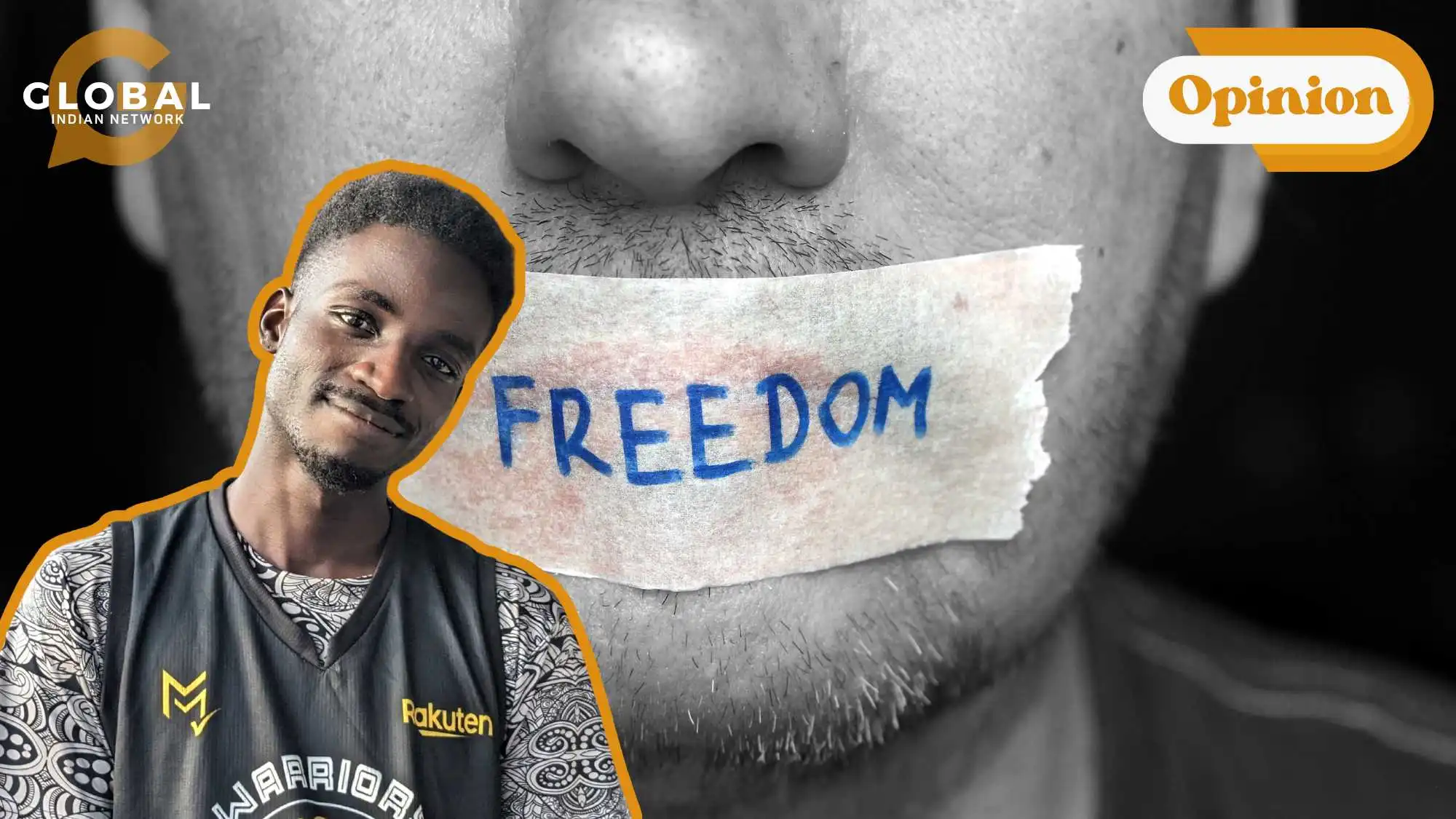
Often misappropriated to Voltaire himself, Evelyn Hall’s quote is considered near biblical for earnest advocates of free speech. However, in the age of little to no barriers to entry to mass audiences and polarising extreme world views. One has to wonder, should there be ethical limits to what one can or cannot say? Or is tolerance to the fringe and divisiveness necessary for the existence of all speech?
The False Dichotomy of Ideals
It goes without saying that much of the world has come to revolve around political ideology. This is not to say that this had not been the case before; policies affect us all, and policies are manufactured in political circles, but at present, most people have become hyperaware of the state of politics around them. This does not inherently assert that people today are better informed than those of yesteryear, but rather that they are aware of the true reach of the political apparatus.
With this awareness has come the adaptation of political nomenclature used for centuries, particularly by Western commentators. Chief amongst them is the idea of Left and Right Wing politics. The adoption of this paradigm in the way many view politics has led to many holding to the idea that beliefs are binary along the political divide, and whatever version you are opposed to holds significance and thus should be tolerated. This doctrine could only survive for so long; however, when political policies naturally start to affect the state of livelihood of a people, it becomes difficult to believe.
Thus, the false dichotomy is that the ideals one holds are balanced by those on the opposite end of the political spectrum. This false dichotomy allows us to have an environment that sustains beliefs that –ironically– can be disharmonious. However, some would counter that this environment is necessary as it protects all.

Is Freedom of Speech Dangerous?
Before Adolf Hitler invaded Poland and kick-started the conflict we now refer to as the Second World War. He rose to prominence through rhetoric. The rhetoric of the other that continues to be used by leaders the world over today precedes any rearmament policy; in fact, in most cases, it justifies it. Rhetoric has a history of being used to justify or even inspire forms of violence. Most genocides and large-scale massacres are preceded by dehumanising the people who end up the victims of this violence.
Modern-day Europe has seen a sudden rise in racial violence, which has in no part been due to grifters and right-wing commentators spreading rhetoric that is inherently racist but masked as pro-legal migration sentiment. This thus begs the question: Is the unchecked freedom of speech dangerous?
If one were to answer the above question with a yes, then the secondary question becomes. What are we as a society to do about that danger? Some might argue that we ought to co-exist with that danger, but given that its unchecked nature has continuously sprouted hate and divisiveness, co-existence not only seems short-sighted but also borderline impossible.
Should We Police Freedom of Speech?
George Orwell’s 1984 describes the presence of the Thought Police who regulate the thoughts of its citizens. The Thought Police was in charge of policing thought crime, which in the context of the book is a stand-in for dissent. This, amongst many aspects of the book, is regarded as a warning for what fascist authoritarian regimes could manifest as. Thought Crime is, of course, institutionalised by policing free speech. It is a well-known fact that authoritarian regimes the world over are very sensitive to the freedom of expression.
Thus, the paradox of free speech. If the unchecked freedom of speech can create an environment that breeds division, should there be guardrails to it? If yes, how do we contend with it, knowing that these guardrails are the same apparatus constantly used by authoritarian regimes in the suppression of expression and thought?
Conclusion
There are many who will argue that the trade-off is worth it. That risking and tolerating rhetoric is the lesser evil than infringing on the tenants of free speech. This article makes no claim for or against either one. Rather, it attempts in its limited capacity to discuss the paradox of free speech. Especially in a time period where much of the world’s stream of information is seemingly democratised into people’s phones, but also controlled by the algorithm’s invisible hand.
Let us know your thoughts. If you have burning thoughts or opinions to express, please feel free to reach out to us at larra@globalindiannetwork.com.