



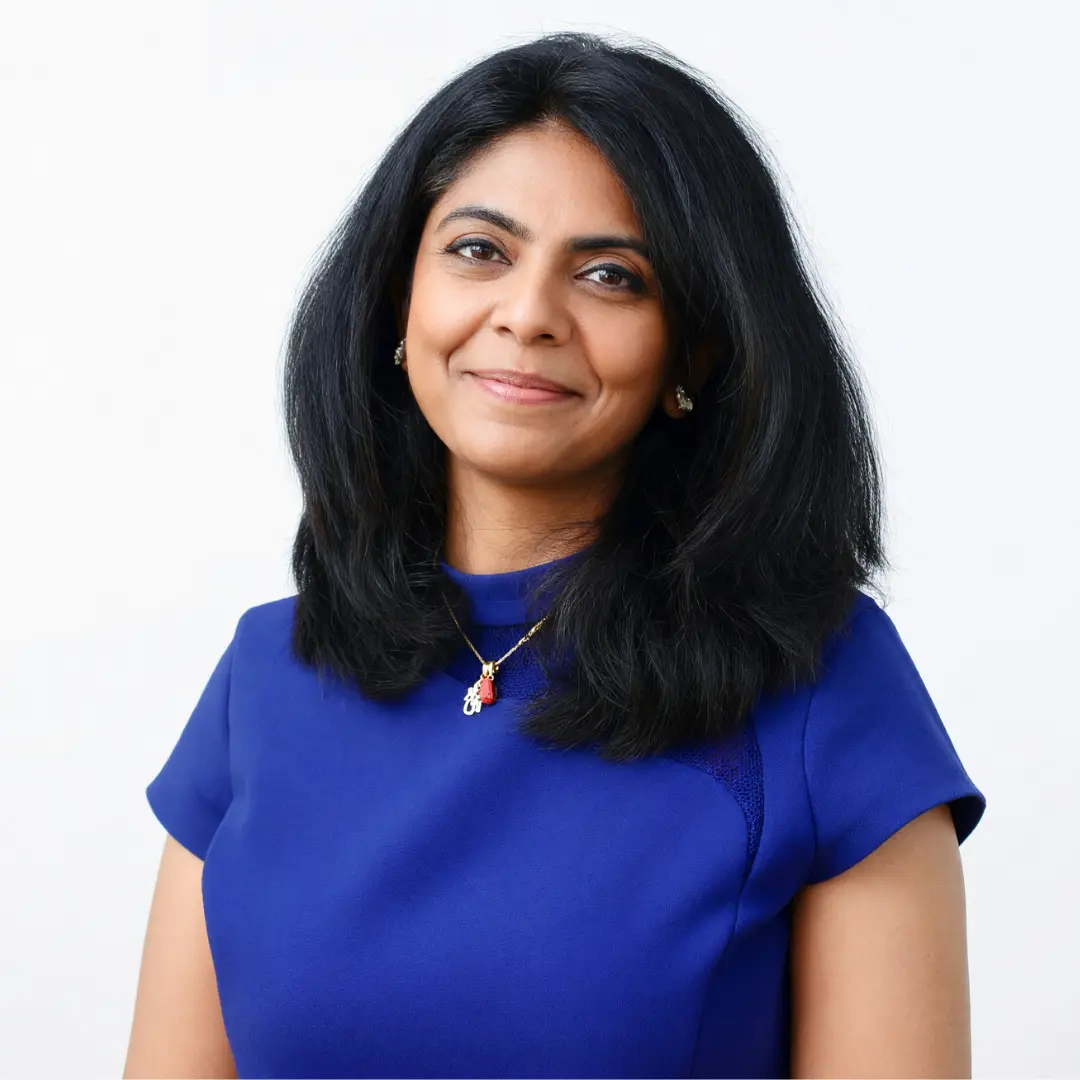
Dr Megha Wadhwa
A migration researcher, author, documentary filmmaker, and cultural diplomat whose career has taken her from New Delhi to Tokyo to Berlin.
Biography
The Story
Dr Megha Wadhwa is one of the foremost academic authorities on the Indian diaspora in Japan — a migration researcher, author, documentary filmmaker, and cultural diplomat whose career has taken her from New Delhi to Tokyo to Berlin, always in pursuit of the same abiding question: what does it mean to be Indian somewhere else? Originally from New Delhi, she spent fifteen years as a resident of Tokyo before relocating to Berlin in 2021, where she serves as a Research Associate at the Institute of East Asia Studies, Free University of Berlin, and as a Visiting Scholar at the Institute of Comparative Culture, Sophia University Tokyo — her doctoral alma mater. Her 2021 Routledge monograph, Indian Migrants in Tokyo: A Study of Socio-Cultural, Religious and Working Worlds, is the defining scholarly work on the Indian community in Japan, and remains the reference point for everyone working in this field.
Education and Academic Formation
Dr Wadhwa completed both her Master's and doctoral programmes at Sophia University in Tokyo — a Jesuit university that is one of Japan's most internationally oriented and prestigious institutions, and the home of the Institute of Comparative Culture where Indian diaspora studies in Japan has its strongest academic lineage. Her doctoral programme spanned Global Studies with specialisations in Area Studies, Social Sciences, Diaspora, Migration, South Asia, and Japan — a genuinely interdisciplinary formation that equipped her to approach the Indian diaspora not just as a community to be documented, but as a window onto questions of identity, class, race, gender, religion, and the global circulation of skilled labour.
Her fieldwork methodology is equally distinctive. She trained formally in documentary filmmaking as a research tool — a commitment to visual ethnography that sets her apart from most migration scholars and gives her work an accessibility and narrative immediacy that purely textual academic outputs rarely achieve. In July 2021 and again in June 2022, she led multi-day filming workshops for the QuaMaFA research team at Free University of Berlin, bringing in internationally recognised documentary filmmaker Dr Andy Lawrence to develop the team's capacity for fieldwork filming. The resulting films and research outputs span three countries and nearly a decade of sustained fieldwork.
Indian Migrants in Tokyo
Published by Routledge in October 2020 (with a 2021 paperback edition), Indian Migrants in Tokyo: A Study of Socio-Cultural, Religious and Working Worlds is the product of years of sustained ethnographic fieldwork within Tokyo's Indian community. The book examines how Indian migrants in Japan navigate identity across multiple axes simultaneously — maintaining cultural and religious traditions, building community institutions, navigating the Japanese workplace and its particular hierarchies, and raising families between two cultures. It is a study of socio-cultural adaptation, religious participation, professional life, and the specific gendered experiences of Indian women who migrate to Japan — often through marriage, and often without prior knowledge of the country or language.
The book was the first comprehensive ethnographic study of its kind focused specifically on the Indian community in Japan, and it filled a significant gap in both South Asian diaspora studies and Japanese migration scholarship. It has been cited in subsequent academic work on skilled migration, diaspora communities in East Asia, and the sociology of Indian professionals abroad, and remains essential reading for anyone researching Indian migration to non-Western destinations.
The BMBF-Funded Research Project (2021–2024)
From March 2021 to December 2024, Dr Wadhwa was a principal researcher in the QuaMaFA project — Qualifications and Skills in the Migration Process of Foreign Workers in Asia — an interdisciplinary research initiative funded by the German Federal Ministry of Education and Research (BMBF) under its 'Small Subjects' funding initiative. The project was led across multiple partner institutions including Free University of Berlin, Goethe University Frankfurt, the University of Duisburg-Essen's IN-EAST Institute, and the Max Planck Institute for the Study of Religious and Ethnic Diversity.
Dr Wadhwa's specific focus within QuaMaFA was Indian professionals in Japan and Singapore — examining migration trends, labour market integration, and the challenges faced by skilled Indian workers in two of Asia's most demanding professional environments. Her side project within the wider initiative also extended the comparative analysis to Indian professionals in Berlin, enabling a triangulated comparison of Indian skilled migration across Japan, Singapore, and Germany — three very different host societies with distinct immigration regimes, workplace cultures, and attitudes toward South Asian professionals.
In December 2024, as the QuaMaFA project drew to a close, Dr Wadhwa co-organised a major international workshop at Free University of Berlin — bringing together scholars, students, and practitioners to engage in critical discussions on migration, visual research methods, and evolving policy challenges in Asia. The workshop was held over five days from 13 to 17 December 2024, and represented a culmination of four years of collaborative, cross-institutional fieldwork across four countries.
Documentary Filmmaking as Ethnographic Practice
Dr Wadhwa's commitment to documentary film as a research methodology is one of the most distinctive features of her academic practice. Her three key films to date are: Daughters from Afghanistan (2019), a documentary exploring the lives and experiences of Afghan women in Japan; Indian Cooks in Japan (2020), a 7-minute documentary examining the working conditions, legal vulnerabilities, and cultural lives of Indian restaurant cooks in Tokyo — a community that became critically exposed during the COVID-19 pandemic and whose stories she had studied for years; and Finding Their Niche: Unheard Stories of Migrant Women (2022), a longer documentary that follows the lives of two Indian women who migrated to Japan through arranged marriages over a decade ago, exploring how they carved out identities, roles, and agency within a society that offered them little institutional support. The film was screened at the Tokyo University of Foreign Studies and the Centre for South Asian Studies (CSAS).
The 2022 film traces the journeys of Jyoti, 41, from Punjab, and Mandeep, 39, also from Punjab — both of whom moved to Japan as young women to marry Indian men already resident there. Through their personal narratives, the film examines past expectations and present realities, the specific pressures and freedoms of being an Indian woman in Japan, and the ways in which migration reshapes not just location but selfhood. The film is available with both English and Japanese subtitles, reflecting Dr Wadhwa's commitment to making her research accessible across both of the language communities her work bridges.
Selected Publications and International Lectures
Beyond her monograph, Dr Wadhwa's published academic output spans journal articles, monograph chapters, and conference contributions. Her peer-reviewed publications include: 'Binding Indians Abroad: Religious Participation of Indian Migrants in Tokyo,' The Journal of Sophia Asian Studies, No. 34 (2011); 'The Plight of Women in India,' The Journal of Sophia Asian Studies, No. 29 (Sophia University); 'Opportunities and Challenges in a Foreign Land: A Study of Indian Resident Community in Tokyo and its Vicinity,' Occasional Papers, Monograph Series, Institute of Asian Cultures, Sophia University (2016); and 'In the Age of COVID-19 — Indian Restaurants and the Indian Cooks in Japan,' The Asia-Pacific Journal: Japan Focus (2020). She has also written extensively on the Indian community in Japan for The Japan Times since 2013.
Her conference presentations and guest lectures span institutions on four continents. She has presented at: the Nissan Institute of Japanese Studies, Oxford School of Global and Area Studies ('Life Stories of Indian Migrants in Tokyo: Fairy Tales and Nightmares'); the GEAS Digital Lecture Series on East Asian Responses to Crisis (2020); the 28th Annual Conference of the Japanese Association for South Asian Studies (JASAS) ('Redefining Indian Traditions and Creating New Spaces: Migrant Women of Indian Origin in Tokyo'); and a Special Lecture Series on Vulnerable Populations in Japan under COVID-19. She has delivered guest lectures at Ryukoku University, Toyo University, Seisen University, Tokyo Metropolitan University, and multiple programmes within Sophia University itself.
Highlights
At a Glance
Join the network that connects leaders across borders, industries, and generations.
Meet All Ambassadors
Thank you for your interest in joining the Global Indian Network team!
Currently, there are no open vacancies in our Design department.
At the Global Indian Network, we are always on the lookout for talented individuals who share our passion for quality journalism and storytelling. While we don't have any positions available at the moment, our team is constantly evolving, and new opportunities may arise in the future.
We encourage you to stay connected with us and watch our website for job openings updates.
You can also reach out to us here.
Thank you for your interest in joining the Global Indian Network team!
Currently, there are no open vacancies in our Tech department.
At the Global Indian Network, we are always on the lookout for talented individuals who share our passion for quality journalism and storytelling. While we don't have any positions available at the moment, our team is constantly evolving, and new opportunities may arise in the future.
We encourage you to stay connected with us and watch our website for job openings updates.
You can also reach out to us here.
Thank you for your interest in joining the Global Indian Network team!
Currently, there are no open vacancies in our Marketing department.
At the Global Indian Network, we are always on the lookout for talented individuals who share our passion for quality journalism and storytelling. While we don't have any positions available at the moment, our team is constantly evolving, and new opportunities may arise in the future.
We encourage you to stay connected with us and watch our website for job openings updates.
You can also reach out to us here.
Thank you for your interest in joining the Global Indian Network team!
Currently, there are no open vacancies in our News department.
At the Global Indian Network, we are always on the lookout for talented individuals who share our passion for quality journalism and storytelling. While we don't have any positions available at the moment, our team is constantly evolving, and new opportunities may arise in the future.
We encourage you to stay connected with us and watch our website for job openings updates.
You can also reach out to us here.